If you have any questions, you are always welcome to contact us. We'll get back to you as soon as possible, withing 24 hours on weekdays.
Customer service
All questions about your order, return and delivery must be sent to our customer service team by e-mail at yourstore@yourdomain.com
Sale & Press
If you are interested in selling our products, need more information about our brand or wish to make a collaboration, please contact us at press@yourdomain.com
Help
If you have any questions, you are always welcome to contact us. We'll get back to you as soon as possible, withing 24 hours on weekdays.
Customer service
All questions about your order, return and delivery must be sent to our customer service team by e-mail at yourstore@yourdomain.com
Sale & Press
If you are interested in selling our products, need more information about our brand or wish to make a collaboration, please contact us at press@yourdomain.com
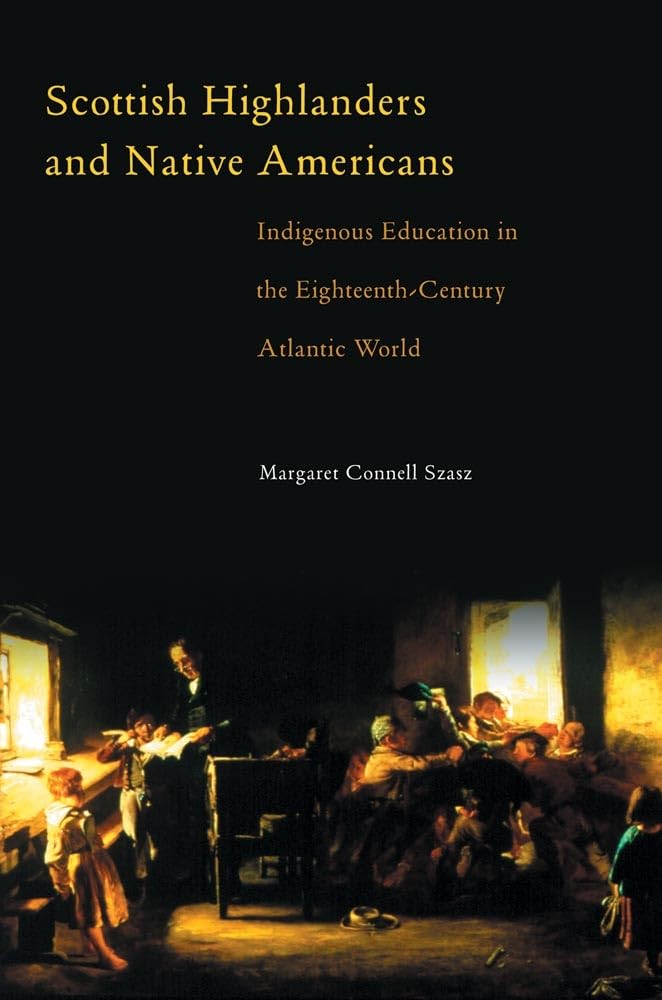
The Society in Scotland for the Propagation of Christian Knowledge (SSPCK) was founded in 1709 by Scottish Lowlanders for the education of Highlanders: specifically to convert them from the Gaelic language to English, from the Episcopal faith to Presbyterianism, and from latent Jacobitism to loyalty to the crown. In a transatlantic translation of this effort, the Scottish Society also established itself in the New World to educate and assimilate Iroquois, Algonquin, and southeastern Native peoples.In this first booklength examination of the SSPCK, Margaret Connell Szasz explores the origins of the Scottish Societys policies of cultural colonialism and their influence on two disparate frontiers. Drawing intriguing parallels between the treatment of Highland Scots and of Native Americans, she incorporates multiple perspectives on the cultural encounter, juxtaposing the attitudes of Highlanders and Lowlanders, English colonials and Native peoples, while giving voice to the Societys pupils and graduates, its schoolmasters, and religious leaders.Featuring more than two dozen illustrations, Scottish Highlanders and Native Americans brims with intriguing comparisons and insights into two cultures on the cusp of modernity. It is a benchmark in emerging studies of comparative education and a major contribution to the growing literature of crosscultural encounters.
⚠️ WARNING (California Proposition 65):
This product may contain chemicals known to the State of California to cause cancer,
birth defects, or other reproductive harm.
For MAP (Minimum Advertised Price) violations and Intellectual Property (IP) or Trademark concerns, please contact:
support@ergodebooks.com
⚠️ California Proposition 65 Warning: Some products sold on this website may expose you to chemicals known to the State of California to cause cancer, birth defects, or other reproductive harm. For more information, visit www.P65Warnings.ca.gov.