
Title
Scraping By: Wage Labor, Slavery, And Survival In Early Baltimore (Studies In Early American Economy And Society From The Librar,New
Sold by Ergodebooks, an authorized reseller.
Returns accepted within 30 days | support@ergodebooks.com
Shipping Information
- Free Standard Shipping — United States only
- Processing Time: 1–3 business days
- Estimated Delivery: 3–5 business days after dispatch
- Double-boxed, fully insured & discreetly packaged
- Tracking number sent via email once dispatched
- Orders over $250 require signature upon delivery. Taxes calculated at checkout.
Returns & Refund
Returns accepted within 30 days of delivery.
Damaged or Defective Item
Free return shipping + replacement or full refund
Wrong Item Received
Free return shipping + replacement or full refund
Change of Mind
Return shipping at customer's expense · 25% restocking fee applies
Payment Option

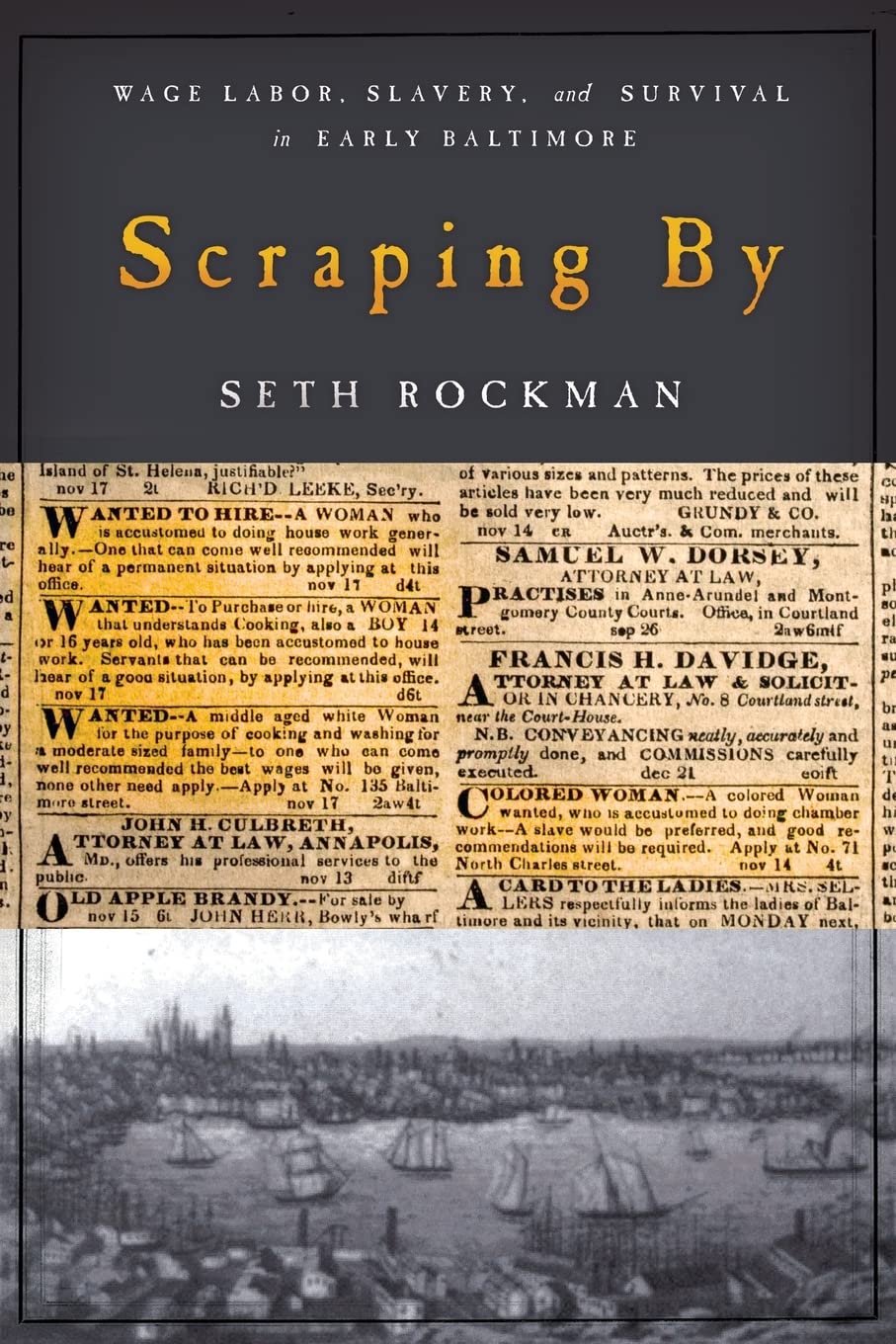
Cowinner, 2010 Merle Curti Award, Organization Of American Historianswinner, 2010 Philip Taft Labor History Book Award, Ilr School At Cornell University And The Labor And Workingclass History Associationwinner, 2010 H. L. Mitchell Award, Southern Historical Associationenslaved Mariners, White Seamstresses, Irish Dockhands, Free Black Domestic Servants, And Nativeborn Street Sweepers All Navigated The Lowend Labor Market In Postrevolutionary Baltimore. Seth Rockman Considers This Diverse Workforce, Exploring How Race, Sex, Nativity, And Legal Status Determined The Economic Opportunities And Vulnerabilities Of Working Families In The Early Republic.In The Era Of Frederick Douglass, Baltimore'S Distinctive Economy Featured Many Slaves Who Earned Wages And White Workers Who Performed Backbreaking Labor. By Focusing His Study On This Boomtown, Rockman Reassesses The Roles Of Race And Region And Rewrites The History Of Class And Capitalism In The United States During This Time.Rockman Describes The Material Experiences Of Lowwage Workershow They Found Work, Translated Labor Into Food, Fuel, And Rent, And Navigated Underground Economies And Social Welfare Systems. He Also Explores What Happened If They Failed To Find Work Or Lost Their Jobs. Rockman Argues That The American Working Class Emerged From The Everyday Struggles Of These Lowwage Workers. Their Labor Was Indispensable To The Early Republics Market Revolution, And It Was Central To The Transformation Of The United States Into The Wealthiest Society In The Western World.Rockmans Research Includes Construction Site Payrolls, Employment Advertisements, Almshouse Records, Court Petitions, And The Nations First 'Living Wage' Campaign. These Rich Accounts Of Day Laborers And Domestic Servants Illuminate The History Of Early Republic Capitalism And Its Consequences For Working Families.
⚠️ WARNING (California Proposition 65):
This product may contain chemicals known to the State of California to cause cancer, birth defects, or other reproductive harm.
For more information, please visit www.P65Warnings.ca.gov.
- Q: How many pages does the book have? A: The book has three hundred sixty-eight pages. It's a comprehensive exploration of wage labor in early Baltimore.
- Q: What is the binding type of this book? A: The binding type is paperback. This makes it lightweight and easy to handle.
- Q: What are the dimensions of the book? A: The book measures six inches in length, nine inches in height, and zero point ninety-one inches in width.
- Q: Who is the author of this book? A: The author is Seth Rockman. He is known for his research on labor history and the early American economy.
- Q: What is the main theme of the book? A: The main theme explores the economic opportunities and vulnerabilities of low-wage workers in early Baltimore.
- Q: Is this book suitable for academic study? A: Yes, it is suitable for academic study. It won multiple awards for its contributions to labor history.
- Q: How do I care for this paperback book? A: To care for this paperback book, keep it away from moisture and extreme temperatures. Store it upright on a shelf.
- Q: Can this book be read by children? A: Yes, but it is more suitable for older children and adults due to its complex themes.
- Q: Is there any special handling required for this book? A: No special handling is required. Just handle it gently to avoid bending the pages.
- Q: What happens if this book arrives damaged? A: If the book arrives damaged, you should contact the seller for a return or replacement. Most sellers offer a satisfaction guarantee.
- Q: Does this book have illustrations? A: Yes, the book contains black and white halftones. These illustrations enhance the understanding of the text.
- Q: Is this book a good resource for labor history? A: Yes, it is an excellent resource for labor history, providing deep insights into the early American workforce.
- Q: What awards has this book won? A: This book has won the 2010 Merle Curti Award and the 2010 Philip Taft Labor History Book Award, among others.
- Q: Is this book part of a series? A: Yes, it is part of the Studies in Early American Economy and Society series from the Library Company of Philadelphia.
- Q: What kind of readers would enjoy this book? A: Readers interested in American history, labor studies, and economic history will particularly enjoy this book.