
Title
Sea Of Opportunity: The Japanese Pioneers Of The Fishing Industry In Hawaii
Sold by Ergodebooks, an authorized reseller.
Returns accepted within 30 days | support@ergodebooks.com
Shipping Information
- Free Standard Shipping — United States only
- Processing Time: 3–5 business days
- Estimated Delivery: 6–10 business days after dispatch
- Double-boxed, fully insured & discreetly packaged
- Tracking number sent via email once dispatched
Returns & Refund
Returns accepted within 30 days of delivery.
Damaged or Defective Item
Free return shipping + replacement or full refund
Wrong Item Received
Free return shipping + replacement or full refund
Change of Mind
Return shipping at customer's expense · 25% restocking fee applies
Payment Option

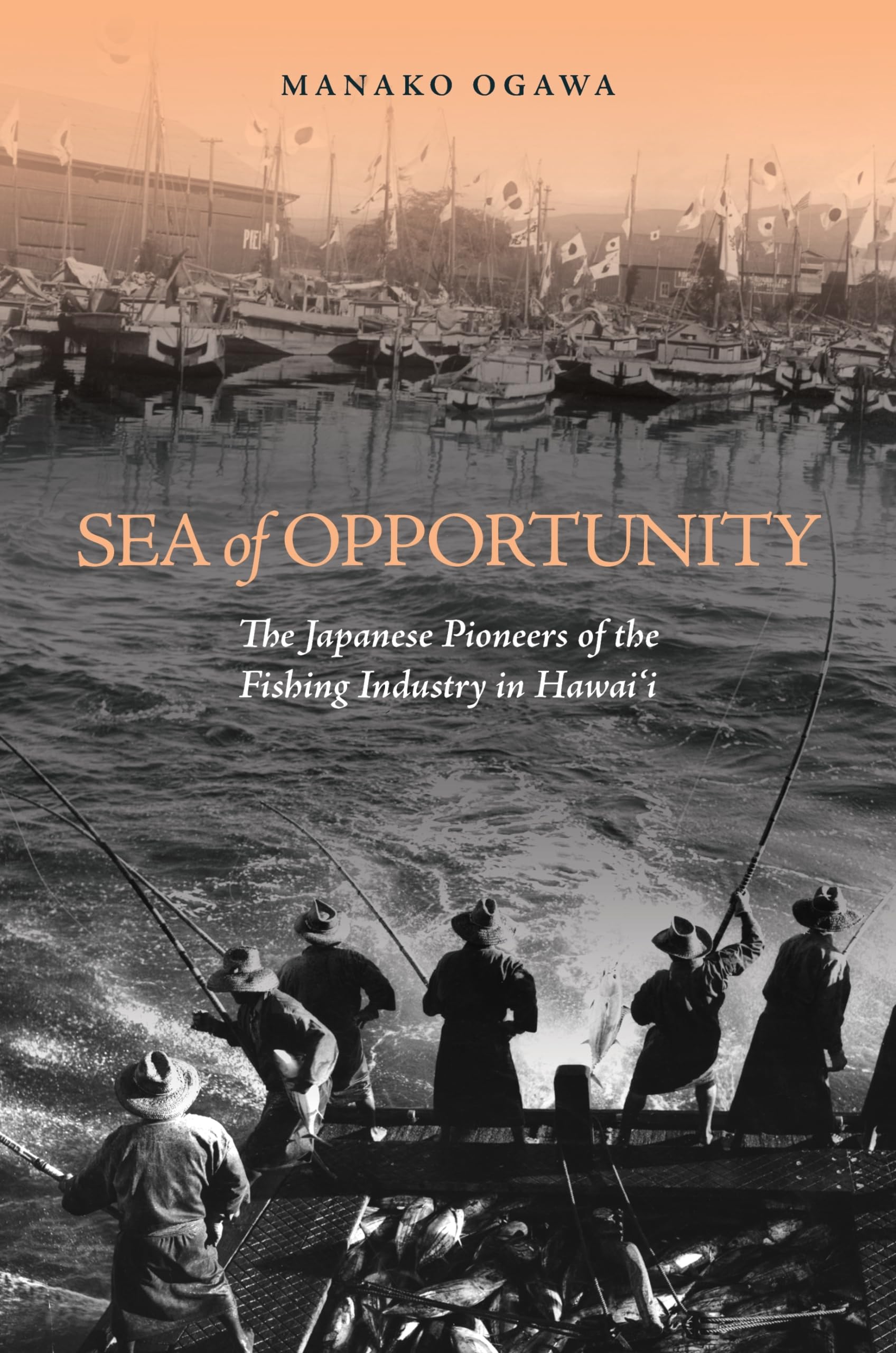
Sea Of Opportunity: The Japanese Pioneers Of The Fishing Industry In Hawaii Is A Part Historical And A Part Ethnographic Study Of Japanese Fisheries In Hawaii From The Late Nineteenth Century To Contemporary Times. When Japanese Fishermen Arrived In Hawaii From Coastal Communities In Japan, Mainly Hiroshima, Yamaguchi, And Wakayama, They Brought Fishing Techniques Developed In Their Homeland To The Hawaiian Archipelago And Adapted Them To New Circumstances. Within A Short Period Of Time, They Expanded The Local Fisheries Into One Of The Pillars Of Hawaii'S Economy. Unlike Most Of The Previous Works On Japanese Immigrants To Hawaii, Which Focus On Sugarcane Plantations, This Breakthrough Book Is The First Comprehensive History Of Japanese As Fishermen.Original In Its Conception And Research, The Book Begins With The Early Accomplishments Of Japanese Fishermen Who Advanced Into Foreign Waters And Situates Their Activities In The Contexts Of Both Japan And Hawaii. Skillfully Using Sources In Various Languages, The Author Complicates The History Of Japanese Immigration To Hawaii By Adding An Obvious Yet Forgotten Transoceanic Agentfishermen.Instead Of Challenging The Notion Of A Landbased History Of The Local Japanese People In Hawaii, Ogawa Tactfully Shifts The Focus By Showing Us That One Of The Earliest Japanese Communities Was Made Up Of Fishermen, Whose Preworld War Ii Success Was A Direct Result Of The Growing Plantation Communities. She Argues That Their Mobility Enabled Fishermen To Retain Homes On Different Shores Much More Easily Than Their Farmer Counterparts, But The December 7, 1941, Attack On Pearl Harbor Affected Both Groups Just The Same. The Postwar Efforts To Reconstruct Hawaii'S Fishing Industry Included Transformation Of Its Ethnic Environment From Japanese Domination Into One That Was Supported By Multiethnic Groups. The Arrival Of Okinawan Fishermen Was Critical In This Development And Reveals A Complex Cultural And Political Relationship Between Hawaii, Okinawa, And Japan. Personal Interviews Conducted By Ogawa Give These Fishermen A Chance To Recount Their Often Difficult Transoceanic Stories In Their Own Language. Their Unflappable Entrepreneurship And Ability To Survive In Different Waters And Lands Parallel The Experiences Of Many Immigrants To Hawaii. Ogawa Reminds Readers Of The Reality Of Overfishing In Hawaii And What It Means To The Fishing Communities Whose Sustenance Relies Heavily On The Sea.
⚠️ WARNING (California Proposition 65):
This product may contain chemicals known to the State of California to cause cancer, birth defects, or other reproductive harm.
For more information, please visit www.P65Warnings.ca.gov.
- Q: How many pages are in 'Sea of Opportunity'? A: The book contains two hundred twenty-four pages. This length allows for a comprehensive exploration of the Japanese fishing industry's history in Hawaii.
- Q: What are the dimensions of this book? A: The book measures six point one inches in length, nine point one inches in height, and zero point nine one inches in width. These dimensions make it a convenient size for reading.
- Q: What type of binding does this book have? A: This book is bound in hardcover. A hardcover binding offers durability and protection, making it suitable for extensive reading.
- Q: Who is the author of 'Sea of Opportunity'? A: The author is Manako Ogawa. She brings a unique perspective to the historical and ethnographic study of Japanese fishermen in Hawaii.
- Q: What is the primary focus of the book? A: The book focuses on the history of Japanese fishermen in Hawaii. It highlights their contributions and the evolution of the fishing industry from the late nineteenth century to present.
- Q: Is this book suitable for academic research? A: Yes, this book is suitable for academic research. It provides a well-researched historical account and utilizes sources in various languages.
- Q: How do the fishing techniques in the book compare to modern practices? A: The book contrasts traditional Japanese fishing techniques with contemporary practices. It emphasizes how early methods laid the groundwork for today's fishing industry in Hawaii.
- Q: Can I read this book if I'm not familiar with Japanese history? A: Yes, you can read this book without prior knowledge of Japanese history. The author provides context and background information throughout the text.
- Q: What challenges did Japanese fishermen face according to the book? A: Japanese fishermen faced various challenges, including adaptation to new environments and the impact of events like the Pearl Harbor attack. Their stories highlight resilience and entrepreneurship.
- Q: Does the book discuss the impact of Okinawan fishermen? A: Yes, the book discusses the arrival of Okinawan fishermen. It outlines their critical role in transforming Hawaii's fishing industry and fostering multicultural interactions.
- Q: How does the book address the issue of overfishing in Hawaii? A: The book addresses overfishing by highlighting its impact on local fishing communities. Ogawa emphasizes the importance of sustainable practices for future generations.
- Q: What is the tone of the author's writing? A: The author's writing is informative and engaging. Ogawa combines historical analysis with personal anecdotes from fishermen, making the narrative accessible.
- Q: Is this book part of a series? A: No, 'Sea of Opportunity' is not part of a series. It stands alone as a comprehensive study of Japanese contributions to Hawaii's fishing industry.
- Q: What kind of sources does the author use? A: The author uses a variety of sources, including personal interviews and historical documents. This multifaceted approach enriches the narrative and provides diverse perspectives.
- Q: Will I learn about the cultural aspects of fishing in Hawaii? A: Yes, the book delves into the cultural aspects of fishing in Hawaii. It explores how Japanese fishing traditions influenced local communities and cultural exchanges.