
Title
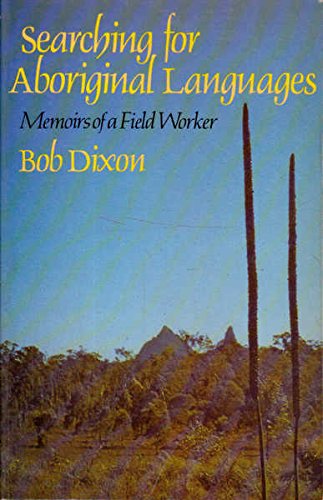
Searching For Aboriginal Languages: Memoirs Of A Field Worker-used
Sold by Ergodebooks, an authorized reseller.
Returns accepted within 30 days | support@ergodebooks.com
Shipping Information
- Free Standard Shipping — United States only
- Processing Time: 3–5 business days
- Estimated Delivery: 6–10 business days after dispatch
- Double-boxed, fully insured & discreetly packaged
- Tracking number sent via email once dispatched
Returns & Refund
Returns accepted within 30 days of delivery.
Damaged or Defective Item
Free return shipping + replacement or full refund
Wrong Item Received
Free return shipping + replacement or full refund
Change of Mind
Return shipping at customer's expense · 25% restocking fee applies
Payment Option

In 1963 R. M. W. (Bob) Dixon Set Off For Australia, Where He Was To Record, Chart, And Preserve Several Of The Complex And Nearly Extinct Aboriginal Languages. Beginning With His Introduction To These Languages While A Graduate Student At The University Of Edinburgh And His Difficulties In Getting To The Australian Bush, Dixons Fourteenyear Tale Is One Of Frustration And Enlightenment, Of Setbacks And Discoveries.As He Made His Way Through Northern Australia, Dixon Was Dependent On Rumors Of Aboriginal Speakers, The Unreliable Advice Of White Australians, And The Faulty Memories Of Many Of The Remaining Speakers Of The Languages. Suggestions Of Informants Led Him On A Circuitous Trail Through The Bush, To Speakers Such As The Singer Willie Kelly In Ravenshoe, Who Wanted His Recordings Sent To The South, 'Where White People Would Pay Big Money To Hear A Genuine Aborigine Sing' And Chloe Grant In Murray Upper, Who Told Tales In Four Dialects Of Digging Wild Yams, Of The Bluetongue Lizard Banggara, And Of The Arrival Of Captain Cook. Dixon Tells Of Obtaining The Trust Of Possible Informants, Of Learning The Customs And Terrain Of The Country, And Of Growing Understanding Of The Culture And Tradition Of His Subjects. And He Explains His Surprise At His Most Unexpected That The Rich Oral Tradition Of The 'Primitive' Aborigines Could Yield A History Of A People, As Told By That People, That Dates To Almost Ten Millenia Before.
⚠️ WARNING (California Proposition 65):
This product may contain chemicals known to the State of California to cause cancer, birth defects, or other reproductive harm.
For more information, please visit www.P65Warnings.ca.gov.
- Q: How many pages are in the book? A: The book contains three hundred forty-four pages. This length provides ample space for detailed exploration of Aboriginal languages and cultures.
- Q: What type of binding does this book have? A: This book is published in paperback binding. Paperback is lightweight and flexible, making it easy to handle.
- Q: Who is the author of this book? A: The author is Robert M. W. Dixon. He is well-known for his extensive research in linguistics and Aboriginal languages.
- Q: What is the main subject of the book? A: The book focuses on Aboriginal languages in Australia. It recounts the author's experiences in documenting nearly extinct languages.
- Q: Is this book suitable for general readers? A: Yes, the book is suitable for general readers. It provides insights into cultural and linguistic aspects that may interest a broad audience.
- Q: What age group is this book appropriate for? A: This book is appropriate for ages twelve and up. Its themes are complex but accessible to mature young readers.
- Q: How should I store this book? A: Store the book in a cool, dry place. Avoid direct sunlight to prevent fading and keep it away from moisture.
- Q: Can I clean the book if it gets dirty? A: Yes, you can clean it gently. Use a soft cloth to wipe the cover and avoid using water directly on the pages.
- Q: What if the book arrives damaged? A: If the book arrives damaged, contact the seller for return options. Most sellers offer a return policy for damaged items.
- Q: Is there a warranty for this book? A: No, books typically do not come with warranties. However, you can check with the seller for their specific return and refund policies.
- Q: How does this book compare to others in its genre? A: This book uniquely focuses on the practical experiences of a field worker. Unlike many academic texts, it offers a personal narrative.
- Q: Is this book recommended for academic purposes? A: Yes, it is recommended for academic purposes. It provides valuable insights that can benefit students of linguistics and cultural studies.
- Q: What makes this book stand out from other ethnic studies books? A: It stands out due to its firsthand accounts and fieldwork experiences. The narrative style engages readers while educating them on Aboriginal languages.
- Q: What should I do if I have questions about the content? A: If you have questions, consider reaching out to academic forums or book clubs. They can provide valuable insights and discussions.
- Q: Are there resources for further reading on this topic? A: Yes, there are many resources available. Look for academic journals, other books by Robert M. W. Dixon, and publications on Aboriginal studies.