
Title
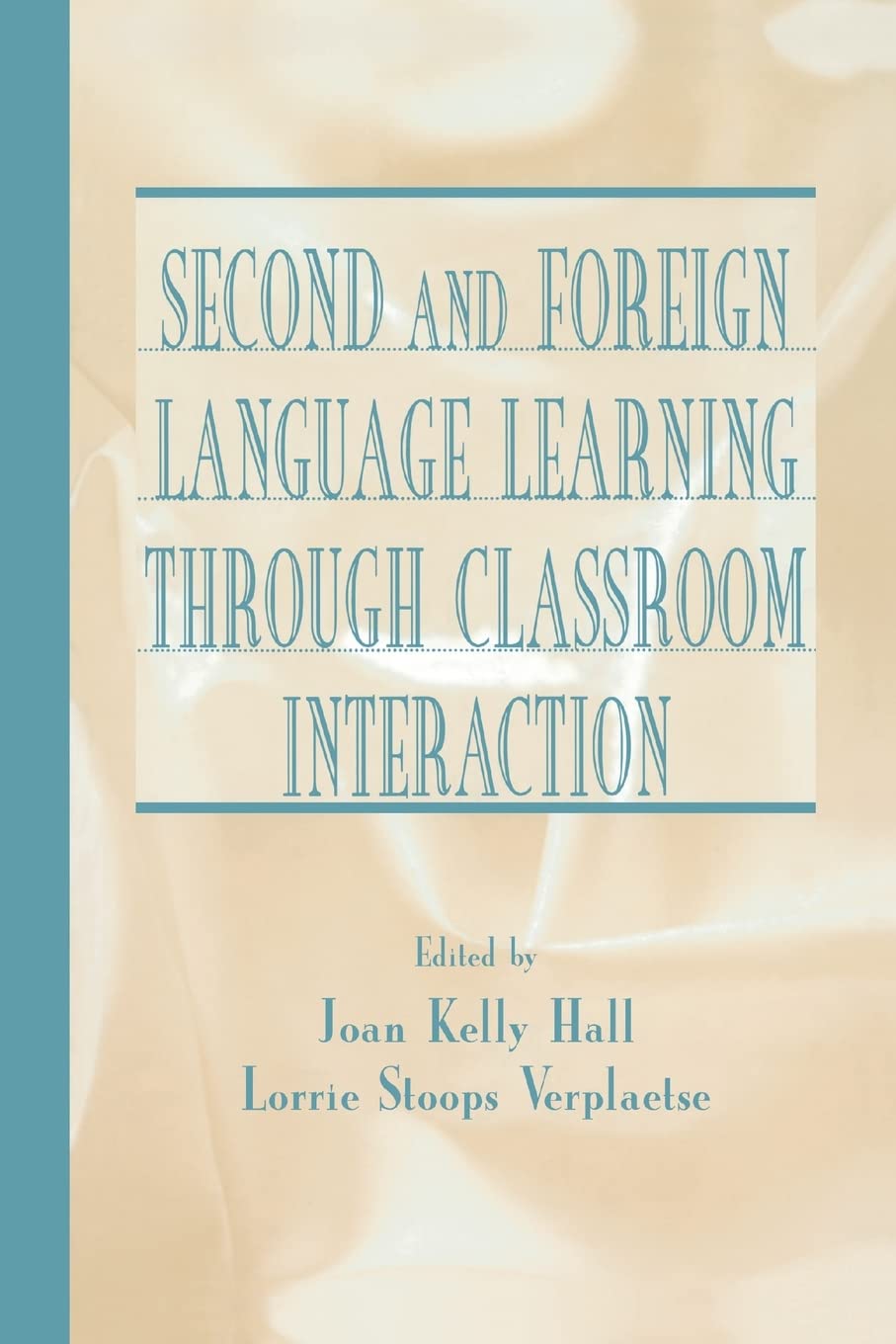
Second And Foreign Language Learning Through Classroom Interaction,Used
Sold by Ergodebooks, an authorized reseller.
Returns accepted within 30 days | support@ergodebooks.com
Shipping Information
- Free Standard Shipping — United States only
- Processing Time: 3–5 business days
- Estimated Delivery: 6–10 business days after dispatch
- Double-boxed, fully insured & discreetly packaged
- Tracking number sent via email once dispatched
Returns & Refund
Returns accepted within 30 days of delivery.
Damaged or Defective Item
Free return shipping + replacement or full refund
Wrong Item Received
Free return shipping + replacement or full refund
Change of Mind
Return shipping at customer's expense · 25% restocking fee applies
Payment Option

This volume brings together the current theoretical interest in reconceptualizing second and foreign language learning from a sociocultural perspective on language and learning, with practical concerns about second and foreign language pedagogy. It presents a set of studies whose focus is on the empirical description of particular practices constructed in classroom interaction that promote the learning of a second or foreign language. The authors examine in detail the processes by which the learning of additional languages is accomplished in the interaction of a variety of classrooms and in a variety of languages. Not only will the findings from the studies reported in this volume help to lay a foundation for the development of a more expansive, sociocultural model of second and foreign language learning, but on a more practical level they will help language educators in creating a set of principles for identifying and sustaining classroom interactional practices that foster additional language development.The volume is distinguished in three ways:* Following a Vygotskyan perspective on development, the studies assume that language learning is a fundamentally pragmatic enterprise, intrinsically linked to language use. This breaks from a more traditional understanding of second and foreign language learning, which has viewed learning and use as two distinct phenomena. The importance of classroom interaction to additional language development is foregrounded.* The investigations reported in this book are distinguished by their methodological approach. Because language learning is assumed to be a situated, contextsensitive, and dynamic process, the studies do not rely on traditional experimental methods for collecting and analyzing data, but rather, they involve primarily the use of ethnographic and discourse analytic methods.* The studies focus on interactional practices that promote second and foreign language learning. Although a great deal of research has examined first language learning in classrooms from a sociocultural perspective, little has looked at second and foreign language classrooms from such a perspective. Thus there is a strong need for this volume of studies addressing this area of research.Researchers, teacher educators, and graduate students across the fields of second and foreign language learning, applied linguistics, and language education will find this book informative and relevant. Because of the programmatic implications arising from the studies, it will also appeal to teacher educators and teachers of second and foreign languages from the elementary to the university levels.
⚠️ WARNING (California Proposition 65):
This product may contain chemicals known to the State of California to cause cancer, birth defects, or other reproductive harm.
For more information, please visit www.P65Warnings.ca.gov.