
Title
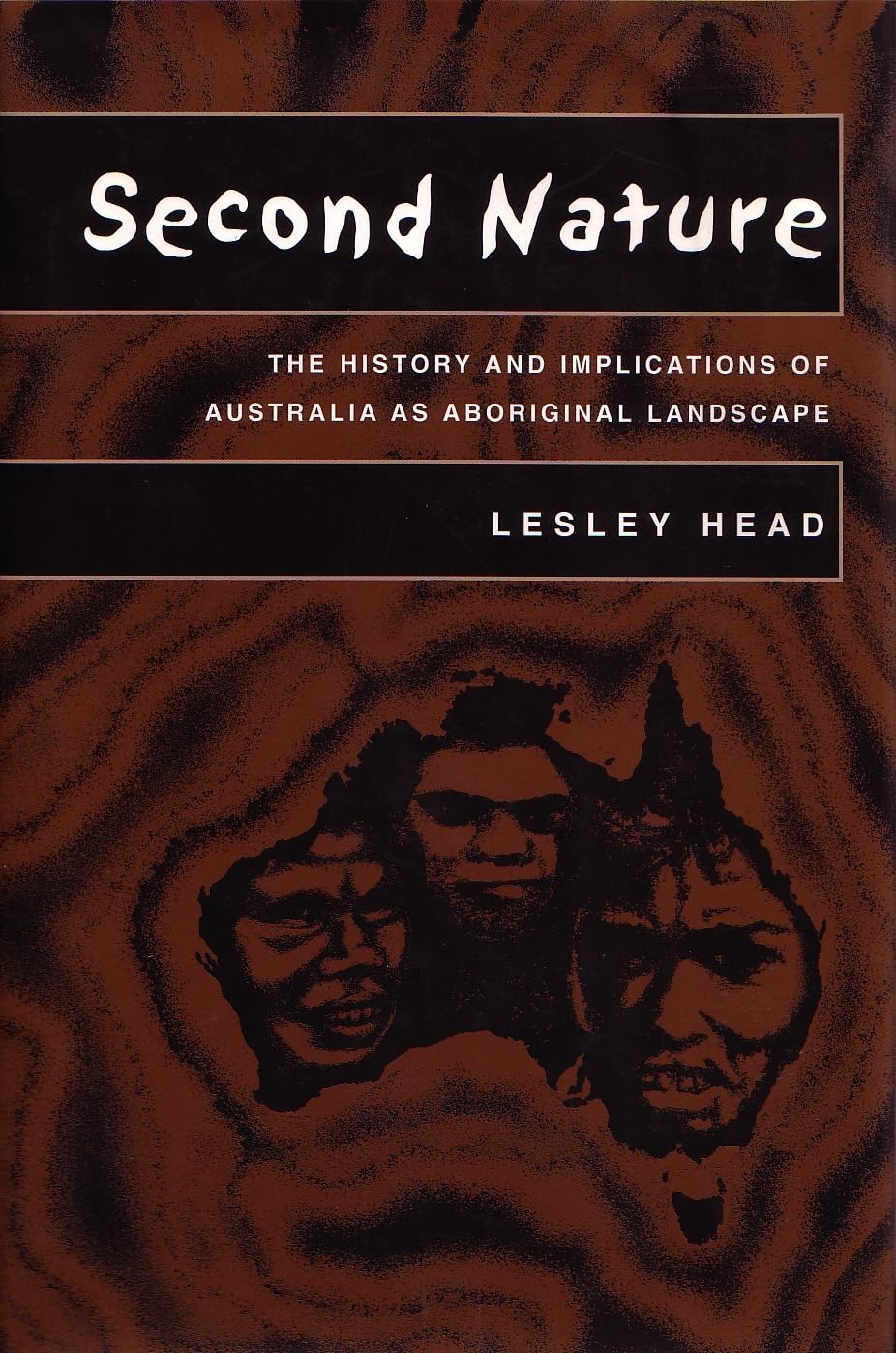
Second Nature: The History And Implications Of Australia As Aboriginal Landscape (Space, Place And Society),New
Sold by Ergodebooks, an authorized reseller.
Returns accepted within 30 days | support@ergodebooks.com
Shipping Information
- Free Standard Shipping — United States only
- Processing Time: 3–5 business days
- Estimated Delivery: 6–10 business days after dispatch
- Double-boxed, fully insured & discreetly packaged
- Tracking number sent via email once dispatched
Returns & Refund
Returns accepted within 30 days of delivery.
Damaged or Defective Item
Free return shipping + replacement or full refund
Wrong Item Received
Free return shipping + replacement or full refund
Change of Mind
Return shipping at customer's expense · 25% restocking fee applies
Payment Option

In Second Nature, Lesley Head examines modem Australia's efforts to come to terms with its Aboriginal past. Like other postcolonial countries, Australia has been confronted by research challenging the myth of a prehistoric (pre 1788) pristine wilderness. Drawing on anthropology, archeology, and history, Head shows that through their use of fire and their methods of hunting and gathering, Aboriginal ancestors transformed the country's biophysical landscape in a variety of still debated ways. These findings present a dramatic shift away from the nineteenthcentury evolutionary models, which viewed Aborigines as an unchanging people in an unchanging land. Given the strength of this challenge to earlier models and the increasing political voice of indigenous people, Head asks why the disruptions to colonial thinking have been so partial. She revisits historical debates to show that Australia's colonial heritage is more deeply embedded in contemporary environmental attitudes than is generally acknowledged. In 1992 the Australian legal system rejected the myth of terra nulliusland belonging to no oneand recognized the persistence of Aboriginal ownership.
⚠️ WARNING (California Proposition 65):
This product may contain chemicals known to the State of California to cause cancer, birth defects, or other reproductive harm.
For more information, please visit www.P65Warnings.ca.gov.
- Q: What is the main topic of 'Second Nature: The History and Implications of Australia as Aboriginal Landscape'? A: The book explores Australia's Aboriginal history and how the landscape has been shaped by Aboriginal practices, challenging the notion of a pristine wilderness before European settlement.
- Q: Who is the author of this book? A: The author is Lesley Head, who examines the intersection of anthropology, archaeology, and history in understanding Australia's Aboriginal past.
- Q: What type of binding does this book have? A: This book is available in a hardcover binding.
- Q: How many pages does 'Second Nature' have? A: The book contains 288 pages.
- Q: When was 'Second Nature' published? A: The book was published on April 1, 2000.
- Q: What themes are addressed in 'Second Nature'? A: The book addresses themes of postcolonialism, environmental attitudes, and the historical impact of Aboriginal peoples on the Australian landscape.
- Q: Is 'Second Nature' suitable for academic study? A: Yes, the book is suitable for academic study as it draws on various disciplines and provides insights into historical debates regarding Aboriginal land ownership and environmental practices.
- Q: What are the implications of the book's findings? A: The findings suggest a reevaluation of colonial narratives and highlight the ongoing significance of Aboriginal land ownership and cultural practices.
- Q: Does the book discuss legal changes regarding Aboriginal land in Australia? A: Yes, it discusses the 1992 legal recognition that rejected the myth of terra nullius, acknowledging Aboriginal ownership of the land.
- Q: What audience would benefit from reading this book? A: The book is beneficial for students, researchers, and anyone interested in Aboriginal history, environmental studies, and postcolonial theory.