If you have any questions, you are always welcome to contact us. We'll get back to you as soon as possible, withing 24 hours on weekdays.
Customer service
All questions about your order, return and delivery must be sent to our customer service team by e-mail at yourstore@yourdomain.com
Sale & Press
If you are interested in selling our products, need more information about our brand or wish to make a collaboration, please contact us at press@yourdomain.com
Help
If you have any questions, you are always welcome to contact us. We'll get back to you as soon as possible, withing 24 hours on weekdays.
Customer service
All questions about your order, return and delivery must be sent to our customer service team by e-mail at yourstore@yourdomain.com
Sale & Press
If you are interested in selling our products, need more information about our brand or wish to make a collaboration, please contact us at press@yourdomain.com
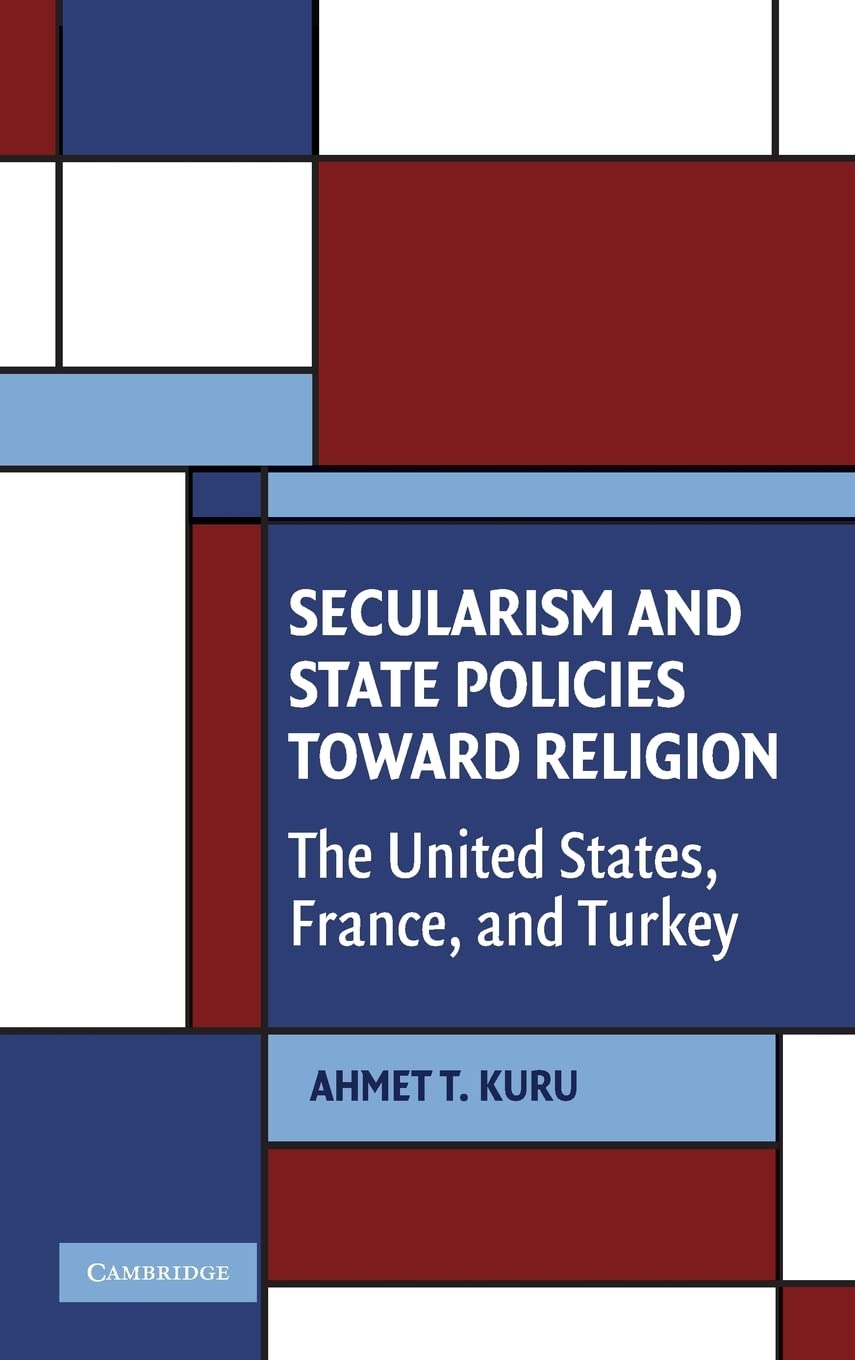
Why do secular states pursue different policies toward religion? This book provides a generalizable argument about the impact of ideological struggles on the public policy making process, as well as a statereligion regimes index of 197 countries. More specifically, it analyzes why American state policies are largely tolerant of religion, whereas French and Turkish policies generally prohibit its public visibility, as seen in their bans on Muslim headscarves. In the United States, the dominant ideology is passive secularism, which requires the state to play a passive role, by allowing public visibility of religion. Dominant ideology in France and Turkey is assertive secularism, which demands that the state play an assertive role in excluding religion from the public sphere. Passive and assertive secularism became dominant in these cases through certain historical processes, particularly the presence or absence of an ancien rgime based on the marriage between monarchy and hegemonic religion during statebuilding periods.
⚠️ WARNING (California Proposition 65):
This product may contain chemicals known to the State of California to cause cancer,
birth defects, or other reproductive harm.
For MAP (Minimum Advertised Price) violations and Intellectual Property (IP) or Trademark concerns, please contact:
support@ergodebooks.com
⚠️ California Proposition 65 Warning: Some products sold on this website may expose you to chemicals known to the State of California to cause cancer, birth defects, or other reproductive harm. For more information, visit www.P65Warnings.ca.gov.