
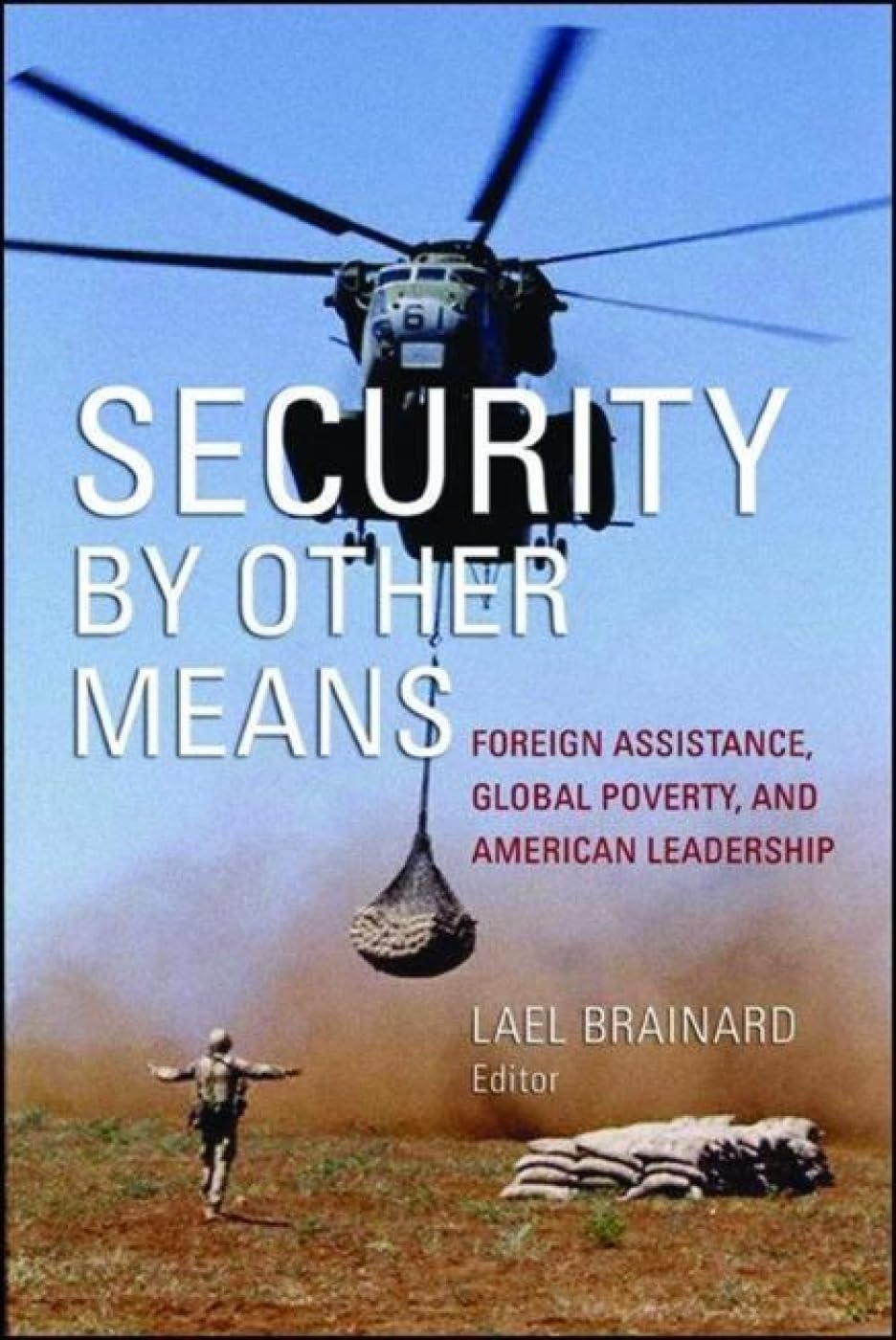
Title
Security By Other Means: Foreign Assistance, Global Poverty, And American Leadership,New
Sold by Ergodebooks, an authorized reseller.
Returns accepted within 30 days | support@ergodebooks.com
Shipping Information
- Free Standard Shipping — United States only
- Processing Time: 3–5 business days
- Estimated Delivery: 6–10 business days after dispatch
- Double-boxed, fully insured & discreetly packaged
- Tracking number sent via email once dispatched
Returns & Refund
Returns accepted within 30 days of delivery.
Damaged or Defective Item
Free return shipping + replacement or full refund
Wrong Item Received
Free return shipping + replacement or full refund
Change of Mind
Return shipping at customer's expense · 25% restocking fee applies
Payment Option

In a world transformed by globalization and challenged by terrorism, foreign aid has assumed renewed importance as a foreign policy tool. While the results of more than forty years of development assistance show some successes, foreign aid is currently dispersed between many agencies and branches of government in a manner that formulation and implementation of a coherent, effective strategy. The current political climate is receptive to a transition toward greater accountability and effectiveness in development aid. Because this transition is clearly an imperative but has not yet been comprehensively addressed, the Brookings Institution and the Center for Strategic and International Studies have conducted a joint study that both assesses the current structures of foreign assistance and makes recommendations for efficient coordination. Drawing on expertise from the full range of agencies whose policies affect foreign aid, Security by Other Means examines foreign assistance across four categories reflecting the interests that aid furthers: security, economic, humanitarian, and political. As disparities in the world become more untenable, foreign aid plays a key role in not only the national interests of the U.S. but also the interconnected interests of the international community. This important new volume takes aim at critical questions in a concerted manner by assigning coherence and effectiveness to U.S. foreign aid. Contributors include Owen Barder (Center for Global Development, formerly UK Department for International Development), Charlie Flickner (former Staff Director of the House Appropriations Subcommittee on Foreign Operations), Steve Hensch (George Washington University), Steve Morrison (Center for Strategic and International Studies), Steve Radelet (Center for Global Development)'
⚠️ WARNING (California Proposition 65):
This product may contain chemicals known to the State of California to cause cancer, birth defects, or other reproductive harm.
For more information, please visit www.P65Warnings.ca.gov.