
Title
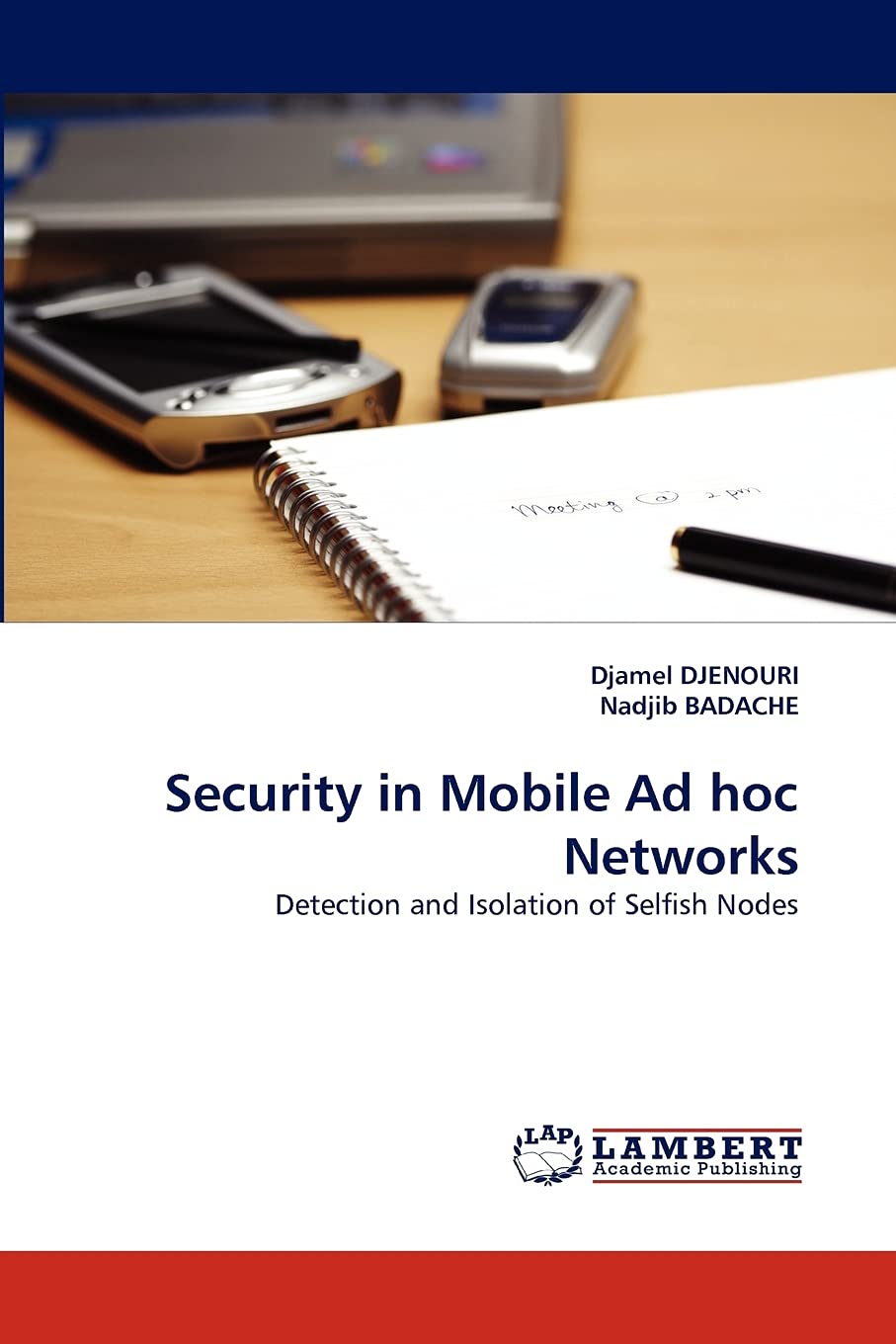
Security in Mobile Ad hoc Networks: Detection and Isolation of Selfish Nodes,Used
Sold by Ergodebooks, an authorized reseller.
Returns accepted within 30 days | support@ergodebooks.com
Shipping Information
- Free Standard Shipping — United States only
- Processing Time: 3–5 business days
- Estimated Delivery: 6–10 business days after dispatch
- Double-boxed, fully insured & discreetly packaged
- Tracking number sent via email once dispatched
Returns & Refund
Returns accepted within 30 days of delivery.
Damaged or Defective Item
Free return shipping + replacement or full refund
Wrong Item Received
Free return shipping + replacement or full refund
Change of Mind
Return shipping at customer's expense · 25% restocking fee applies
Payment Option

Ad hoc networking attracts more and more attention amongst researchers. It includes a variety of topics involving many challenges. In this book, we dealt with security problems and focused on one related to the energy constraint of the nodes forming the network, namely node selfish misbehavior or node noncooperation. This problem is specific to ad hoc networks and threatens the service availability, which one of the security requirements. A misbehavior router, anxious about its battery shortage, drops packets originated from other nodes, while using them as routers to relay its own packets. A general review of some security problems has provided, with more focus on the selfish misbehavior. The power management that is the main cause of this misbehavior has been tackled, and a power awarerouting protocol has been proposed. This helps increasing the battery life time, but it is far from eliminating this challenging problem. Therefore, a solution that detects and isolates selfish nodes is mandatory for selforganized ad hoc networks. A new solution to monitor, detect, and isolate such nodes has finally been proposed, analyzed, and evaluated.
⚠️ WARNING (California Proposition 65):
This product may contain chemicals known to the State of California to cause cancer, birth defects, or other reproductive harm.
For more information, please visit www.P65Warnings.ca.gov.