If you have any questions, you are always welcome to contact us. We'll get back to you as soon as possible, withing 24 hours on weekdays.
Customer service
All questions about your order, return and delivery must be sent to our customer service team by e-mail at yourstore@yourdomain.com
Sale & Press
If you are interested in selling our products, need more information about our brand or wish to make a collaboration, please contact us at press@yourdomain.com
Help
If you have any questions, you are always welcome to contact us. We'll get back to you as soon as possible, withing 24 hours on weekdays.
Customer service
All questions about your order, return and delivery must be sent to our customer service team by e-mail at yourstore@yourdomain.com
Sale & Press
If you are interested in selling our products, need more information about our brand or wish to make a collaboration, please contact us at press@yourdomain.com
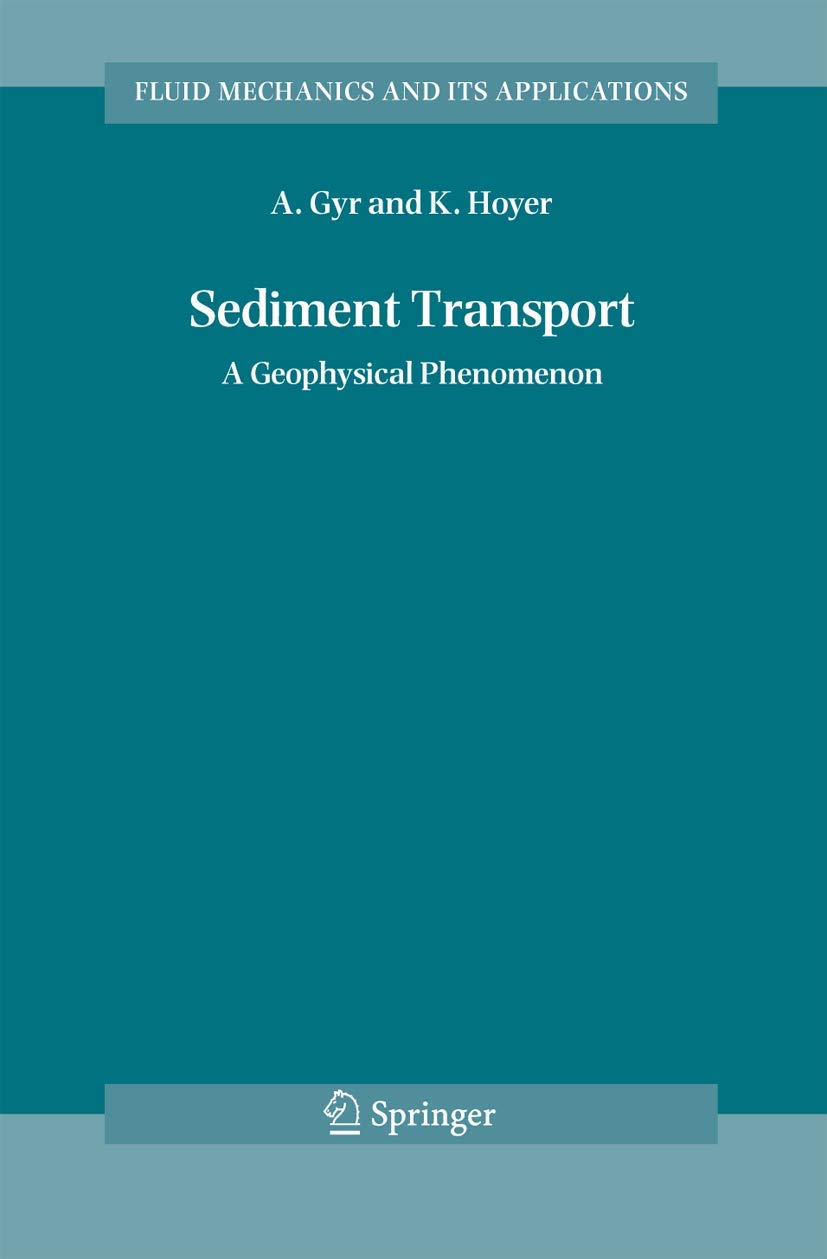
A major part of this sediment transport representation closely follows the progress made in understanding the interactions between a turbulent flow and transportable solid particles. Introducing new aspects found in the research of turbulent flows, this book updates the theory of sediment transport, e. g. , using new representations for flow separations, and coherent structures thought to be relevant and confronts the problem that existent theories do not relate directly the relevant quantities involved in the physical processes. A review of the complex matter suggests that a closer cooperation between engineers and physicists would benefit the problem and our concept tries to acknowledge this fact. Having this in mind the book was organized in four parts. The engineer who is interested in predicting sediment transport will find the classical as well as statistical approaches in the first part (Chaps. 14). The second part (Chaps. 58) critically reviews the most problematic issues like rheology, turbulence, topological aspects of flow separations, vortical dynamics, and scaling parameters. This part is mainly addressed to the physicist interested in the geophysical aspects of river dynamics but will also support the engineers in their decision making process, when constructing a simulation scheme. The third part (Chaps. 911) presents the sediment transport using micromechanical principles, using new results from turbulence research and introducing flow separation as the main selforganization mechanism observed in the formation of bedforms.
⚠️ WARNING (California Proposition 65):
This product may contain chemicals known to the State of California to cause cancer,
birth defects, or other reproductive harm.
For MAP (Minimum Advertised Price) violations and Intellectual Property (IP) or Trademark concerns, please contact:
support@ergodebooks.com
⚠️ California Proposition 65 Warning: Some products sold on this website may expose you to chemicals known to the State of California to cause cancer, birth defects, or other reproductive harm. For more information, visit www.P65Warnings.ca.gov.