
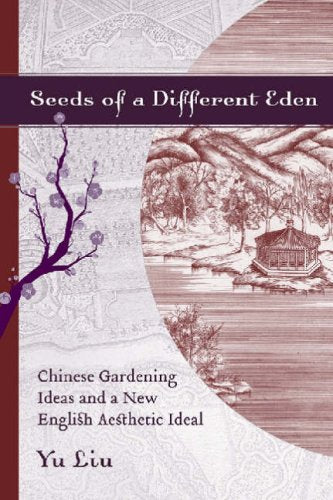
Title
Seeds Of A Different Eden: Chinese Gardening Ideas And A New English Aesthetic Ideal (Non Series)
Sold by Ergodebooks, an authorized reseller.
Returns accepted within 30 days | support@ergodebooks.com
Shipping Information
- Free Standard Shipping — United States only
- Processing Time: 3–5 business days
- Estimated Delivery: 6–10 business days after dispatch
- Double-boxed, fully insured & discreetly packaged
- Tracking number sent via email once dispatched
Returns & Refund
Returns accepted within 30 days of delivery.
Damaged or Defective Item
Free return shipping + replacement or full refund
Wrong Item Received
Free return shipping + replacement or full refund
Change of Mind
Return shipping at customer's expense · 25% restocking fee applies
Payment Option

Seeds Of A Different Eden Is A Pathbreaking Multidisciplinary Study Of The Influence Of Chinese Gardening Concepts On The English Landscaping Revolution Of The Early Eighteenth Century And The Resulting Germination Of New Theories Of Beauty And Art, Which Took Form In The Works Of Alexander Pope, Joseph Addison, And Lord Shaftesbury And Culminated In The Aesthetic Revolution Of Immanuel Kant.Beginning With The Importation Of Chinese Gardening Ideas Into England By Christian Missionaries And Other European Travelers In The Late Seventeenth Century, Liu Explores The Sources And Transmission Of Chinese Influence, From Tradegoods Imagery And Other Chinoiserie To The Conceptual Influence Of William Temple'S Sharawadgi (Studied Irregularity), Which Conveyed Appreciation Of Horticultural Naturalism If Not The Underlying Worldview. Liu Demonstrates How The Appeal Of Chineseinfluenced Unregulated Nature, Free Of Imposed Geometry And Symmetry, Gained Favor, Particularly In English Gardens Such As Moor Park And Chiswick.Liu Also Illustrates How The Chinese Aesthetic Influence Grew Beyond Horticulture To Literature, Art, And Philosophy. Pope Adopted The New Naturalistic Landscaping Ideas While Seeking To Connect Them In The Works Of Martial, Virgil, And Homer. Similarly Addison Focused His Landscape Discussion On The Idea Of Beauty Without Order And Anchored The Aesthetic Pleasure Of A Landscape To The Spiritual Rather Than The Physical World. Shaftesbury, Liu Argues, Demonstrated The Chinese Influence In His View That Contemplative Appreciation Of Wild Nature Exerts A Liberating Influence On The Spectator. And Liu Posits That The Origin Of Kant'S Idea Of Human Beings As Naturally Endowed To Do What Is Both Pleasant And Good Stems More From Eastern Than From Western Sources.Liu Presents An Original Exploration Of How Principles Of Chinese Gardening Crosspollinated European Intellectual History With A Host Of New Ideas Rooted In The Influence That Freedom In The Natural World Exerts On The Individual. His Is A Valuable Case Study In Eastwest Intellectual Interactions In The Early Modern Period With Ramifications Across The Humanities Disciplines.
⚠️ WARNING (California Proposition 65):
This product may contain chemicals known to the State of California to cause cancer, birth defects, or other reproductive harm.
For more information, please visit www.P65Warnings.ca.gov.
- Q: How many pages does this book have? A: This book has two hundred eight pages. It provides a thorough exploration of Chinese gardening and its influence on English aesthetics.
- Q: What is the binding type of this book? A: The book is hardcover. This type of binding ensures durability and a premium feel.
- Q: What are the dimensions of this book? A: The dimensions are six inches in length, zero point seventy-five inches in width, and nine point zero two inches in height. This makes it a convenient size for reading.
- Q: Who is the author of this book? A: The author is Yu Liu. He presents a multidisciplinary study of the influence of Chinese gardening concepts.
- Q: What genre does this book belong to? A: This book belongs to the Landscape genre. It discusses gardening concepts and aesthetic ideals.
- Q: What themes are explored in this book? A: The book explores themes of cultural influence, aesthetic evolution, and the intersection of Eastern and Western philosophies.
- Q: How can I apply the ideas in this book to my gardening? A: You can apply the ideas by incorporating unregulated natural aesthetics and appreciating irregularity in your garden design. The book offers insights into creating a more natural landscape.
- Q: Is this book suitable for beginners in gardening? A: Yes, the book is suitable for beginners. It provides foundational concepts and historical context that can enhance your gardening knowledge.
- Q: What age group is this book appropriate for? A: This book is appropriate for adults and older teens interested in landscape architecture and gardening history.
- Q: How should I store this book to keep it in good condition? A: Store the book in a cool, dry place away from direct sunlight. Keeping it upright on a shelf will also help maintain its shape.
- Q: Can I clean the cover of this book? A: Yes, you can clean the cover with a dry cloth. Avoid using water or cleaners that may damage the surface.
- Q: What if the book arrives damaged? A: If the book arrives damaged, you should contact the seller for a return or replacement. Most sellers have policies in place for such issues.
- Q: Is there a warranty on this book? A: No, books typically do not come with a warranty. However, you should check the seller's return policy for any specific coverage.
- Q: How does this book compare to other gardening books? A: This book uniquely combines Eastern and Western gardening philosophies, setting it apart from other gardening literature that may focus solely on one tradition.
- Q: What makes this book a valuable resource? A: The book is valuable for its original exploration of Chinese influence on European gardening and its impact on aesthetic theories.