
Title
Seeds of the Pomegranate,Used
Sold by Ergodebooks, an authorized reseller.
Returns accepted within 30 days | support@ergodebooks.com
Shipping Information
- Free Standard Shipping — United States only
- Processing Time: 3–5 business days
- Estimated Delivery: 6–10 business days after dispatch
- Double-boxed, fully insured & discreetly packaged
- Tracking number sent via email once dispatched
Returns & Refund
Returns accepted within 30 days of delivery.
Damaged or Defective Item
Free return shipping + replacement or full refund
Wrong Item Received
Free return shipping + replacement or full refund
Change of Mind
Return shipping at customer's expense · 25% restocking fee applies
Payment Option

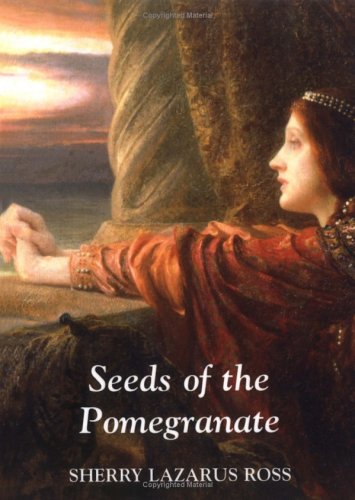
POET magazine says of Ms. Ross' poetry that she is able to 'extend the everyday moment into deep mythology, using the commonplace as an avenue into the emotions.' In SEEDS OF THE POMEGRANATE, Sherry uses the ancient Greek myth of Persephone as a metaphor for her own life. In the myth of Persephone, which is retold in the book's forward, Persephone is abducted by Hades, the god of the underworld. Her mother, the earth goddess Demeter, is both grief stricken and enraged at her daughter's disappearance. Obsessed with finding her daughter she neglects her duties and the land dries up and becomes cold, the leaves fall from the trees, and death hunts mankind. Eventually, she confronts Hades in his world of the dead and they make a bargain. Hades has come to love Persephone and recognizes her suffering when he sees her joy in being reunited with her mother. Persephone has only eaten six seeds from the pomegranate fruit since her abduction. Demeter and Hades agree that Persephone may spend six months above ground with her mother and six months in the world of the dead with Hades. Persephone accepts the compromise and becomes both the Queen of the Underworld, sharing the throne with her husband, and a symbol of rebirth, fertility and joy, when she returns to the upper world and her mother. In SEEDS OF THE POMEGRANATE, each poems is treated as a seed of this fruit on which the bargain was made. The poems moves from summer to fall and contain the nostalgic sense of loss we all sometimes feel in our lives: losses both concrete and hard to define. The winter poems move to the center of the book, where a few of the poems are as dark as Hades' world. Then, moving towards spring, we find healing and tenderness. Through the everyday process of loss and compromise, we can also find much to gain in growth and experience. Our relationships are fuller and we can also know joy.
⚠️ WARNING (California Proposition 65):
This product may contain chemicals known to the State of California to cause cancer, birth defects, or other reproductive harm.
For more information, please visit www.P65Warnings.ca.gov.