
Title
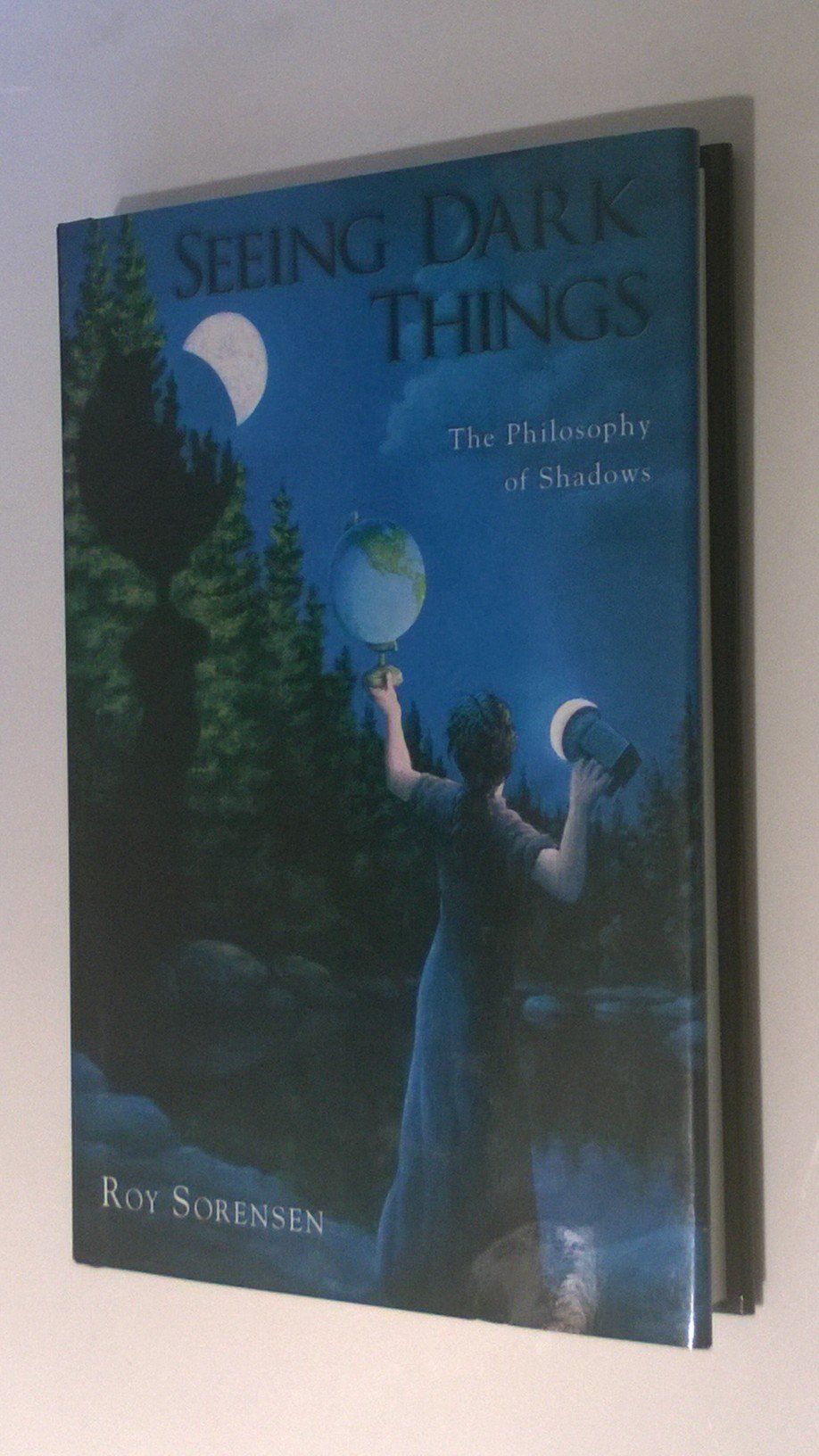
Seeing Dark Things: The Philosophy Of Shadows
Sold by Ergodebooks, an authorized reseller.
Returns accepted within 30 days | support@ergodebooks.com
Shipping Information
- Free Standard Shipping — United States only
- Processing Time: 3–5 business days
- Estimated Delivery: 6–10 business days after dispatch
- Double-boxed, fully insured & discreetly packaged
- Tracking number sent via email once dispatched
Returns & Refund
Returns accepted within 30 days of delivery.
Damaged or Defective Item
Free return shipping + replacement or full refund
Wrong Item Received
Free return shipping + replacement or full refund
Change of Mind
Return shipping at customer's expense · 25% restocking fee applies
Payment Option

If a spinning disk casts a round shadow does this shadow also spin? When you experience the total blackness of a cave, are you seeing in the dark? Or are you merely failing to see anything (just like your blind companion)?Seeing Dark Things uses visual riddles to explore our ability to see shadows, silhouettes, and black birdsplus some things that are only metaphorically 'dark' such as holes. These dark things are anomalies for the causal theory of perception which states that anything we see must be a cause of what we see. This orthodoxy successfully explains why you see the front of this page rather than its rear. However, the causal theory has trouble explaining how you manage to see the black letters on this page. The letters are made visible by the light they fail to reflect rather than the light they reflect.Nevertheless, Roy Sorensen defends the causal theory of perception by treating absences as causes. His fourteen chapters draw heavily on common sense and psychology to vindicate the assumption that we directly perceive absences.Seeing Dark Things is philosophy for the eye. It contains fiftynine figures designed to prompt visual judgment. Sorensen proceeds bottomup from observation rather than topdown from theory. He regards detailed analysis of absences as premature; he hopes a future theory will refine the pictorial thinking stimulated by the book's riddles. Just as the biologist pursues genetics with fruit flies, the metaphysician can study absences by means of shadows.Shadows are metaphysical amphibians with one foot on the terra firma of common sense and the other in the murky waters of nonbeing. Sorensen portrays the causal theory of perception's confrontation with the shadows as a triumph against alien attacka victory that deepens a theory that resonates so strongly with common sense and science. In sum, Seeing Dark Things is an unorthodox defense of an orthodox theory.
⚠️ WARNING (California Proposition 65):
This product may contain chemicals known to the State of California to cause cancer, birth defects, or other reproductive harm.
For more information, please visit www.P65Warnings.ca.gov.