
Title
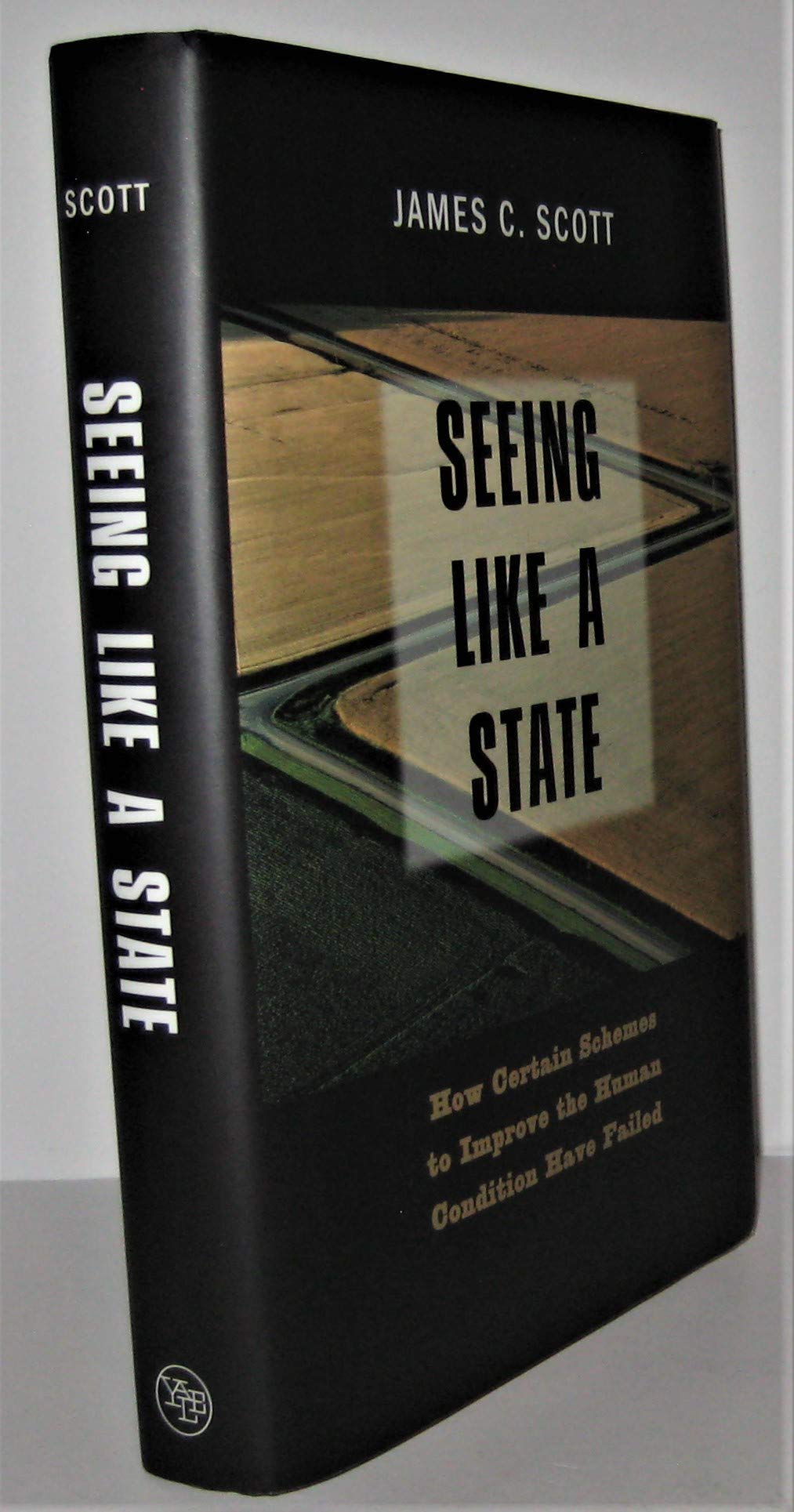
Seeing Like A State: How Certain Schemes To Improve The Human Condition Have Failed (The Institution For Social And Policy St)
Sold by Ergodebooks, an authorized reseller.
Returns accepted within 30 days | support@ergodebooks.com
Shipping Information
- Free Standard Shipping — United States only
- Processing Time: 3–5 business days
- Estimated Delivery: 6–10 business days after dispatch
- Double-boxed, fully insured & discreetly packaged
- Tracking number sent via email once dispatched
Returns & Refund
Returns accepted within 30 days of delivery.
Damaged or Defective Item
Free return shipping + replacement or full refund
Wrong Item Received
Free return shipping + replacement or full refund
Change of Mind
Return shipping at customer's expense · 25% restocking fee applies
Payment Option

Why Have Largescale Schemes To Improve The Human Condition In The Twentieth Century So Often Gone Awry? James C. Scott Analyzes Diverse Failures In Highmodernist, Authoritarian State Planningcollectivization In Russia, The Building Of Brasilia, Compulsory Ujamaa Villages In Tanzania, And Othersand Uncovers Conditions Common To All Such Planning Disasters. What These Failures Teach Us, He Argues, Is That Any Centrally Managed Social Plan Must Recognize The Importance Of Local Customs And Practical Knowledge If It Hopes To Succeed.
⚠️ WARNING (California Proposition 65):
This product may contain chemicals known to the State of California to cause cancer, birth defects, or other reproductive harm.
For more information, please visit www.P65Warnings.ca.gov.
- Q: How many pages does the book have? A: This book contains four hundred sixty-four pages. It offers a comprehensive analysis of social planning failures.
- Q: What are the dimensions of this book? A: The book measures six and a half inches in length, one point twenty-six inches in width, and nine and a half inches in height.
- Q: What is the binding type of this book? A: This book is bound in hardcover. Hardcover bindings provide durability and a professional appearance.
- Q: Who is the author of this book? A: The author is Professor James C. Scott. He is known for his work on social theory and political science.
- Q: What genre does this book belong to? A: This book falls under the category of Psychology and Counseling. It explores themes related to social planning and human condition.
- Q: What is the main topic of 'Seeing Like a State'? A: The main topic addresses the failures of large-scale schemes aimed at improving human conditions. The author analyzes various historical planning disasters.
- Q: Is this book suitable for general readers? A: Yes, this book is suitable for general readers interested in social studies and political theory. It is accessible yet thought-provoking.
- Q: How can I apply the insights from this book? A: You can apply the insights by understanding the importance of local customs in any social plan. The book encourages critical thinking about top-down approaches.
- Q: What age group is this book appropriate for? A: This book is appropriate for adults and college students. Its themes are complex and may require prior knowledge of social theory.
- Q: How should I store this book? A: Store this book in a dry, cool place, upright on a shelf. Avoid exposure to direct sunlight to prevent damage to the cover.
- Q: Can I read this book if I am new to social theory? A: Yes, you can read this book even if you are new to social theory. It provides a foundational understanding of the subject.
- Q: What is the best way to keep this book in good condition? A: To keep this book in good condition, handle it carefully and avoid bending the spine. Use bookmarks instead of folding pages.
- Q: Is there a warranty or guarantee for the book? A: No, typically books do not come with a warranty. However, check the return policy of the retailer for specific conditions.
- Q: What should I do if the book arrives damaged? A: If the book arrives damaged, contact the retailer's customer service for return instructions. Most retailers will offer a replacement.
- Q: How does this book compare to other works in social theory? A: This book is unique as it combines historical analysis with practical insights. It is often compared to works that focus on political economy.
- Q: Are there any supplementary materials with this book? A: No, this book does not come with supplementary materials. It stands alone as an in-depth study of its subject.