
Title
Seeing What Others Don't,New
Sold by Ergodebooks, an authorized reseller.
Returns accepted within 30 days | support@ergodebooks.com
Shipping Information
- Free Standard Shipping — United States only
- Processing Time: 3–5 business days
- Estimated Delivery: 6–10 business days after dispatch
- Double-boxed, fully insured & discreetly packaged
- Tracking number sent via email once dispatched
Returns & Refund
Returns accepted within 30 days of delivery.
Damaged or Defective Item
Free return shipping + replacement or full refund
Wrong Item Received
Free return shipping + replacement or full refund
Change of Mind
Return shipping at customer's expense · 25% restocking fee applies
Payment Option

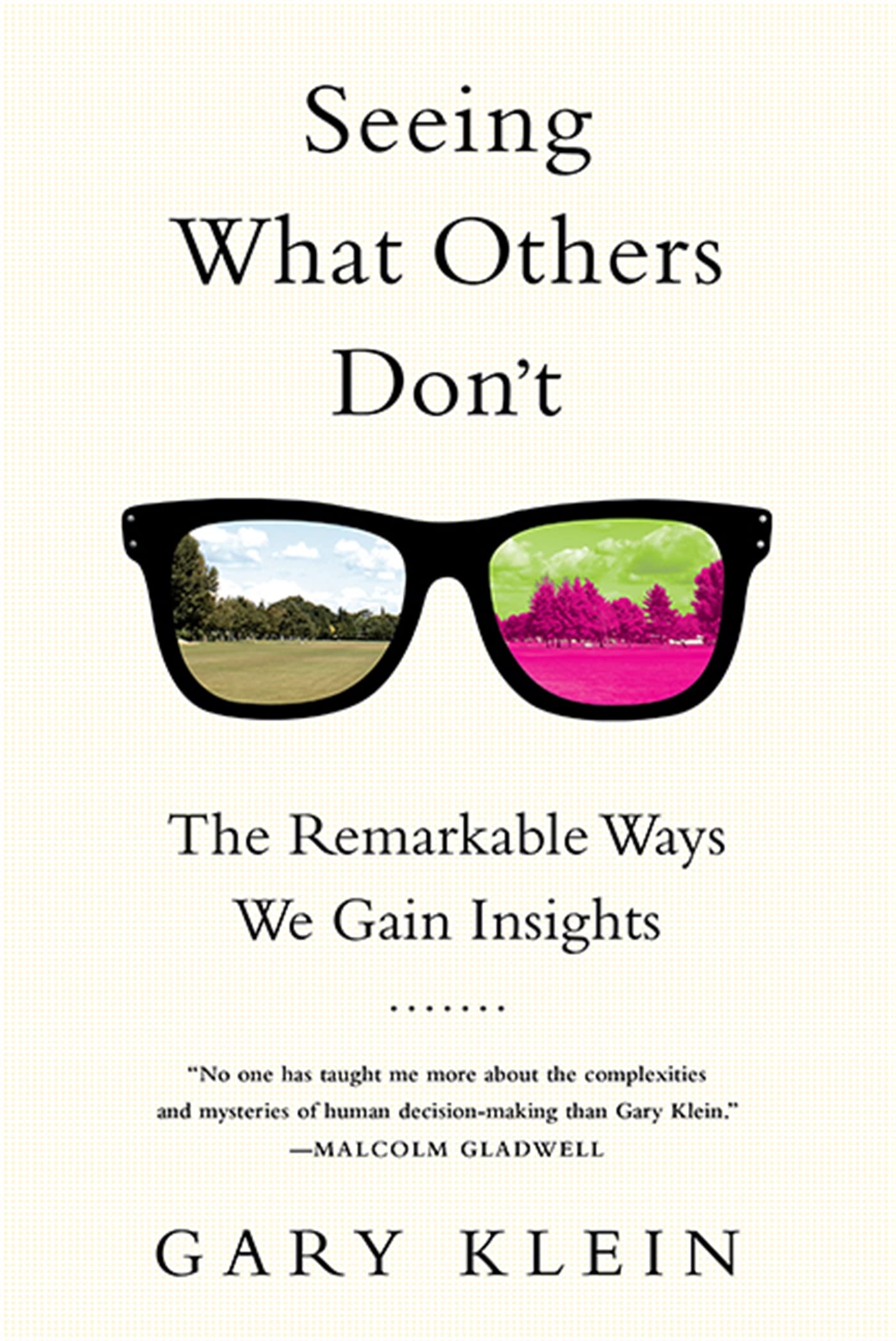
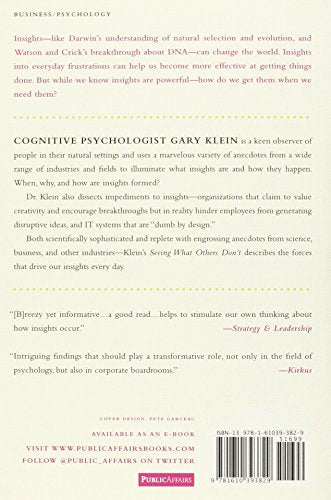
Insights like Darwin's understanding of the way evolution actually works, and Watson and Crick's breakthrough discoveries about the structure of DNA can change the world. We also need insights into the everyday things that frustrate and confuse us so that we can more effectively solve problems and get things done. Yet we know very little about when, why, or how insights are formed or what blocks them. In Seeing What Others Don't, renowned cognitive psychologist Gary Klein unravels the mystery.Klein is a keen observer of people in their natural settings scientists, businesspeople, firefighters, police officers, soldiers, family members, friends, himself and uses a marvelous variety of stories to illuminate his research into what insights are and how they happen. What, for example, enabled Harry Markopolos to put the finger on Bernie Madoff? How did Dr. Michael Gottlieb make the connections between different patients that allowed him to publish the first announcement of the AIDS epidemic? What did Admiral Yamamoto see (and what did the Americans miss) in a 1940 British attack on the Italian fleet that enabled him to develop the strategy of attack at Pearl Harbor? How did a 'smokejumper' see that setting another fire would save his life, while those who ignored his insight perished? How did Martin Chalfie come up with a milliondollar idea (and a Nobel Prize) for a natural flashlight that enabled researchers to look inside living organisms to watch biological processes in action?Klein also dissects impediments to insight, such as when organizations claim to value employee creativity and to encourage breakthroughs but in reality block disruptive ideas and prioritize avoidance of mistakes. Or when information technology systems are 'dumb by design' and block potential discoveries.Both scientifically sophisticated and fun to read, Seeing What Others Don't shows that insight is not just a 'eureka!' moment but a whole new way of understanding.
⚠️ WARNING (California Proposition 65):
This product may contain chemicals known to the State of California to cause cancer, birth defects, or other reproductive harm.
For more information, please visit www.P65Warnings.ca.gov.
- Q: What is the main theme of 'Seeing What Others Don't'? A: 'Seeing What Others Don't' explores the complexities of human decision-making and the process of gaining insights that can lead to significant breakthroughs in understanding and problem-solving.
- Q: Who is the author of this book? A: The author is Gary Klein, a renowned cognitive psychologist known for his research on decision-making and insights.
- Q: How many pages does 'Seeing What Others Don't' have? A: The book contains 304 pages.
- Q: What is the publication date of this book? A: 'Seeing What Others Don't' was published on March 24, 2015.
- Q: What format is the book available in? A: The book is available in paperback format.
- Q: Is 'Seeing What Others Don't' suitable for all readers? A: Yes, the book is both scientifically sophisticated and accessible, making it suitable for a wide range of readers interested in psychology, decision-making, and personal development.
- Q: What are some key insights discussed in the book? A: The book discusses various insights related to decision-making, creativity, and the barriers that can prevent individuals and organizations from achieving breakthroughs.
- Q: Does the book provide real-life examples? A: Yes, Gary Klein uses a variety of stories from different fields such as science, business, and emergency services to illustrate his research on insights.
- Q: What category does this book fall under? A: 'Seeing What Others Don't' falls under the category of Motivation & Self-Improvement.
- Q: Can this book help improve my decision-making skills? A: Absolutely, the insights and stories shared in the book can help readers understand how to recognize and cultivate their own insights, potentially improving their decision-making skills.