
Title
Selecting International Judges: Principle, Process, and Politics (International Courts and Tribunals Series),Used
Sold by Ergodebooks, an authorized reseller.
Returns accepted within 30 days | support@ergodebooks.com
Shipping Information
- Free Standard Shipping — United States only
- Processing Time: 3–5 business days
- Estimated Delivery: 6–10 business days after dispatch
- Double-boxed, fully insured & discreetly packaged
- Tracking number sent via email once dispatched
Returns & Refund
Returns accepted within 30 days of delivery.
Damaged or Defective Item
Free return shipping + replacement or full refund
Wrong Item Received
Free return shipping + replacement or full refund
Change of Mind
Return shipping at customer's expense · 25% restocking fee applies
Payment Option

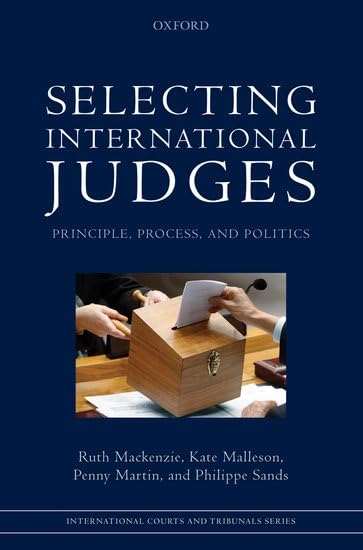
This book examines the way international court judges are chosen. Focusing principally on the judicial selection procedures of the International Court of Justice and International Criminal Court, it provides the first detailed examination of how the selection process works in practice at national and international levels: what factors determine whether a state will nominate a candidate? How is a candidate identified? What factors influence success or failure? What are the respective roles of merit, politics, and other considerations in the nomination and election process?The research was based on interviews, case studies and survey data in a range of different states. It concludes that although the nature and quality of nomination and election processes vary widely, a common theme indicates the powerful influence of domestic and international political considerations, and the significant role of a small group of diplomats, civil servants, lawyers, and academics, often without transparency or accountability. The processes allow overt political considerations to be introduced throughout the decisionmaking process in ways that may detract from the selection of the most highly qualified candidates and, ultimately, undermine independence. This is particularly evident in the election campaigning that has become a defining feature of the selection process, accompanied by widespread vote trading and reciprocal agreements between states. The effect of these practices is often to undermine the role of statutory selection criteria and to favour candidates from more politically powerful states. The book reviews new judicial selection models adopted or proposed in other international and regional courts, and considers a number of proposals for change to promote more independent, transparent, and meritbased nomination and election procedures.
⚠️ WARNING (California Proposition 65):
This product may contain chemicals known to the State of California to cause cancer, birth defects, or other reproductive harm.
For more information, please visit www.P65Warnings.ca.gov.