If you have any questions, you are always welcome to contact us. We'll get back to you as soon as possible, withing 24 hours on weekdays.
Customer service
All questions about your order, return and delivery must be sent to our customer service team by e-mail at yourstore@yourdomain.com
Sale & Press
If you are interested in selling our products, need more information about our brand or wish to make a collaboration, please contact us at press@yourdomain.com
Help
If you have any questions, you are always welcome to contact us. We'll get back to you as soon as possible, withing 24 hours on weekdays.
Customer service
All questions about your order, return and delivery must be sent to our customer service team by e-mail at yourstore@yourdomain.com
Sale & Press
If you are interested in selling our products, need more information about our brand or wish to make a collaboration, please contact us at press@yourdomain.com
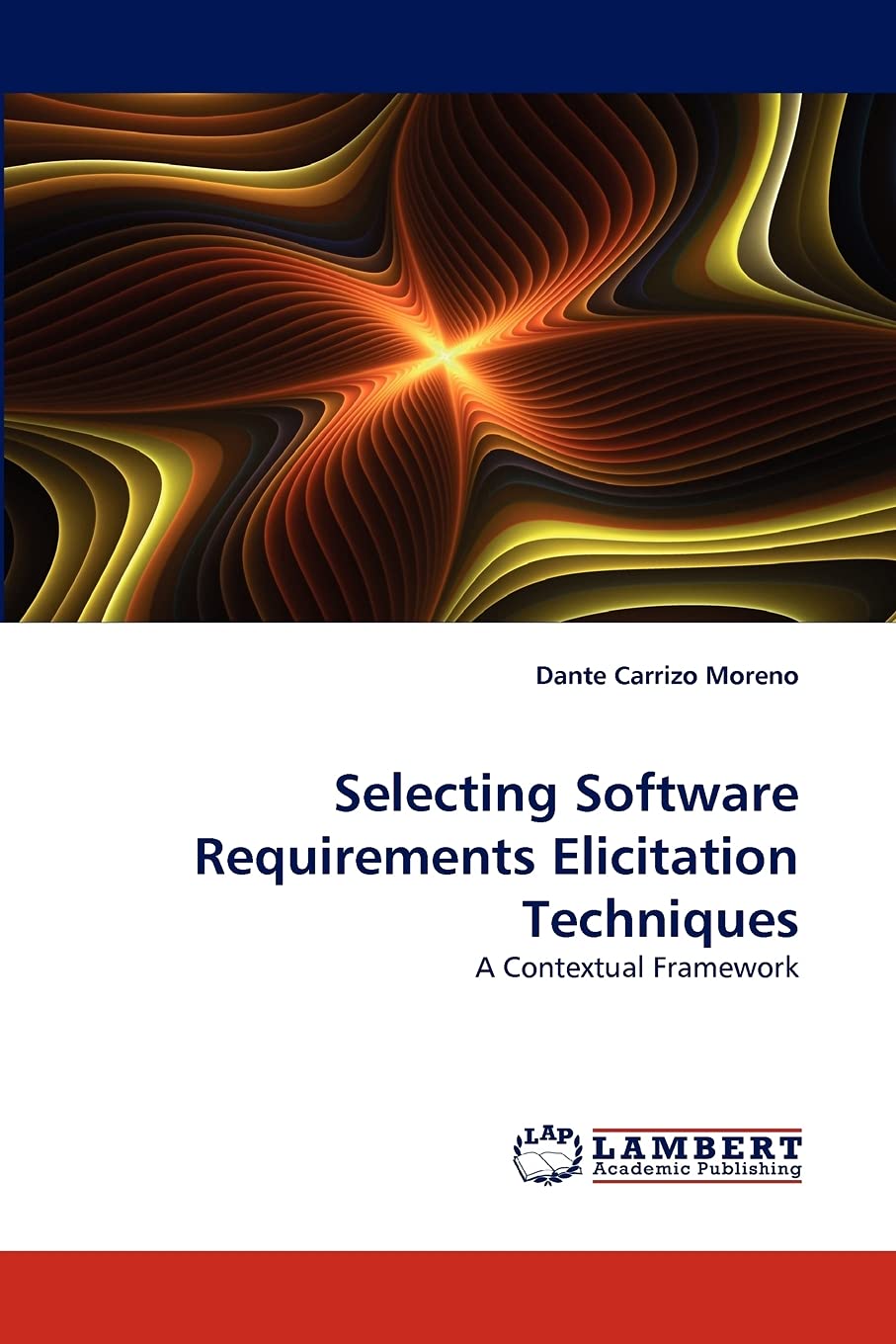
Nowadays, software developers recurrently have to decide how to elicit requirements information from product development stakeholders. Even though they appreciate the importance of requirements elicitation, they still select techniques subjectively. This is due to the fact that they have limited knowledge of how many techniques are currently available and to that the information available about existing elicitation techniques is mostly descriptive and there is hardly any pragmatic or prescriptive information. This book addresses how to select the best requirements elicitation techniques at any time in the process. To this, it proposes a framework with three components: the contextual attributes affecting technique effectiveness; adequacy of the elicitation techniques, that is, prescriptions on use for the attribute values; and selection procedures that suggest, after determining the contextual situation, techniques for use in the next elicitation session subject to technique adequacy. In sum, this book provides a practical insight to help developers systematically and objectively select requirements elicitation techniques for a software project.
⚠️ WARNING (California Proposition 65):
This product may contain chemicals known to the State of California to cause cancer,
birth defects, or other reproductive harm.
For MAP (Minimum Advertised Price) violations and Intellectual Property (IP) or Trademark concerns, please contact:
support@ergodebooks.com
⚠️ California Proposition 65 Warning: Some products sold on this website may expose you to chemicals known to the State of California to cause cancer, birth defects, or other reproductive harm. For more information, visit www.P65Warnings.ca.gov.