
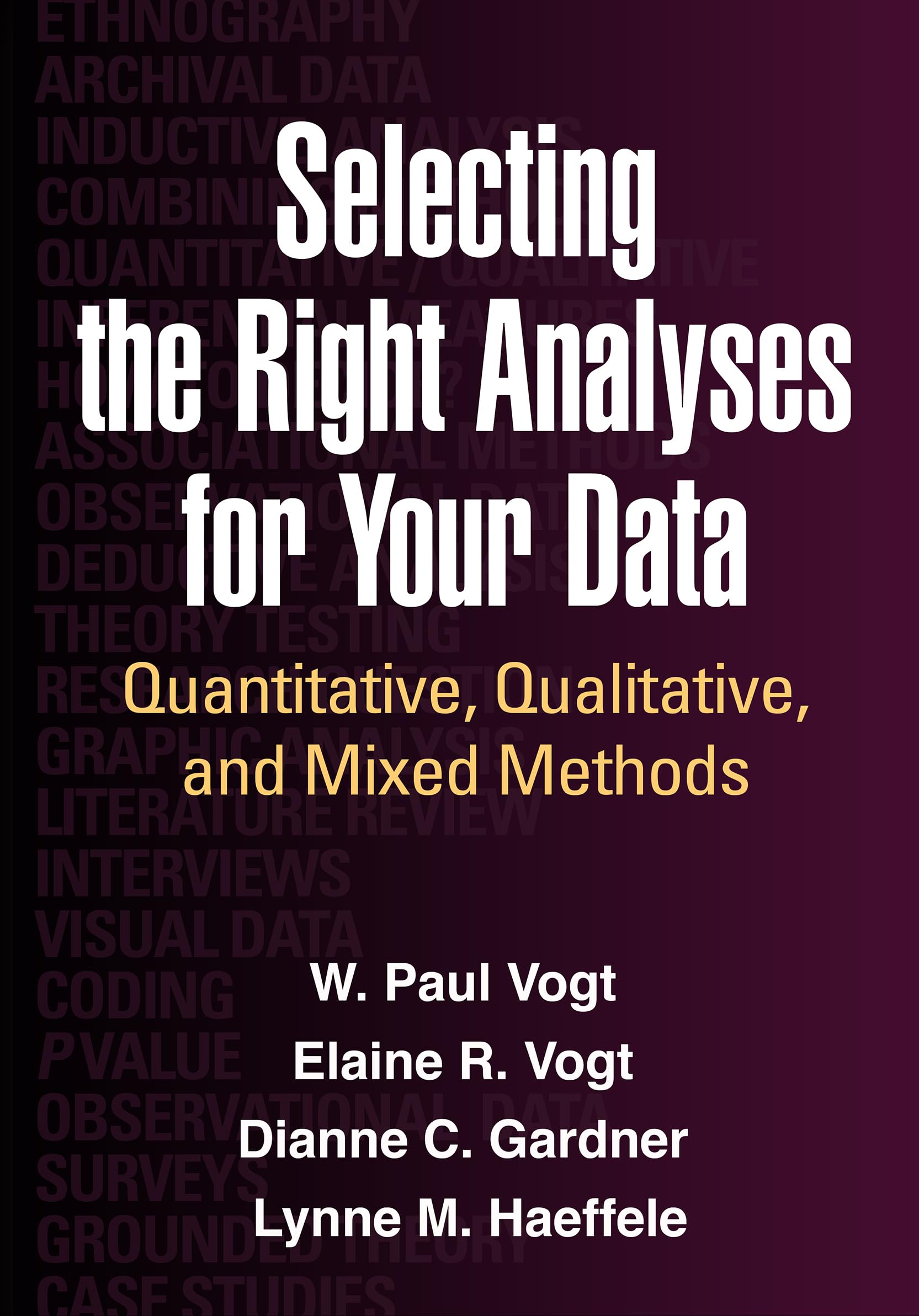
Title
Selecting the Right Analyses for Your Data: Quantitative, Qualitative, and Mixed Methods,New
Sold by Ergodebooks, an authorized reseller.
Returns accepted within 30 days | support@ergodebooks.com
Shipping Information
- Free Standard Shipping — United States only
- Processing Time: 3–5 business days
- Estimated Delivery: 6–10 business days after dispatch
- Double-boxed, fully insured & discreetly packaged
- Tracking number sent via email once dispatched
Returns & Refund
Returns accepted within 30 days of delivery.
Damaged or Defective Item
Free return shipping + replacement or full refund
Wrong Item Received
Free return shipping + replacement or full refund
Change of Mind
Return shipping at customer's expense · 25% restocking fee applies
Payment Option

What are the most effective methods to code and analyze data for a particular study? This thoughtful and engaging book reviews the selection criteria for coding and analyzing any set of datawhether qualitative, quantitative, mixed, or visual. The authors systematically explain when to use verbal, numerical, graphic, or combined codes, and when to use qualitative, quantitative, graphic, or mixedmethods modes of analysis. Chapters on each topic are organized so that researchers can read them sequentially or can easily 'flip and find' answers to specific questions. Nontechnical discussions of cuttingedge approachesillustrated with realworld examplesemphasize how to choose (rather than how to implement) the various analyses. The book shows how using the right analysis methods leads to more justifiable conclusions and more persuasive presentations of research results.UserFriendly Features*Chapteropening preview boxes that highlight useful topics addressed.*Endofchapter summary tables recapping the 'dos and don'ts' and advantages and disadvantages of each analytic technique.*Annotated suggestions for further reading and technical resources on each topic.See also Vogt et al.'s When to Use What Research Design, which addresses the design and sampling decisions that occur prior to data collection.
⚠️ WARNING (California Proposition 65):
This product may contain chemicals known to the State of California to cause cancer, birth defects, or other reproductive harm.
For more information, please visit www.P65Warnings.ca.gov.
- Q: What is the main focus of the book 'Selecting the Right Analyses for Your Data'? A: The book focuses on guiding researchers in selecting the most effective methods to code and analyze data, whether it is qualitative, quantitative, mixed, or visual.
- Q: Who are the authors of this book? A: The book is authored by W. Paul Vogt.
- Q: What types of analysis methods does the book cover? A: The book covers verbal, numerical, graphic, and combined codes, along with qualitative, quantitative, graphic, and mixed-methods modes of analysis.
- Q: How is the content organized in the book? A: Chapters are organized sequentially but also allow for easy 'flipping' to find answers to specific questions.
- Q: What user-friendly features does the book include? A: The book includes chapter-opening preview boxes, end-of-chapter summary tables, and annotated suggestions for further reading.
- Q: What is the publication date of this book? A: The book was published on July 2, 2014.
- Q: What is the condition of the book? A: The book is in new condition.
- Q: How many pages does the book have? A: The book contains 500 pages.
- Q: Is this book suitable for beginners in research? A: Yes, the nontechnical discussions and real-world examples make it accessible for beginners.
- Q: Are there any recommendations for further reading included in the book? A: Yes, the book provides annotated suggestions for further reading and technical resources on each topic.