
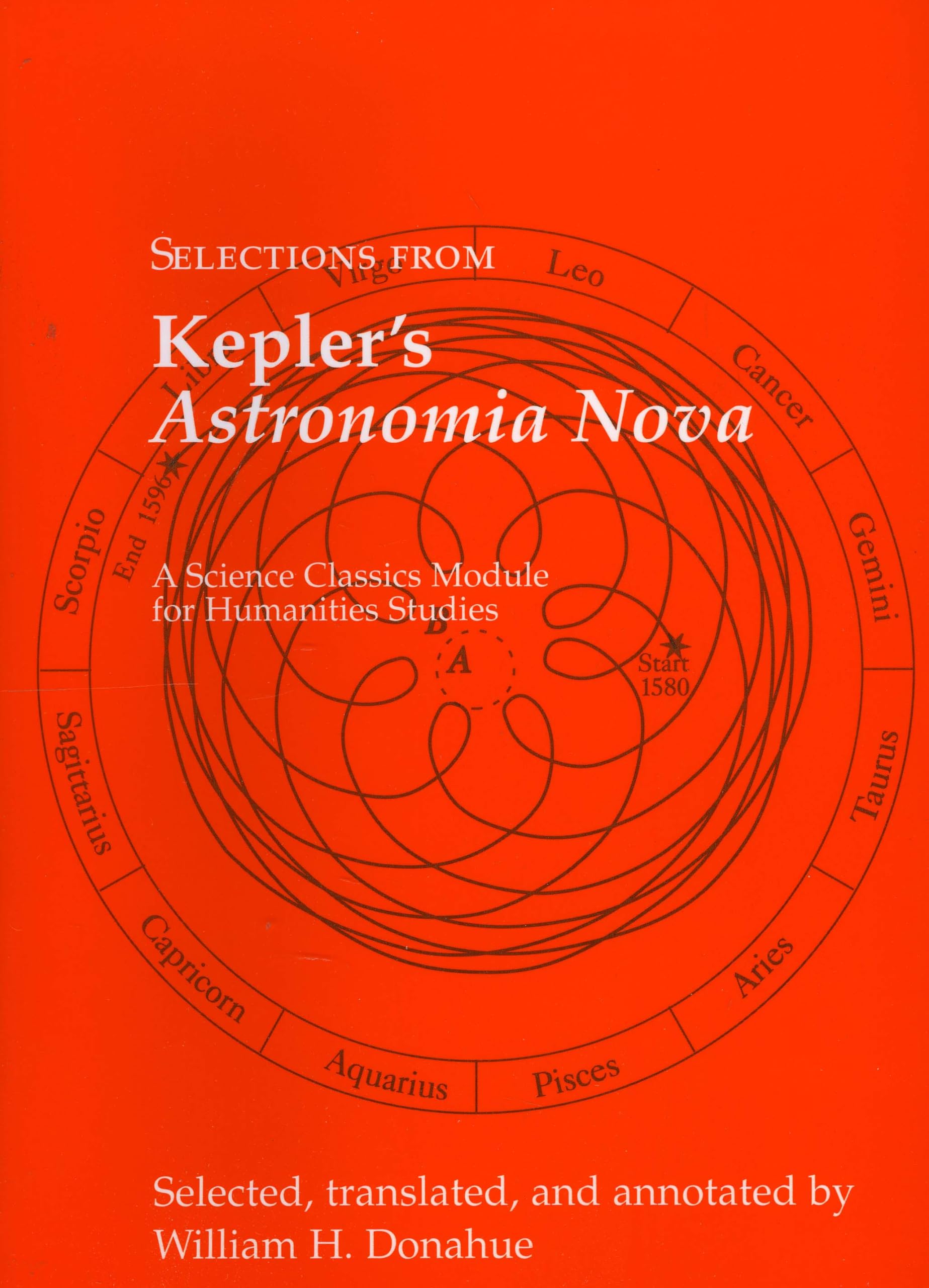
Title
Selections from Kepler's Astronomia Nova (Science Classics Module for Humanities Studies),New
Sold by Ergodebooks, an authorized reseller.
Returns accepted within 30 days | support@ergodebooks.com
Shipping Information
- Free Standard Shipping — United States only
- Processing Time: 3–5 business days
- Estimated Delivery: 6–10 business days after dispatch
- Double-boxed, fully insured & discreetly packaged
- Tracking number sent via email once dispatched
Returns & Refund
Returns accepted within 30 days of delivery.
Damaged or Defective Item
Free return shipping + replacement or full refund
Wrong Item Received
Free return shipping + replacement or full refund
Change of Mind
Return shipping at customer's expense · 25% restocking fee applies
Payment Option

Johannes Kepler wrote Astronomia Nova (1609) in a singleminded drive to sweep away the ancient and medieval clutter of spheres and orbs and to establish a new truth in astronomy, based on physical causality. Thus a good part of the book is given over to a nontechnical discussion of how planets can be made to move through space by physical forces. This is the theme of the readings in the present module. The selection includes Kepler's Introduction as well as a selection of chapters that develop the physics of planetary motion. In these groundbreaking chapters, the true Kepler emerges, not as a speculative mystic or a numbercrunching drudge, but as a firstrate scientific thinker with a wonderfully engaging narrative style.
⚠️ WARNING (California Proposition 65):
This product may contain chemicals known to the State of California to cause cancer, birth defects, or other reproductive harm.
For more information, please visit www.P65Warnings.ca.gov.
- Q: What is the main focus of Johannes Kepler's Astronomia Nova? A: The main focus of Astronomia Nova is to establish a new truth in astronomy based on physical causality, moving away from ancient and medieval models of celestial spheres.
- Q: What can I expect to learn from the selected readings in this module? A: The selected readings include a nontechnical discussion on planetary motion and physical forces, showcasing Kepler's scientific thinking and narrative style.
- Q: Is this book suitable for someone without a background in science? A: Yes, the book is designed to be accessible to readers without a technical background, with a focus on engaging narrative rather than complex mathematics.
- Q: What is the condition of the book being sold? A: The book is listed as a 'Used Book in Good Condition,' indicating it has been pre-owned but remains in a satisfactory state for reading.
- Q: How many pages does the book have? A: The book has a total of 120 pages.
- Q: What is the binding type of this book? A: The book is available in paperback binding.
- Q: When was this edition of the book published? A: This edition of the book was published on March 1, 2005.
- Q: Who is the author of Selections from Kepler's Astronomia Nova? A: The author of the book is Johannes Kepler.
- Q: What topics are specifically covered in the chapters selected for this module? A: The selected chapters cover the physics of planetary motion and Kepler's introduction to his theories.
- Q: Is this book part of a larger series or module? A: Yes, this book is a part of the Science Classics Module for Humanities Studies.