
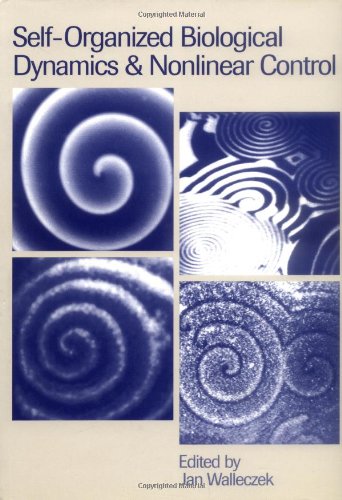
Title
Selforganized Biological Dynamics And Nonlinear Control: Toward Understanding Complexity, Chaos And Emergent Function In Living,Used
Sold by Ergodebooks, an authorized reseller.
Returns accepted within 30 days | support@ergodebooks.com
Shipping Information
- Free Standard Shipping — United States only
- Processing Time: 3–5 business days
- Estimated Delivery: 6–10 business days after dispatch
- Double-boxed, fully insured & discreetly packaged
- Tracking number sent via email once dispatched
Returns & Refund
Returns accepted within 30 days of delivery.
Damaged or Defective Item
Free return shipping + replacement or full refund
Wrong Item Received
Free return shipping + replacement or full refund
Change of Mind
Return shipping at customer's expense · 25% restocking fee applies
Payment Option

The Growing Impact Of Nonlinear Science On Biology And Medicine Is Fundamentally Changing Our View Of Living Organisms And Disease Processes. This Book Introduces The Application To Biomedicine Of A Broad Range Of Concepts From Nonlinear Dynamics, Such As Selforganization, Complexity, Coherence, Stochastic Resonance, Fractals, And Chaos. Written By Leading Figures In The Field, Coverage Details Experimental And Theoretical Research, As Well As The Emerging Technological Possibilities Such As Nonlinear Control Techniques For Treating Pathological Biodynamics, Including Heart Arrhythmias And Epilepsy. Selforganized Biological Dynamics And Nonlinear Control Will Attract The Interest Of Professionals And Students From A Wide Range Of Disciplines, Including Physicists, Chemists, Biologists, Sensory Physiologists And Medical Researchers Such As Cardiologists, Neurologists And Biomedical Engineers.
⚠️ WARNING (California Proposition 65):
This product may contain chemicals known to the State of California to cause cancer, birth defects, or other reproductive harm.
For more information, please visit www.P65Warnings.ca.gov.
- Q: What is the length, width, and height of the book? A: The book measures seven point zero one inches in length, one inch in width, and nine point five inches in height.
- Q: How many pages does the book have? A: The book contains four hundred forty-two pages.
- Q: What type of binding does this book have? A: This book is bound in hardcover.
- Q: Who is the author of the book? A: The author of the book is Jan Walleczek.
- Q: What is the main subject of the book? A: The book focuses on nonlinear science as it relates to biology and medicine.
- Q: Is this book suitable for beginners in biology? A: Yes, this book is suitable for both professionals and students in various disciplines.
- Q: How can I apply the concepts from this book? A: The concepts can be applied to fields like biomedicine, addressing issues like heart arrhythmias and epilepsy.
- Q: Is this book appropriate for medical researchers? A: Yes, the book is designed for medical researchers, including cardiologists and neurologists.
- Q: How do I care for this book to keep it in good condition? A: To keep the book in good condition, store it upright in a cool, dry place away from direct sunlight.
- Q: Is this book safe for children? A: No, this book is primarily aimed at professionals and students in advanced fields of study.
- Q: What should I do if the book arrives damaged? A: If the book arrives damaged, contact the seller for a return or exchange policy.
- Q: Can I return the book if I change my mind? A: Return policies vary by seller, so check the specific return policy before purchasing.
- Q: Does this book include experimental research? A: Yes, it covers both experimental and theoretical research in the field of nonlinear dynamics.
- Q: What kind of readers will find this book useful? A: Physicists, chemists, biologists, and medical researchers will find this book particularly useful.
- Q: Is this book part of a series or standalone? A: This book appears to be a standalone title, focusing on its specific subject matter.
- Q: What are some key topics discussed in the book? A: Key topics include self-organization, complexity, coherence, stochastic resonance, and chaos.