
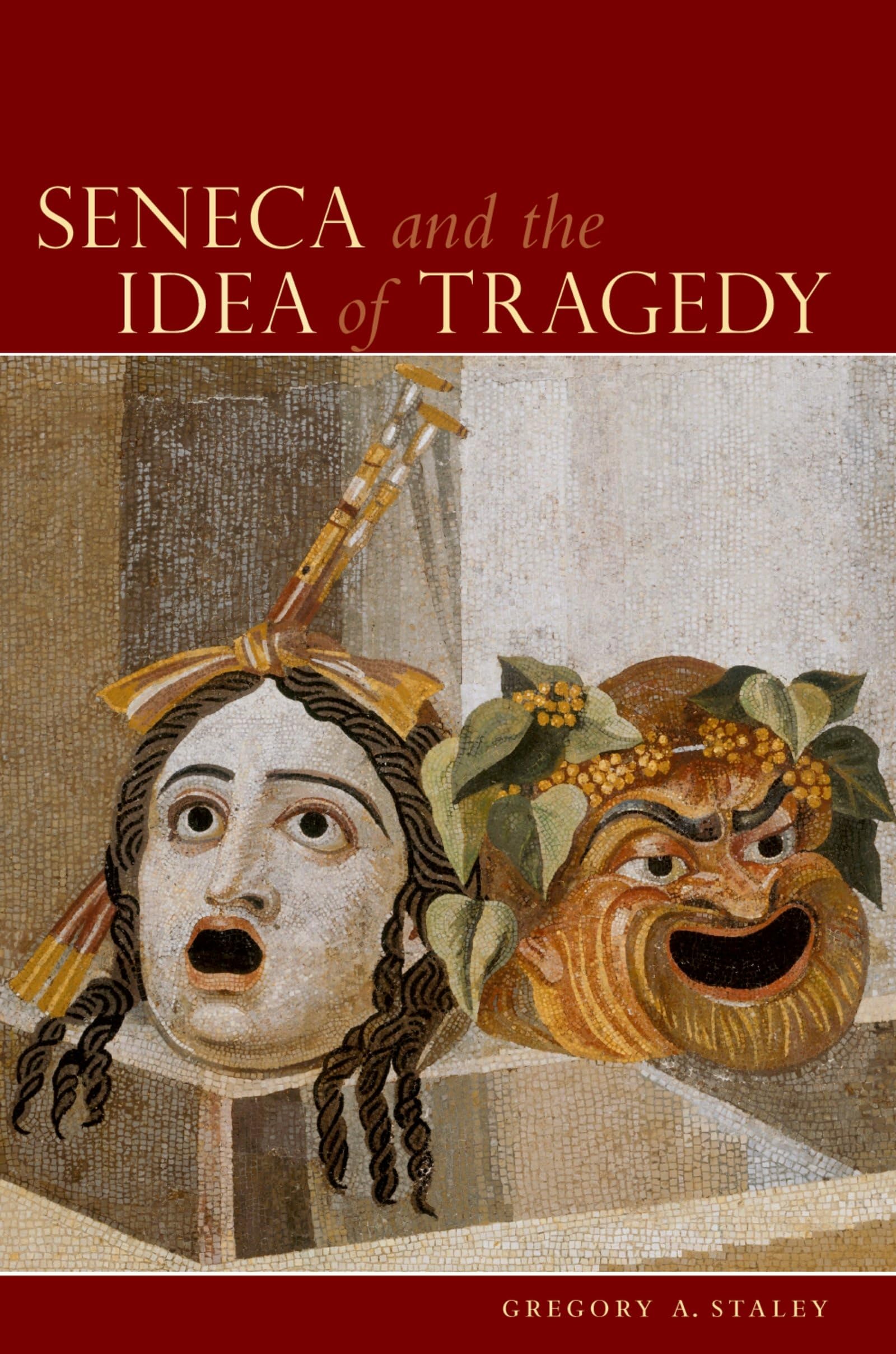
Title
Seneca and the Idea of Tragedy,New
Sold by Ergodebooks, an authorized reseller.
Returns accepted within 30 days | support@ergodebooks.com
Shipping Information
- Free Standard Shipping — United States only
- Processing Time: 3–5 business days
- Estimated Delivery: 6–10 business days after dispatch
- Double-boxed, fully insured & discreetly packaged
- Tracking number sent via email once dispatched
Returns & Refund
Returns accepted within 30 days of delivery.
Damaged or Defective Item
Free return shipping + replacement or full refund
Wrong Item Received
Free return shipping + replacement or full refund
Change of Mind
Return shipping at customer's expense · 25% restocking fee applies
Payment Option

As both a literary genre and a view of life, tragedy has from the very beginning spurred a dialogue between poetry and philosophy. Plato famously banned tragedians from his ideal community because he believed that their representations of vicious behavior could deform minds. Aristotle set out to answer Plato's objections, arguing that fiction offers a faithful image of the truth and that it promotes emotional health through the mechanism of catharsis. Aristotle's definition of tragedy actually had its greatest impact not on Greek tragedy itself but on later Latin literature, beginning with the tragedies of the Roman poet and Stoic philosopher Seneca (4 BC AD 65). Scholarship over the last fifty years, however, has increasingly sought to identify in Seneca's prose writings a Platonic poetics which is antagonistic toward tragedy and which might therefore explain why Seneca's plays seem so often to present the failure of Stoicism. As Gregory Staley argues in this book, when Senecan tragedy fails to stage virtue we should see in this not the failure of Stoicism but a Stoic conception of tragedy as the right vehicle for imaging Seneca's familiar world of madmen and fools. Senecan tragedy enacts Aristotle's conception of the genre as a vivid image of the truth and treats tragedy as a natural venue in which to explore the human soul. Staley's reading of Seneca's plays draws on current scholarship about Stoicism as well as on the writings of Renaissance authors like Sir Philip Sidney, who borrowed from Seneca the word 'idea' to designate what we would now label as a 'theory' of tragedy. Seneca and the Idea of Tragedy will appeal broadly to students and scholars of classics, ancient philosophy, and English literature.
⚠️ WARNING (California Proposition 65):
This product may contain chemicals known to the State of California to cause cancer, birth defects, or other reproductive harm.
For more information, please visit www.P65Warnings.ca.gov.