
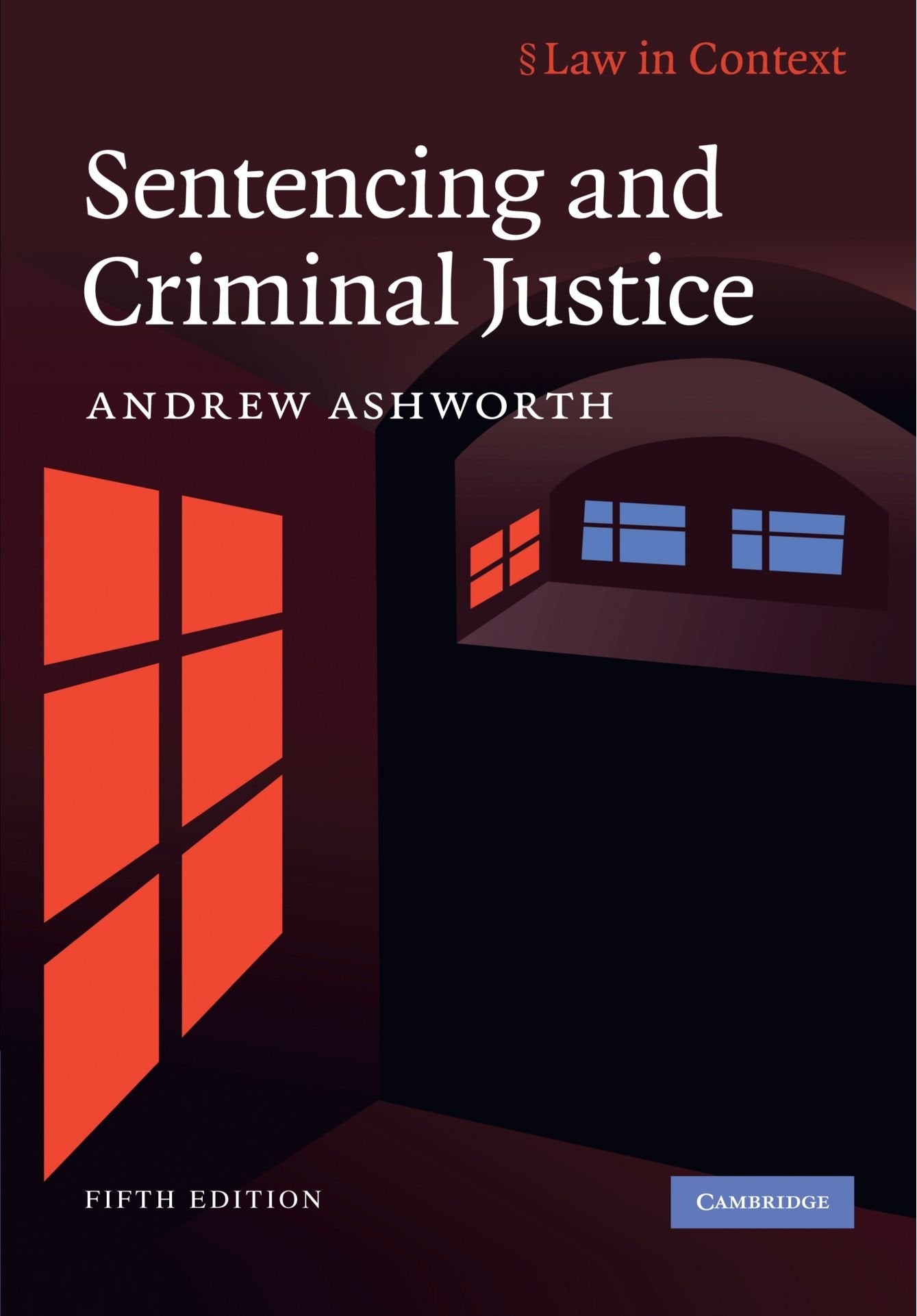
Title
Sentencing And Criminal Justice (Law In Context)
Processing time: 1-3 days
US Orders Ships in: 3-5 days
International Orders Ships in: 8-12 days
Return Policy: 15-days return on defective items
Payment Option

Andrew Ashworth Expertly Examines The Key Issues In English Sentencing Policy And Practice Including The Mechanisms For Producing Sentencing Guidelines. He Considers The Most Highprofile Stages In The Criminal Justice Process Such As The Court Of Appeal'S Approach To The Custody Threshold, The Framework For The Sentencing Of Young Offenders And The Abiding Problems Of Previous Convictions In Sentencing. Taking Into Account The Criminal Justice And Immigration Act 2008 And The Coroners And Justice Act 2009, The Book'S Interdisciplinary Approach Places The Legislation And Guidelines On Sentencing In The Context Of Criminological Research, Statistical Trends And Theories Of Punishment. By Examining The Law In Relation To Elements Of The Wider Criminal Justice System, Including The Prison And Probation Services, Students Gain A Rounded Perspective On The Relevant Principles And Problems Of Sentencing And Criminal Justice.
⚠️ WARNING (California Proposition 65):
This product may contain chemicals known to the State of California to cause cancer, birth defects, or other reproductive harm.
For more information, please visit www.P65Warnings.ca.gov.
- Q: How many pages does this book have? A: This book has five hundred four pages. It provides an in-depth examination of English sentencing policy and practice.
- Q: What is the binding type of this book? A: The binding type is paperback. This makes it lightweight and easy to carry.
- Q: What are the dimensions of the book? A: The book measures six point seventy-five inches in length, one inch in width, and nine point five inches in height. These dimensions make it convenient for reading.
- Q: Who is the author of 'Sentencing and Criminal Justice'? A: The author is Andrew Ashworth. He is well-regarded for his expertise in criminal law.
- Q: What is the main focus of this book? A: The book focuses on key issues in English sentencing policy and criminal justice. It discusses sentencing guidelines and their implications.
- Q: Is this book suitable for law students? A: Yes, this book is suitable for law students. It provides a comprehensive overview of sentencing principles relevant to their studies.
- Q: Can this book help with understanding sentencing guidelines? A: Yes, it offers detailed insights into the mechanisms for producing sentencing guidelines. This knowledge is crucial for legal practitioners.
- Q: What themes are covered in 'Sentencing and Criminal Justice'? A: The book covers themes like the Court of Appeal's approach, sentencing of young offenders, and issues regarding previous convictions. These themes are central to understanding criminal justice.
- Q: Is this a good resource for understanding the Criminal Justice and Immigration Act 2008? A: Yes, it discusses the Criminal Justice and Immigration Act 2008 in detail. This context is essential for comprehending recent legal changes.
- Q: How can I maintain this book in good condition? A: To maintain this book, keep it in a dry place and avoid exposing it to direct sunlight. This will help preserve its quality over time.
- Q: What should I do if the book arrives damaged? A: If the book arrives damaged, contact the seller for a return or replacement. Most sellers have policies in place to handle such issues.
- Q: Is there a warranty for this book? A: No, typically there is no warranty for books. However, check the seller's return policy for any guarantees.
- Q: Is this book appropriate for beginners in criminal law? A: Yes, it is appropriate for beginners. The book offers a clear and accessible examination of complex legal concepts.
- Q: What makes this book unique in its approach? A: The book's interdisciplinary approach sets it apart. It integrates criminological research and statistical trends with legal guidelines.
- Q: How does this book relate to the Coroners and Justice Act 2009? A: It examines the Coroners and Justice Act 2009's implications for sentencing practices. This analysis is vital for understanding current legal frameworks.