

Title

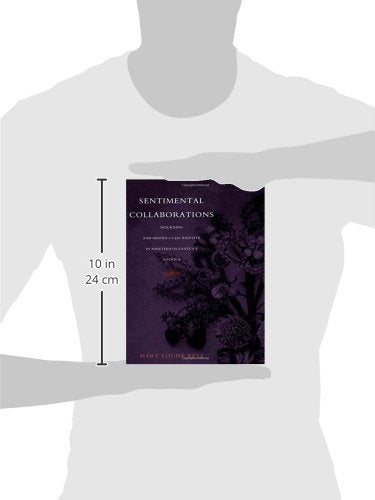
Sentimental Collaborations: Mourning and MiddleClass Identity in NineteenthCentury America (New Americanists),Used
Sold by Ergodebooks, an authorized reseller.
Returns accepted within 30 days | support@ergodebooks.com
Shipping Information
- Free Standard Shipping — United States only
- Processing Time: 3–5 business days
- Estimated Delivery: 6–10 business days after dispatch
- Double-boxed, fully insured & discreetly packaged
- Tracking number sent via email once dispatched
Returns & Refund
Returns accepted within 30 days of delivery.
Damaged or Defective Item
Free return shipping + replacement or full refund
Wrong Item Received
Free return shipping + replacement or full refund
Change of Mind
Return shipping at customer's expense · 25% restocking fee applies
Payment Option

During the 1992 Democratic Convention and again while delivering Harvard Universitys commencement address two years later, Vice President Al Gore shared with his audience a story that showed the effect of sentiment in his life. In telling how an accident involving his son had provided him with a revelation concerning the compassion of others, Gore effectively reconstructed himself as a typical, middleclass American for whom sympathy can lead to salvation. This contemporary reiteration of midnineteenthcentury American sentimental discourse proves to be a fruitful point of departure for Mary Louise Ketes argument that sentimentality has been an important and recurring form of cultural narrative that has helped to shape middleclass American life.Many scholars have written about the sentimental novel as a primarily female genre and have stressed its negative ideological aspects. Kete finds that in fact many menfrom writers to politiciansparticipated in nineteenthcentury sentimental culture. Importantly, she also recovers the utopian dimension of the phenomenon, arguing that literary sentimentality, specifically in the form of poetry, is the written trace of a broad cultural discourse that Kete calls sentimental collaborationan exchange of sympathy in the form of gifts that establishes common cultural or intellectual ground. Kete reads the work of Ralph Waldo Emerson, Henry Wadsworth Longfellow, Mark Twain, Harriet Beecher Stowe, and Lydia Huntley Sigourney with an eye toward the deployment of sentimentality for the creation of Americanism, as well as for political and abolitionist ends. Finally, she locates the origins of sentimental collaboration in the activities of ordinary people who participated in mourning ritualswriting poetry, condolence letters, or epitaphsto ease their personal grief.Sentimental Collaborations significantly advances prevailing scholarship on Romanticism, antebellum culture, and the formation of the American middle class. It will be of interest to scholars of American studies, American literature, cultural studies, and womens studies.
⚠️ WARNING (California Proposition 65):
This product may contain chemicals known to the State of California to cause cancer, birth defects, or other reproductive harm.
For more information, please visit www.P65Warnings.ca.gov.