
Title
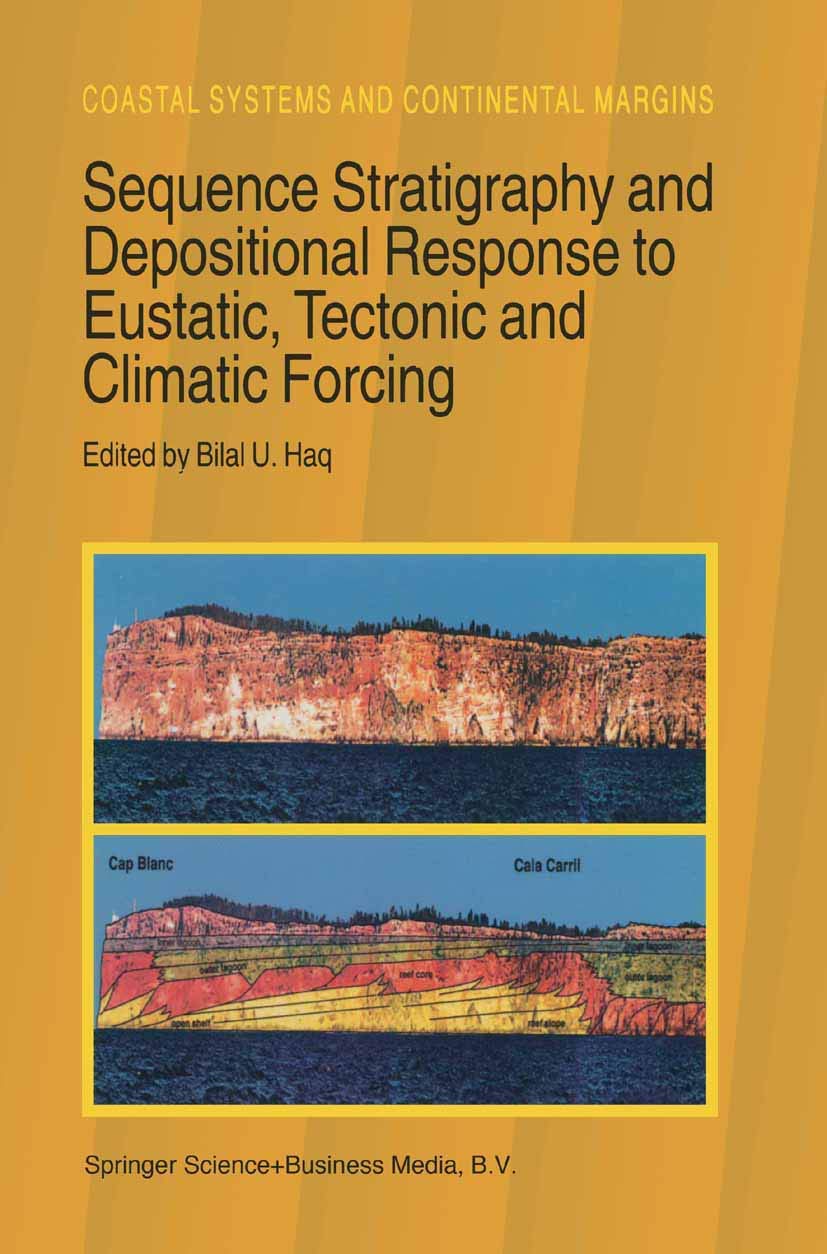
Sequence Stratigraphy and Depositional Response to Eustatic, Tectonic and Climatic Forcing (Coastal Systems and Continental Marg,Used
Sold by Ergodebooks, an authorized reseller.
Returns accepted within 30 days | support@ergodebooks.com
Shipping Information
- Free Standard Shipping — United States only
- Processing Time: 3–5 business days
- Estimated Delivery: 6–10 business days after dispatch
- Double-boxed, fully insured & discreetly packaged
- Tracking number sent via email once dispatched
Returns & Refund
Returns accepted within 30 days of delivery.
Damaged or Defective Item
Free return shipping + replacement or full refund
Wrong Item Received
Free return shipping + replacement or full refund
Change of Mind
Return shipping at customer's expense · 25% restocking fee applies
Payment Option

Sequence stratigraphy has advanced considerably since the early applications of the concepts on seismic data. It attempts to discern the migration of facies re sulting from changes in a combination of factors such as, sea level, tectonics, climate and sediment flux, and integrates it with a meaningful chronostratigraphy. The stratigraphic record is envisioned as a framework of repetitive packages of geneticallyrelated strata, formed in response to the shifting base level, in which the locus of deposition of various sediment types may be anticipated. This attribute is rapidly promoting sequence stratigraphy as an indispensable tool for prediction of facies in exploration and production geology. In hydrocarbon exploration the application of sequence stratigraphy has ranged from anticipating reservoir and sourcerock distribution to predicting carbonate diagenesis, porosity and permeability. The capability to anticipate vertical and lateral distribution of facies and reservoir sands in the basinal, shoreface, incised valleyfill and regressive settings alone has been a great asset for exploration. In frontier areas, where data are often limited to seismic lines, sequencestratigraphic methodology has helped determine the timing and of types of unconformities and anticipate transgressive and regressiveprone intervals. In production it is aiding in field development by providing improved source and seal predictions for secondary oil recovery. A recognition of stratigraphic causes of poor recovery through improved understanding of internal stratal architecture can lead to new well recompletions and enhanced exploitation in existing fields. The sequencestratigraphic discipline is in a state of rapid expansion.
⚠️ WARNING (California Proposition 65):
This product may contain chemicals known to the State of California to cause cancer, birth defects, or other reproductive harm.
For more information, please visit www.P65Warnings.ca.gov.