
Title
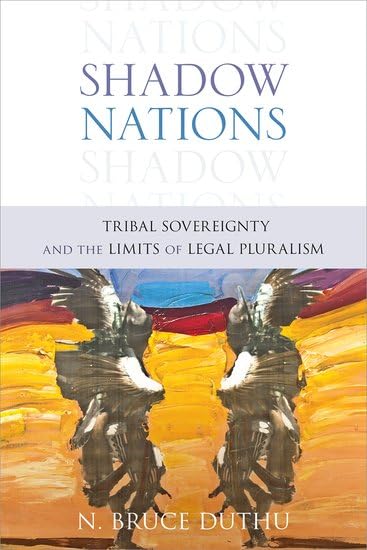
Shadow Nations: Tribal Sovereignty and the Limits of Legal Pluralism,Used
Sold by Ergodebooks, an authorized reseller.
Returns accepted within 30 days | support@ergodebooks.com
Shipping Information
- Free Standard Shipping — United States only
- Processing Time: 3–5 business days
- Estimated Delivery: 6–10 business days after dispatch
- Double-boxed, fully insured & discreetly packaged
- Tracking number sent via email once dispatched
Returns & Refund
Returns accepted within 30 days of delivery.
Damaged or Defective Item
Free return shipping + replacement or full refund
Wrong Item Received
Free return shipping + replacement or full refund
Change of Mind
Return shipping at customer's expense · 25% restocking fee applies
Payment Option

American Indian tribes have long been recognized as "domestic, dependent nations" within the United States, with powers of selfgovernment that operate within the tribes' sovereign territories. Yet over the years, Congress and the Supreme Court have steadily eroded these tribal powers. In some respects, the erosion of tribal powers reflects the legacy of an imperialist impulse to constrain or eliminate any political power that may compete with the state. These developments have moved the nation away from its early commitments to a legally plural societyin other words, the idea that multiple nations and their legal systems could coexist peacefully in shared territories.Shadow Nations argues for redirecting the trajectory of tribalfederal relations to better reflect the formative ethos of legal pluralism that operated in the nation's earliest years. From an ideological standpoint, this means that we must reexamine several longheld commitments. One is to legal centralism, the view that the nationstate and its institutions are the only legitimate sources of law. Another is to liberalism, the dominant political philosophy that undergirds our democratic structures and situates the individual, not the group or a collective, as the bedrock moral unit of society. From a constitutional standpoint, establishing more robust expressions of tribal sovereignty will require that we take seriously the concerns of citizens, tribal and nontribal alike, who demand that tribal governments operate consistently with basic constitutional values. From an institutional standpoint, these efforts will require a new, flexible and adaptable institutional architecture that is better suited to accommodating these competing interests.Argued with grace, humanity, and a peerless scholarly eye, Shadow Nations is a clarion call for a true and consequential rethinking of the legal and political relationship between Indigenous tribes and the United States government.
⚠️ WARNING (California Proposition 65):
This product may contain chemicals known to the State of California to cause cancer, birth defects, or other reproductive harm.
For more information, please visit www.P65Warnings.ca.gov.