If you have any questions, you are always welcome to contact us. We'll get back to you as soon as possible, withing 24 hours on weekdays.
Customer service
All questions about your order, return and delivery must be sent to our customer service team by e-mail at yourstore@yourdomain.com
Sale & Press
If you are interested in selling our products, need more information about our brand or wish to make a collaboration, please contact us at press@yourdomain.com
Help
If you have any questions, you are always welcome to contact us. We'll get back to you as soon as possible, withing 24 hours on weekdays.
Customer service
All questions about your order, return and delivery must be sent to our customer service team by e-mail at yourstore@yourdomain.com
Sale & Press
If you are interested in selling our products, need more information about our brand or wish to make a collaboration, please contact us at press@yourdomain.com
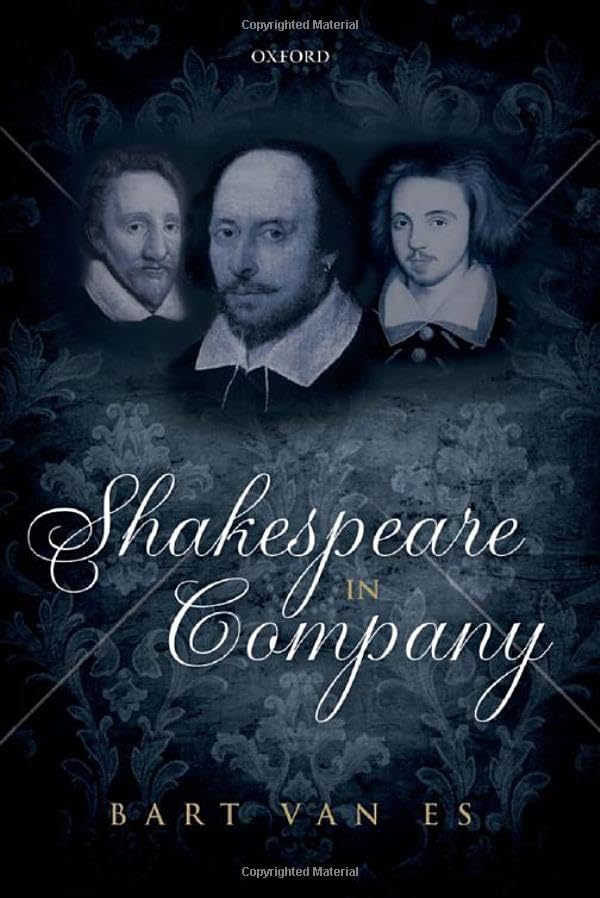
This book is about two very different kinds of company. On the one hand it concerns Shakespeare's poetplaywright contemporaries, such as Marlowe, Jonson, and Fletcher. On the other, it examines the contribution of his fellow actors, including Burbage, Armin, and Kemp. Traditionally, criticism has treated these two influences in separation, so that Shakespeare is considered either in relation to educated Renaissance culture, or as a man of the theatre. Shakespeare in Company unites these perspectives. Bart van Es argues that Shakespeare's decision, in 1594, to become an investor (or 'sharer') in the newly formed Chamberlain's acting company had a transformative effect on his writing, moving him beyond the conventions of Renaissance dramaturgy. On the basis of the physical distinctiveness of his actors, Shakespeare developed 'relational drama', something no previous dramatist had explored. This book traces the evolution of that innovation, showing how Shakespeare responded to changes in the personnel of his acting fellowship and to competing drama, such as that produced for the children's companies after 1599. Covering over two decades of theatrical history, van Es explores the playwright's career through four distinct phases, ending on the conditions that shaped Shakespeare's late style. Paradoxically, Shakespeare emerges as a playwright unique 'in company'special, in part, because of the unparalleled working conditions that he enjoyed.
⚠️ WARNING (California Proposition 65):
This product may contain chemicals known to the State of California to cause cancer,
birth defects, or other reproductive harm.
For MAP (Minimum Advertised Price) violations and Intellectual Property (IP) or Trademark concerns, please contact:
support@ergodebooks.com
⚠️ California Proposition 65 Warning: Some products sold on this website may expose you to chemicals known to the State of California to cause cancer, birth defects, or other reproductive harm. For more information, visit www.P65Warnings.ca.gov.