If you have any questions, you are always welcome to contact us. We'll get back to you as soon as possible, withing 24 hours on weekdays.
Customer service
All questions about your order, return and delivery must be sent to our customer service team by e-mail at yourstore@yourdomain.com
Sale & Press
If you are interested in selling our products, need more information about our brand or wish to make a collaboration, please contact us at press@yourdomain.com
Help
If you have any questions, you are always welcome to contact us. We'll get back to you as soon as possible, withing 24 hours on weekdays.
Customer service
All questions about your order, return and delivery must be sent to our customer service team by e-mail at yourstore@yourdomain.com
Sale & Press
If you are interested in selling our products, need more information about our brand or wish to make a collaboration, please contact us at press@yourdomain.com
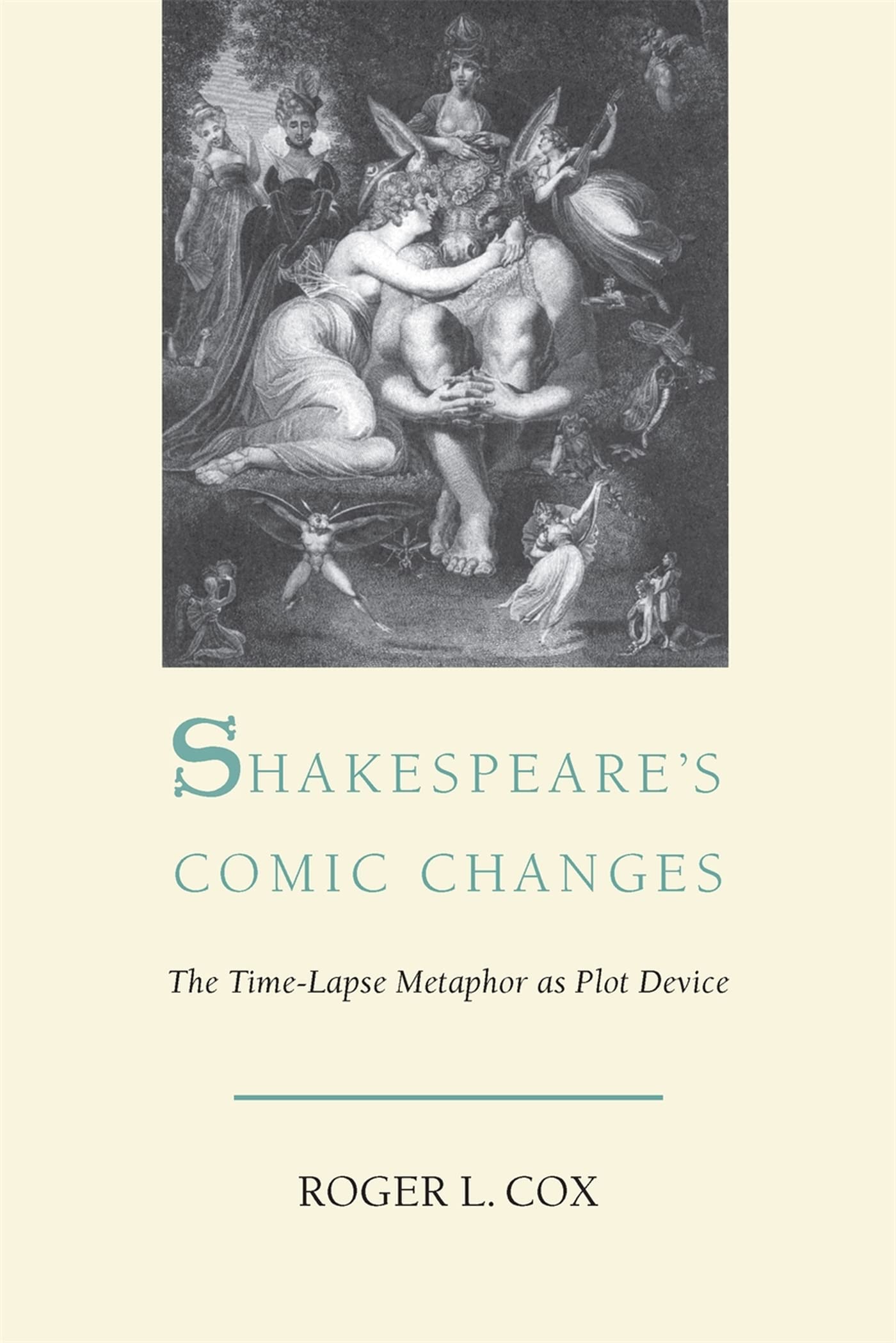
Product Description Perhaps the central question about Shakespeares comedies is whether they form a single group we can meaningfully call Shakespearean comedy. The problem arises in locating a unifying principle that is not so broad as to lack interpretive value. In Shakespeares Comic Changes, Roger L. Cox argues that the thread connecting almost all of Shakespeares comedies is a plot in which character change is presented metaphorically instead of realistically. Violating classical dramatic rules about the consistency of character, Shakespeare offers character changes that are improbable and unrealistic. Shakespeares chief means for representing character change is what Cox calls the timelapse metaphor. Two sharply contrasting views of a given character emerge in timeorder: first, a fairly realistic view of the character as flawed and in conflict with society; then, an idealized view of the same character reformed. Cox argues that, by allowing us to see the plays as a cohesive whole, the timelapse metaphor thus becomes the very basis for the plot. Review With the tools provided, we are shown how to construct feminist, psychoanalytical, historical, etc., versions of Shakespeare, and, in the process, to construct ourselves. Notes & Queries About the Author ROGER L. COX was a professor emeritus of English and comparative literature at the University of Delaware. He is the author of Between Earth and Heaven: Shakespeare, Dostoevsky, and the Meaning of Christian Tragedy.
⚠️ WARNING (California Proposition 65):
This product may contain chemicals known to the State of California to cause cancer,
birth defects, or other reproductive harm.
For MAP (Minimum Advertised Price) violations and Intellectual Property (IP) or Trademark concerns, please contact:
support@ergodebooks.com
⚠️ California Proposition 65 Warning: Some products sold on this website may expose you to chemicals known to the State of California to cause cancer, birth defects, or other reproductive harm. For more information, visit www.P65Warnings.ca.gov.