
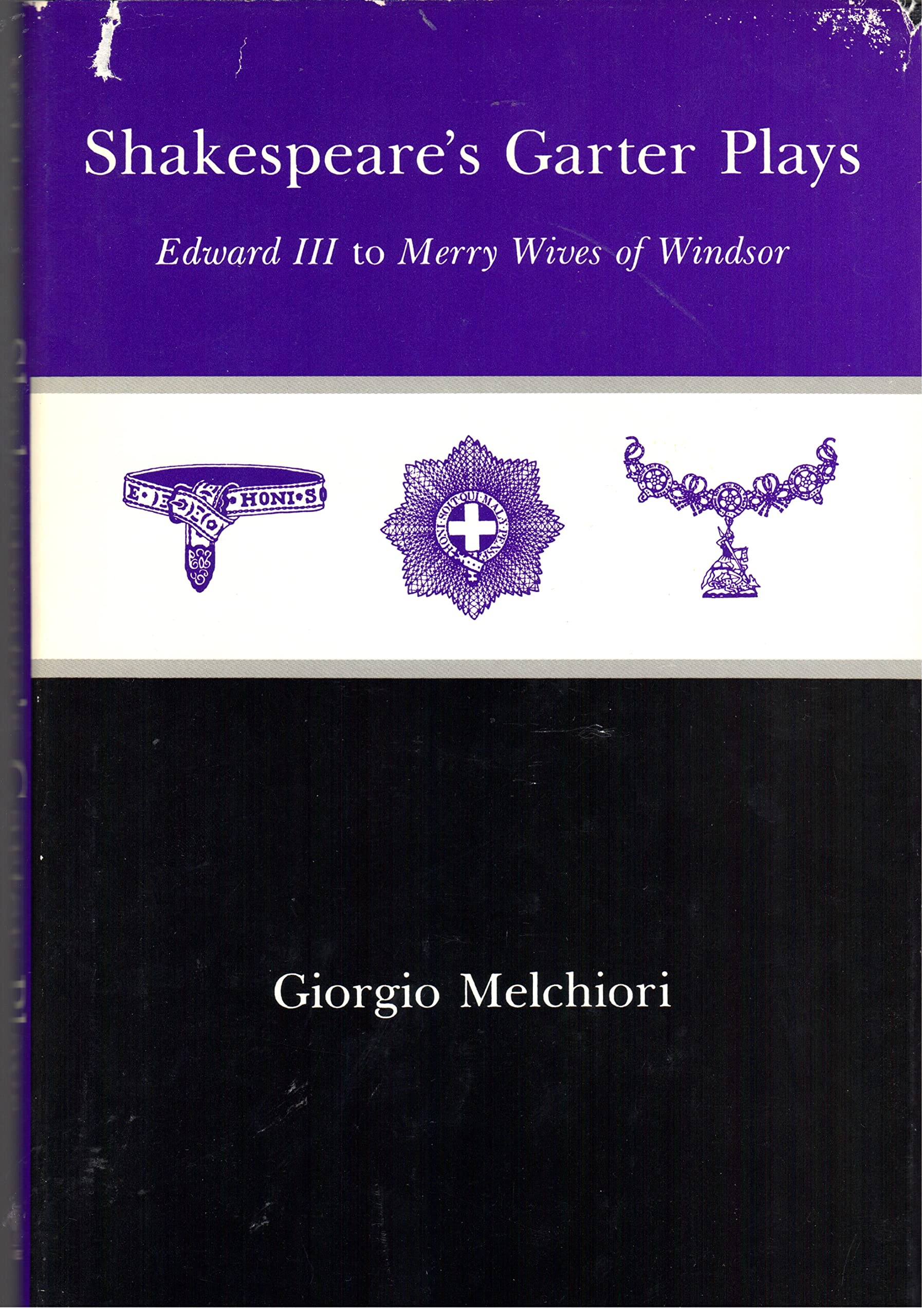
Title
Shakespeare'S Garter Plays: Edward Iii To Merry Wives Of Windsor
Sold by Ergodebooks, an authorized reseller.
Returns accepted within 30 days | support@ergodebooks.com
Shipping Information
- Free Standard Shipping — United States only
- Processing Time: 3–5 business days
- Estimated Delivery: 6–10 business days after dispatch
- Double-boxed, fully insured & discreetly packaged
- Tracking number sent via email once dispatched
Returns & Refund
Returns accepted within 30 days of delivery.
Damaged or Defective Item
Free return shipping + replacement or full refund
Wrong Item Received
Free return shipping + replacement or full refund
Change of Mind
Return shipping at customer's expense · 25% restocking fee applies
Payment Option

The Second Cycle Of Shakespeare Histories (Richard Ii, 1 And 2 Henry Iv, Henry V) Is Presented In A New Perspective By Extending It To Include The Earlier Reign Of King Edward The Third And The Merry Wives Of Windsor, So As To Create A Single Dramatic Continuum With The Five Histories As Acts And The Comedy As The Final Jig. What Holds Them Together Is Shakespeare'S Attitude Toward The Concepts Of Policy And Honor, Reflected Both In The Figure Of Falstaff As Antihero, And In The Open Or Covert Allusions To The Order Of The Garter, Which Is The Figure In The Carpet Of The Sextet.Shakespeare Tackled The Issues Of Policy And Honor Confronted By Power When He Was Remaking The Old Play Woodstock As Richard Ii And The Famous Victories Of Henry The Fifth As Henry Iv And Henry V. It Is Argued That Henry Iv Was Originally Written As A Single Play, But, Because Of The Presence Of The Character Of Sir John Oldcastle, Shakespeare Was Forced To Rewrite The Play With Sir John Falstaff Instead. The Success Of The Ampler Role Given To The Latter Prompted The Addition Of A Sequel (Part Two). A Chapter In This Work Is Devoted To A Reconstruction Of The Oneplay Version Of Henry Iv And Another To The Passages Presumably Added In The Rewriting.The Second Half Of The Book, After Tracing Falstaff'S Ancestry To A Captain In A Play Adapted By Anthony Munday From An Italian Original, Reexamines The Question Of The Relationship Between The Merry Wives And A Court Entertainment Supposedly Offered On The Occasion Of The Garter Feast In 1597. This Entails A Revision Of The Chronology Of Composition Of All Falstaff Plays.Finally, In The Prelude To The Lancastrian Cycle, The Collaborative Play On The Reign Of Edward Iii, The Founder Of The Order Of The Garter, The Thread Running Through The Shakespearean Saga Up To The Last Incarnation Of Falstaff In Windsor Stands Out Clearly. Edward Iii Is Undoubtedly A Garter Play In Its Celebration Of The Values Presiding Over The Education Of Princes, Though It Never Mentions The Founding Of The Order, Which Holinshed Links To The Loss Of The Countess Of Salisbury'S Garter. But The Inclusion In The Play Of The Episode Of Edward'S Infatuation With The Countess, Interconnecting Sexuality And Power (A Theme Present From Lucrece Through Measure For Measure To Cymbeline), Accounts For The Dramatist'S Ambiguous View Of The Garter Myth.
⚠️ WARNING (California Proposition 65):
This product may contain chemicals known to the State of California to cause cancer, birth defects, or other reproductive harm.
For more information, please visit www.P65Warnings.ca.gov.