
Title
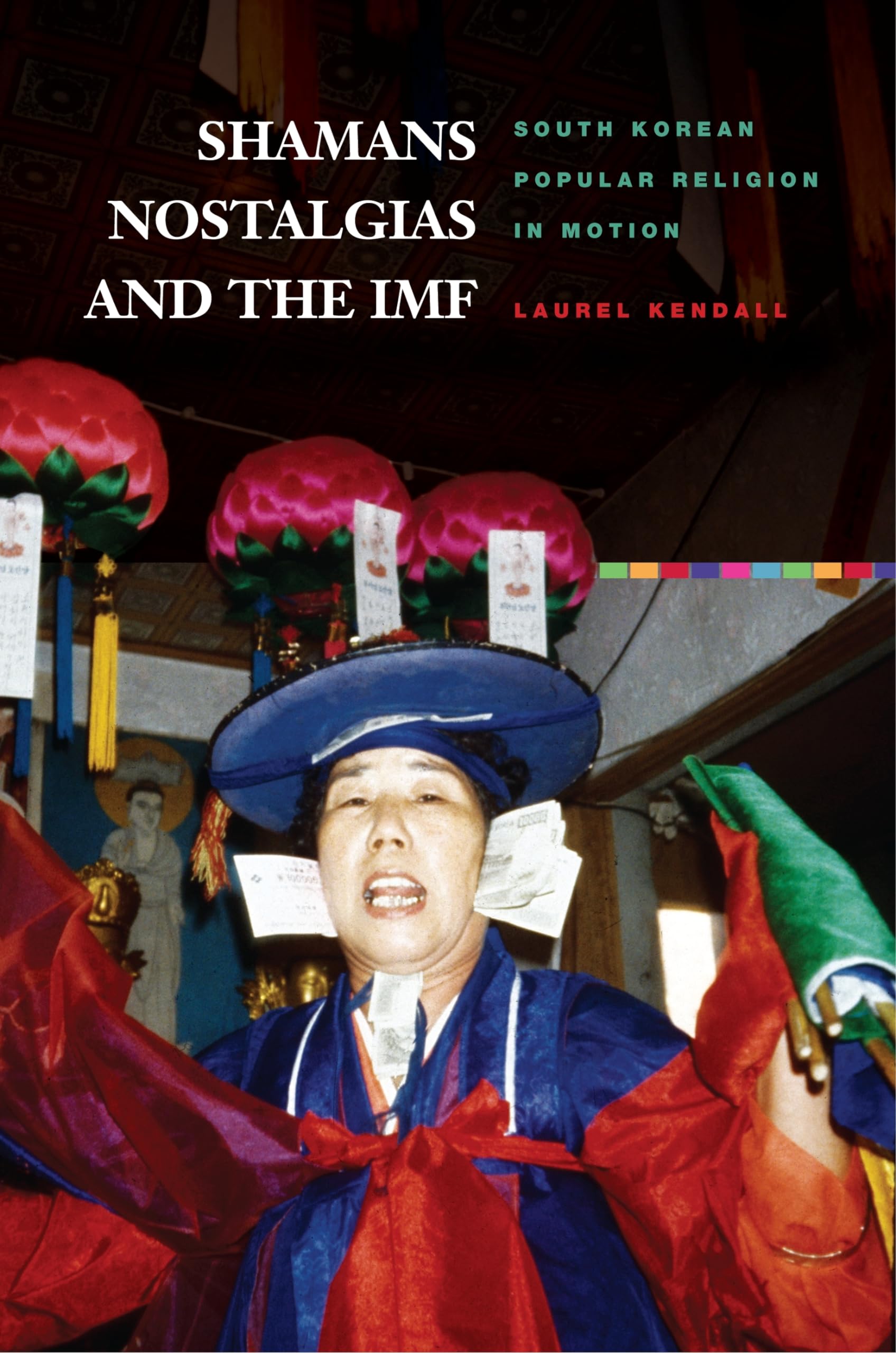
Shamans, Nostalgias, and the IMF: South Korean Popular Religion in Motion,Used
Sold by Ergodebooks, an authorized reseller.
Returns accepted within 30 days | support@ergodebooks.com
Shipping Information
- Free Standard Shipping — United States only
- Processing Time: 3–5 business days
- Estimated Delivery: 6–10 business days after dispatch
- Double-boxed, fully insured & discreetly packaged
- Tracking number sent via email once dispatched
Returns & Refund
Returns accepted within 30 days of delivery.
Damaged or Defective Item
Free return shipping + replacement or full refund
Wrong Item Received
Free return shipping + replacement or full refund
Change of Mind
Return shipping at customer's expense · 25% restocking fee applies
Payment Option

Thirty years ago, anthropologist Laurel Kendall did intensive fieldwork among South Koreas (mostly female) shamans and their clients as a reflection of village womens lives. In the intervening decades, South Korea experienced an unprecedented economic, social, political, and material transformation and Korean villages all but disappeared. And the shamans? Kendall attests that they not only persist but are very much a part of South Korean modernity.This enlightening and entertaining study of contemporary Korean shamanism makes the case for the dynamism of popular religious practice, the creativity of those we call shamans, and the necessity of writing about them in the present tense. Shamans thrive in South Koreas highrise cities, working with clients who are largely middle class and technologically sophisticated. Emphasizing the shamans work as open and mutable, Kendall describes how gods and ancestors articulate the changing concerns of clients and how the ritual fame of these transactions has itself been transformed by urban sprawl, private cars, and zealous Christian proselytizing.For most of the last century Korean shamans were reviled as practitioners of antimodern superstition; today they are nostalgically celebrated icons of a vanished rural world. Such superstition and tradition occupy flip sides of modernitys cointhe one by confuting, the other by obscuring, the beating heart of shamanic practice. Kendall offers a lively account of shamans, who once ministered to the domestic crises of farmers, as they address the anxieties of entrepreneurs whose dreams of wealth are matched by their omnipresent fears of ruin. Money and access to foreign goods provoke moral dilemmas about getting and spending; shamanic rituals express these through the longings of the dead and the playful antics of greedy gods, some of whom have acquired a taste for imported whiskey.No other booklength study captures the tension between contemporary South Korean life and the contemporary South Korean shamans work. Kendalls familiarity with the country and long association with her subjects permit nuanced comparisons between a 1970s "then" and recent encounterssome with the same shamans and clientsas South Korea moved through the 1990s, endured the Asian Financial Crisis, and entered the new millennium. She approaches her subject through multiple anthropological lenses such that readers interested in religion, ritual performance, healing, gender, landscape, material culture, modernity, and consumption will find much of interest here.
⚠️ WARNING (California Proposition 65):
This product may contain chemicals known to the State of California to cause cancer, birth defects, or other reproductive harm.
For more information, please visit www.P65Warnings.ca.gov.
- Q: How many pages does this book have? A: This book has two hundred eighty pages. It provides an in-depth exploration of South Korean popular religion and shamanism.
- Q: What are the dimensions of this book? A: The book measures five point nine one inches in length, zero point seven one inches in width, and eight point eight two inches in height.
- Q: What type of binding does this book have? A: The book is available in paperback binding. This allows for easy handling and reading.
- Q: Who is the author of this book? A: The author is Laurel Kendall, an anthropologist known for her extensive research on South Korean shamans.
- Q: What is the main focus of the book? A: The book focuses on contemporary Korean shamanism and its relevance in modern South Korean society. It explores the intersection of tradition and modernity.
- Q: Is this book suitable for academic research? A: Yes, this book is suitable for academic research. It provides insights into anthropology, religion, and cultural studies.
- Q: How do I read this book effectively? A: You can read this book by focusing on its chapters that discuss different aspects of Korean shamanism, including its historical context and modern practices.
- Q: Is there a specific audience for this book? A: Yes, the book is targeted towards scholars, students, and anyone interested in anthropology and religious studies.
- Q: What themes does the book cover? A: The book covers themes such as modernity, gender, ritual performance, and the impact of economic changes on religious practices.
- Q: How should I care for this book? A: To care for this book, keep it in a dry place away from direct sunlight. Handle it gently to avoid wear and tear.
- Q: Can I store this book on a shelf? A: Yes, you can store this book on a shelf. Ensure it is placed upright to maintain its shape.
- Q: What if the book arrives damaged? A: If the book arrives damaged, you should contact the seller for a replacement or refund. Most sellers have a return policy.
- Q: What if I have questions about the book's content? A: If you have questions about the book's content, consider reaching out to online forums or academic communities focused on anthropology.
- Q: Is this book a good choice for someone new to the subject? A: Yes, this book is a good choice for beginners. It presents complex topics in an accessible manner.
- Q: How does this book compare to others on the same topic? A: This book provides a unique perspective on Korean shamanism compared to others, emphasizing the contemporary relevance of shamanic practices.
- Q: Are there any illustrations in the book? A: Yes, the book includes eleven illustrations that complement the text and enhance understanding of the cultural context.