If you have any questions, you are always welcome to contact us. We'll get back to you as soon as possible, withing 24 hours on weekdays.
Customer service
All questions about your order, return and delivery must be sent to our customer service team by e-mail at yourstore@yourdomain.com
Sale & Press
If you are interested in selling our products, need more information about our brand or wish to make a collaboration, please contact us at press@yourdomain.com
Help
If you have any questions, you are always welcome to contact us. We'll get back to you as soon as possible, withing 24 hours on weekdays.
Customer service
All questions about your order, return and delivery must be sent to our customer service team by e-mail at yourstore@yourdomain.com
Sale & Press
If you are interested in selling our products, need more information about our brand or wish to make a collaboration, please contact us at press@yourdomain.com
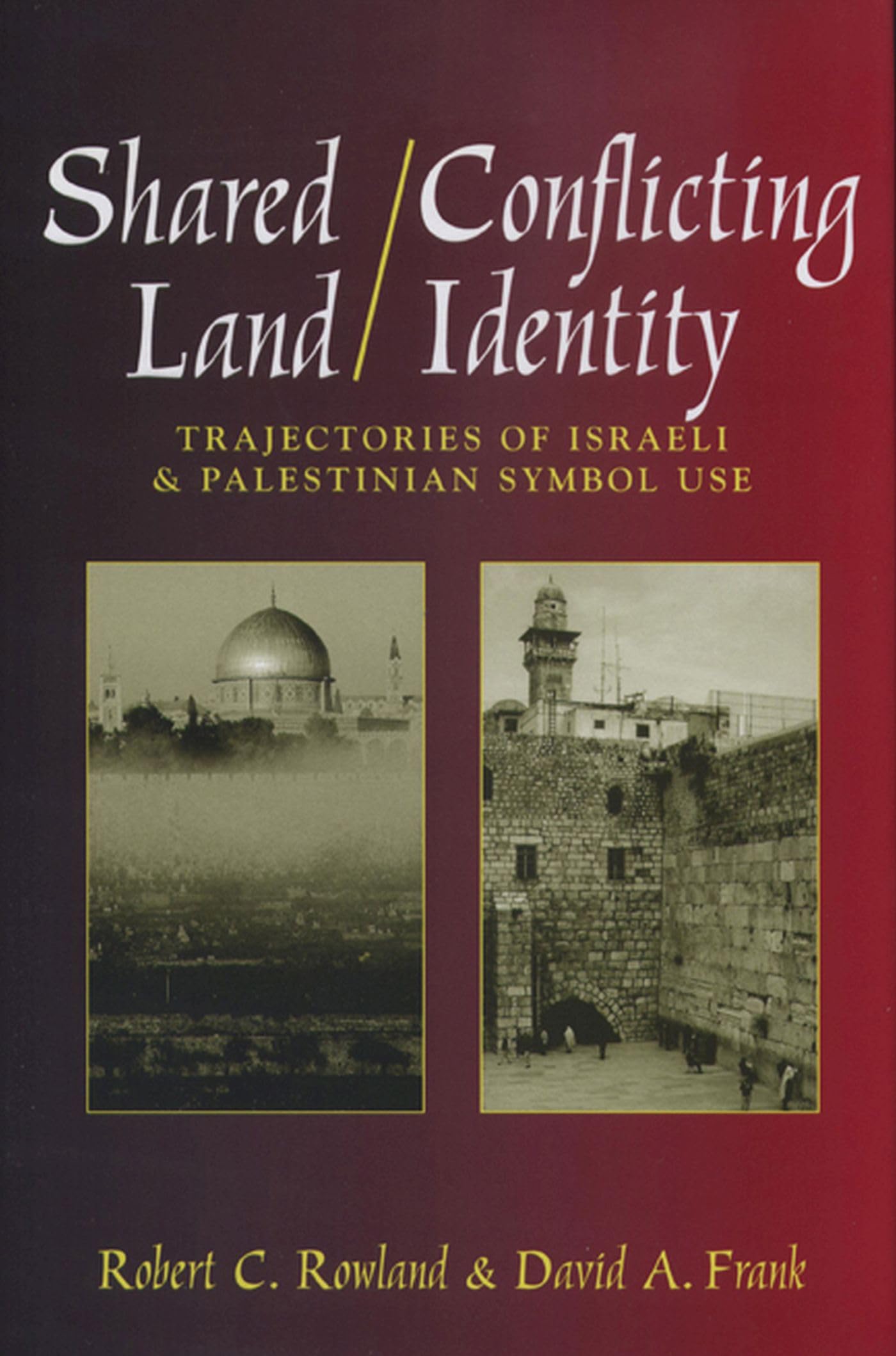
Shared Land/Conflicting Identity: Trajectories of Israeli and Palestinian Symbol Use argues that rhetoric, ideology, and myth have played key roles in influencing the development of the 100year conflict between first the Zionist settlers and the current Israeli people and the Palestinian residents in what is now Israel. The IsraeliPalestinian conflict is usually treated as an issue of land and water. While these elements are the core of the conflict, they are heavily influenced by the symbols used by both peoples to describe, understand, and persuade each other. The authors argue that symbolic practices deeply influenced the Oslo Accords, and that the breakthrough in the peace process that led to Oslo could not have occurred without a breakthrough in communication styles.Rowland and Frank develop four crucial ideas on social development: the roles of rhetoric, ideology, and myth; the influence of symbolic factors; specific symbolic factors that played a key role in peace negotiations; and the identification and value of criteria for evaluating symbolic practices in any society.
⚠️ WARNING (California Proposition 65):
This product may contain chemicals known to the State of California to cause cancer,
birth defects, or other reproductive harm.
For MAP (Minimum Advertised Price) violations and Intellectual Property (IP) or Trademark concerns, please contact:
support@ergodebooks.com
⚠️ California Proposition 65 Warning: Some products sold on this website may expose you to chemicals known to the State of California to cause cancer, birth defects, or other reproductive harm. For more information, visit www.P65Warnings.ca.gov.