
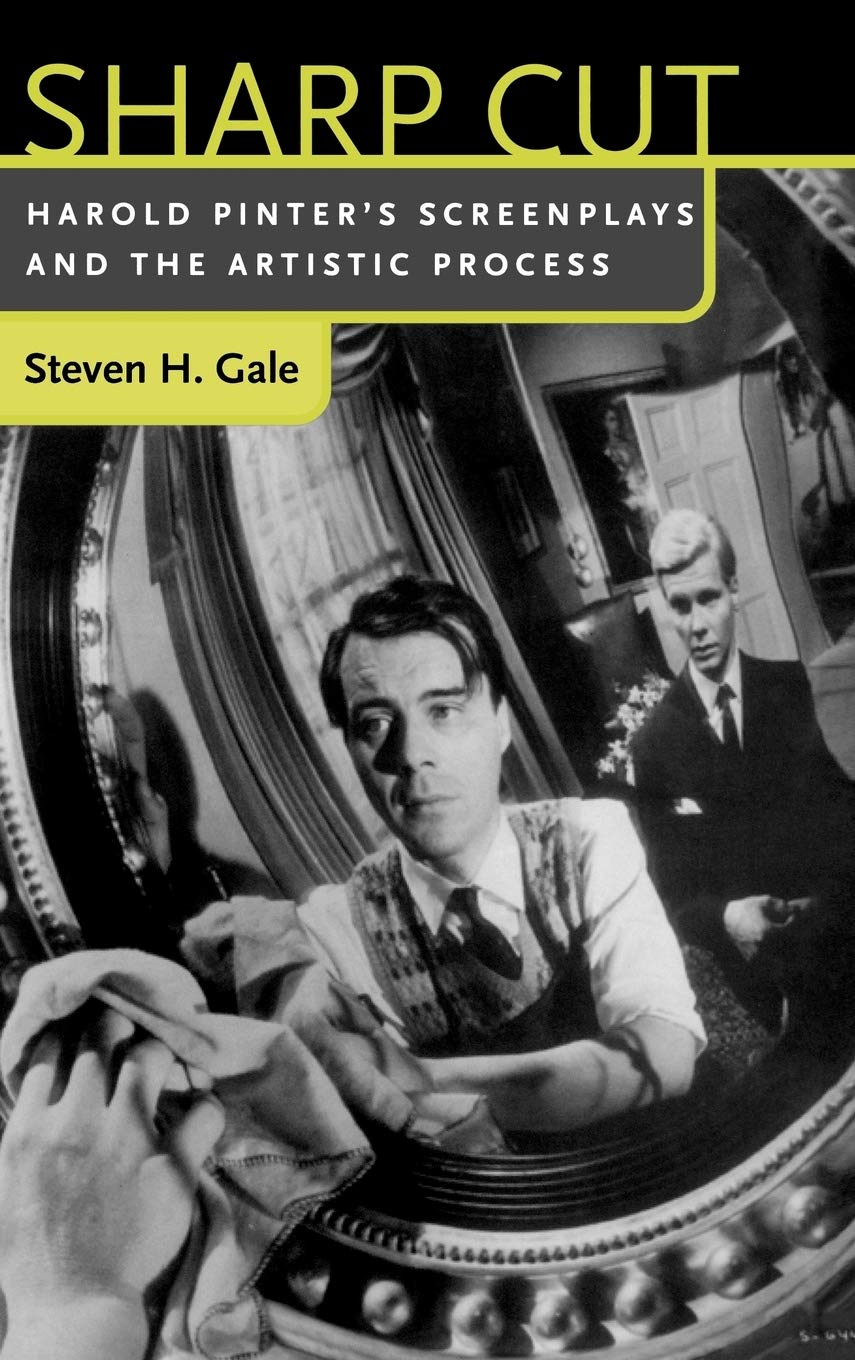
Title
Sharp Cut: Harold Pinter's Screenplays and the Artistic Process,Used
Sold by Ergodebooks, an authorized reseller.
Returns accepted within 30 days | support@ergodebooks.com
Shipping Information
- Free Standard Shipping — United States only
- Processing Time: 3–5 business days
- Estimated Delivery: 6–10 business days after dispatch
- Double-boxed, fully insured & discreetly packaged
- Tracking number sent via email once dispatched
Returns & Refund
Returns accepted within 30 days of delivery.
Damaged or Defective Item
Free return shipping + replacement or full refund
Wrong Item Received
Free return shipping + replacement or full refund
Change of Mind
Return shipping at customer's expense · 25% restocking fee applies
Payment Option

While best known as one of the most important playwrights of the twentieth century, Harold Pinter (19302008) had an equally successful career writing screenplays. His collaborations with director Joseph Losey garnered great attention and esteem, and two of his screenplays earned Academy Award nominations: The French Lieutenant's Woman (1981) and Betrayal (1983). He is also credited for writing an unproduced script to remake Stanley Kubrick's 1962 adaptation of Lolita. Much scholarship has been dedicated to the subject of Pinter as playwright, but the rich landscape of his work in film has been left largely undisturbed.In Sharp Cut: Harold Pinter's Screenplays and the Artistic Process, Steven H. Gale, the world's foremost Pinter scholar, analyzes Pinter's creative process from initial conception to finished film. Gale makes careful, pointbypoint comparisons of each stage in the screenplay's creationthe source material, the adaptations themselves, and the films made from the scriptsin order to reveal the meaning behind each film script and to explain the cinematic techniques used to express that meaning.Unlike most Pinter scholars, who focus almost solely on the written word, Gale devotes discussion to the cinematic interpretation of the scripts through camera angles and movement, cutting, and other techniques. Pinter does not merely convert his stage scripts to screenplays; he adapts the works to succeed in the other medium, avoiding elements of the live play that do not work onscreen and using the camera's focusing operations in ways that are not possible on the stage.As Pinter's career progressed and his writing evolved, screenplays became for him an increasingly vital means of creative expression. Sharp Cut is the first study to fully explore this important component of the Pinter canon.
⚠️ WARNING (California Proposition 65):
This product may contain chemicals known to the State of California to cause cancer, birth defects, or other reproductive harm.
For more information, please visit www.P65Warnings.ca.gov.
- Q: What is the main focus of 'Sharp Cut: Harold Pinter's Screenplays and the Artistic Process'? A: The book analyzes Harold Pinter's creative process in screenwriting, comparing the original source material to the finished films, and exploring the cinematic techniques employed in his adaptations.
- Q: Who is the author of this book? A: The author is Steven H. Gale, a recognized expert on Harold Pinter's work.
- Q: What type of book is 'Sharp Cut'? A: It is an annotated hardcover book focusing on the intersection of Pinter's screenplays and the artistic process behind them.
- Q: How many pages does the book contain? A: The book has a total of 538 pages.
- Q: When was 'Sharp Cut' published? A: The book was published on August 22, 2003.
- Q: Is the book in new condition? A: Yes, the item condition is listed as new.
- Q: What category does this book fall under? A: It falls under the category of Performing Arts.
- Q: Does 'Sharp Cut' include discussions about Pinter's stage plays? A: While the book primarily focuses on screenplays, it also touches on how Pinter adapts his stage plays for the screen.
- Q: What makes this book unique compared to other studies of Pinter? A: Unlike most studies that focus solely on written works, Gale's analysis includes a detailed look at cinematic interpretations and techniques used in Pinter's film adaptations.
- Q: Is there any specific focus on Pinter's collaborations with directors? A: Yes, the book highlights Pinter's collaborations with director Joseph Losey and discusses the impact of these partnerships on his screenwriting.