
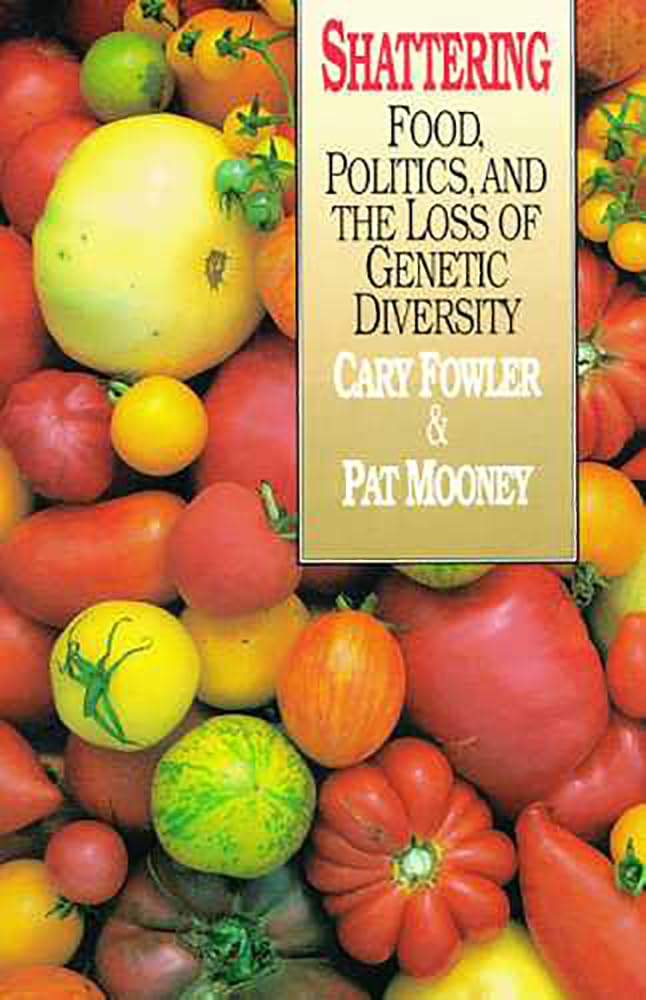
Title
Shattering: Food, Politics, And The Loss Of Genetic Diversity,New
Sold by Ergodebooks, an authorized reseller.
Returns accepted within 30 days | support@ergodebooks.com
Shipping Information
- Free Standard Shipping — United States only
- Processing Time: 3–5 business days
- Estimated Delivery: 6–10 business days after dispatch
- Double-boxed, fully insured & discreetly packaged
- Tracking number sent via email once dispatched
Returns & Refund
Returns accepted within 30 days of delivery.
Damaged or Defective Item
Free return shipping + replacement or full refund
Wrong Item Received
Free return shipping + replacement or full refund
Change of Mind
Return shipping at customer's expense · 25% restocking fee applies
Payment Option

It Was Through Control Of The Shattering Of Wild Seeds That Humans First Domesticated Plants. Now Control Over Those Very Plants Threatens To Shatter The World'S Food Supply, As Loss Of Genetic Diversity Sets The Stage For Widespread Hunger.Largescale Agriculture Has Come To Favor Uniformity In Food Crops. More Than 7,000 U.S. Apple Varieties Once Grew In American Orchards; 6,000 Of Them Are No Longer Available. Every Broccoli Variety Offered Through Seed Catalogs In 1900 Has Now Disappeared. As The International Genetics Supply Industry Absorbs Seed Companieswith Nearly One Thousand Takeovers Since 1970This Trend Toward Uniformity Seems Likely To Continue; And As Third World Agriculture Is Brought In Line With International Business Interests, The Gene Pools Of Humanity'S Most Basic Foods Are Threatened.The Consequences Are More Than Culinary. Without The Genetic Diversity From Which Farmers Traditionally Breed For Resistance To Diseases, Crops Are More Susceptible To The Spread Of Pestilence. Tragedies Like The Irish Potato Famine May Be Thought Of Today As Ancient History; Yet The U.S. Corn Blight Of 1970 Shows That Technologically Based Agribusiness Is A Breeding Ground For Disaster.Shattering Reviews The Development Of Genetic Diversity Over 10,000 Years Of Human Agriculture, Then Exposes Its Loss In Our Lifetime At The Hands Of Political And Economic Forces. The Possibility Of Crisis Is Real; This Book Shows That It May Not Be Too Late To Avert It.
⚠️ WARNING (California Proposition 65):
This product may contain chemicals known to the State of California to cause cancer, birth defects, or other reproductive harm.
For more information, please visit www.P65Warnings.ca.gov.
- Q: What is the page count of the book? A: This book has two hundred ninety-six pages. It provides an in-depth exploration of genetic diversity in agriculture.
- Q: What binding type does the book have? A: The book is available in paperback binding. This makes it lightweight and easy to handle.
- Q: Who is the author of this book? A: The author of the book is Cary Fowler. He is known for his expertise in agricultural biodiversity.
- Q: What is the genre of this book? A: This book falls under the Biological Sciences genre. It delves into topics related to food, politics, and genetics.
- Q: What are the dimensions of the book? A: The book measures six inches in length, eight-tenths of an inch in width, and nine point zero two inches in height. These dimensions make it convenient for reading.
- Q: Is this book suitable for children? A: No, this book is not primarily aimed at children. It discusses complex issues related to agriculture and genetics.
- Q: What themes does the book explore? A: The book explores themes of genetic diversity, agricultural practices, and the socio-political impacts on food supply. It emphasizes the importance of preserving genetic variety.
- Q: What should I expect from the book's content? A: You can expect a comprehensive review of agricultural history over ten thousand years. It also addresses current threats to genetic diversity.
- Q: Is there a specific audience this book is meant for? A: Yes, this book is meant for readers interested in biological sciences, agriculture, and environmental issues. It's suitable for academics and general readers alike.
- Q: How should I care for this book? A: To keep the book in good condition, store it in a cool, dry place away from direct sunlight. Avoid bending the spine to preserve its integrity.
- Q: Can this book be returned if I don't like it? A: Yes, most retailers allow returns for books within a specified period. Check the return policy of your specific retailer for details.
- Q: What if the book arrives damaged? A: If the book arrives damaged, contact the retailer's customer service for a replacement or refund. Keep all packaging materials for easier returns.
- Q: Does this book discuss the Irish Potato Famine? A: Yes, the book references the Irish Potato Famine as a historical example of the consequences of genetic uniformity in crops.
- Q: What is the main argument of the book? A: The main argument is that loss of genetic diversity threatens food security worldwide. It warns that without diversity, crops become more vulnerable to disasters.
- Q: Is there a foreword or introduction in the book? A: Yes, the book includes an introduction that lays the groundwork for understanding the importance of genetic diversity in agriculture.