
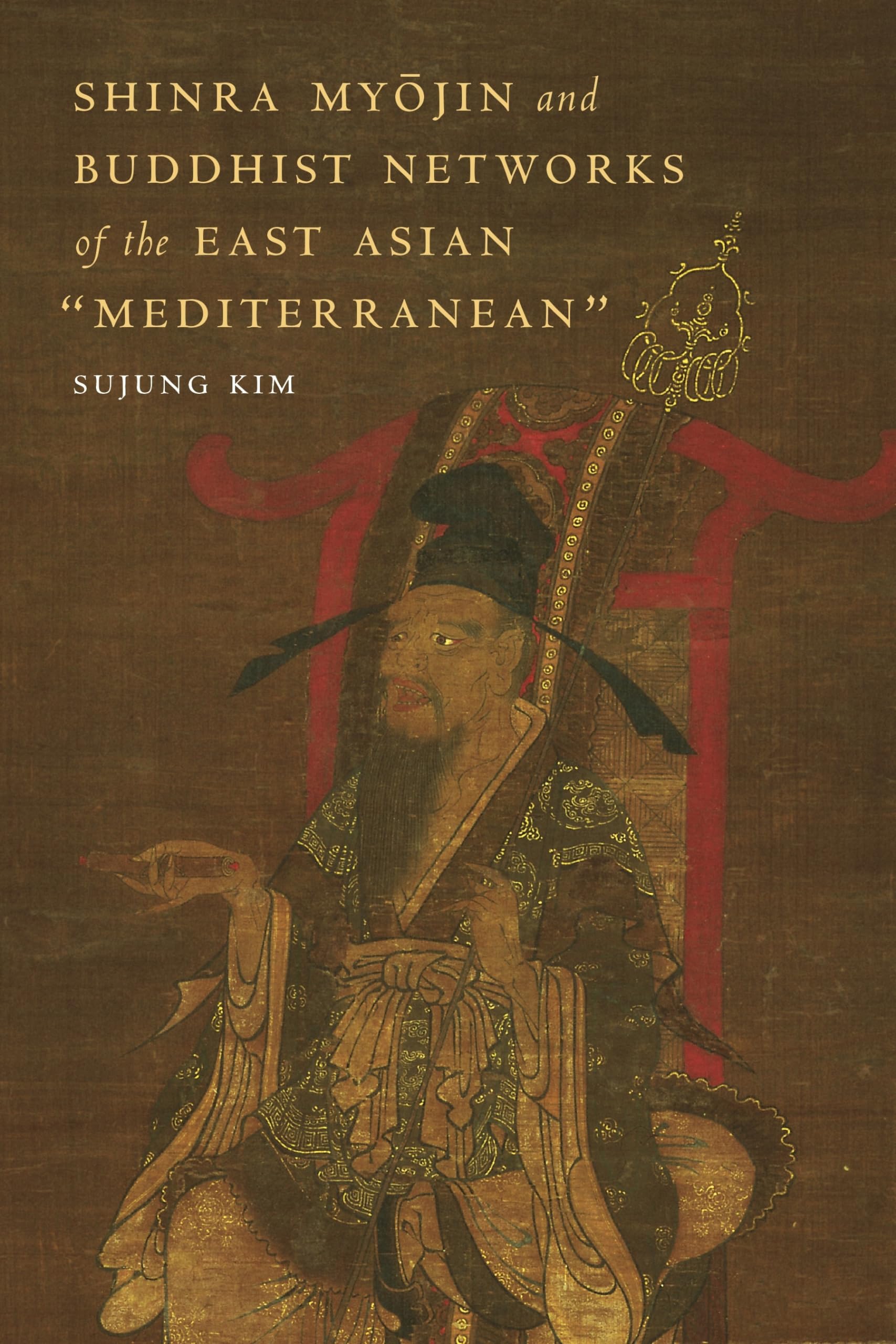
Title
Shinra Myojin and Buddhist Networks of the East Asian Mediterranean,Used
Sold by Ergodebooks, an authorized reseller.
Returns accepted within 30 days | support@ergodebooks.com
Shipping Information
- Free Standard Shipping — United States only
- Processing Time: 3–5 business days
- Estimated Delivery: 6–10 business days after dispatch
- Double-boxed, fully insured & discreetly packaged
- Tracking number sent via email once dispatched
Returns & Refund
Returns accepted within 30 days of delivery.
Damaged or Defective Item
Free return shipping + replacement or full refund
Wrong Item Received
Free return shipping + replacement or full refund
Change of Mind
Return shipping at customer's expense · 25% restocking fee applies
Payment Option

This ambitious work offers a transnational account of the deity Shinra Myojin, the god of Silla worshipped in medieval Japanese Buddhism from the eleventh to sixteenth centuries. Sujung Kim challenges the longheld understanding of Shinra Myojin as a protective deity of the Tendai Jimon school, showing how its worship emerged and developed in the complex networks of the East Asian Mediterraneana quality rather than a physical space defined by Kim as the primary conduit for crosscultural influence in a region that includes the Yellow Sea, the Sea of Japan (East Sea), the East China Sea, and neighboring coastal areas. While focusing on the transcultural worship of the deity, Kim engages the different maritime arrangements in which Shinra Myojin circulated: first, the network of Korean immigrants, Chinese merchants, and Japanese Buddhist monks in Chinas Shandong peninsula and Japans Omi Province; and second, that of gods found in the East Asian Mediterranean. Both of these networks became nodal points of exchange of both goods and gods. Kims examination of temple chronicles, literary writings, and iconography reveals Shinra Myojins evolution from a seafaring god to a multifaceted one whose roles included the god of pestilence and of poetry, the insurer of painless childbirth, and the protector of performing arts.Shinra Myojin and Buddhist Networks of the East Asian Mediterranean is not only the first monograph in any language on the Tendai Jimon school in Japanese Buddhism, but also the first booklength study in English to examine Korean connections in medieval Japanese religion. Unlike other recent studies on individual Buddhist deities, it foregrounds the need to approach them within a broader East Asian context. By shifting the paradigm from a landcentered vision to a seacentered one, the work underlines the importance of a transcultural and interdisciplinary approach to the study of Buddhist deities.
⚠️ WARNING (California Proposition 65):
This product may contain chemicals known to the State of California to cause cancer, birth defects, or other reproductive harm.
For more information, please visit www.P65Warnings.ca.gov.