
Title
Shooting Arrows and Slinging Mud: Custer, the Press, and the Little Bighorn,New
Sold by Ergodebooks, an authorized reseller.
Returns accepted within 30 days | support@ergodebooks.com
Shipping Information
- Free Standard Shipping — United States only
- Processing Time: 3–5 business days
- Estimated Delivery: 6–10 business days after dispatch
- Double-boxed, fully insured & discreetly packaged
- Tracking number sent via email once dispatched
Returns & Refund
Returns accepted within 30 days of delivery.
Damaged or Defective Item
Free return shipping + replacement or full refund
Wrong Item Received
Free return shipping + replacement or full refund
Change of Mind
Return shipping at customer's expense · 25% restocking fee applies
Payment Option

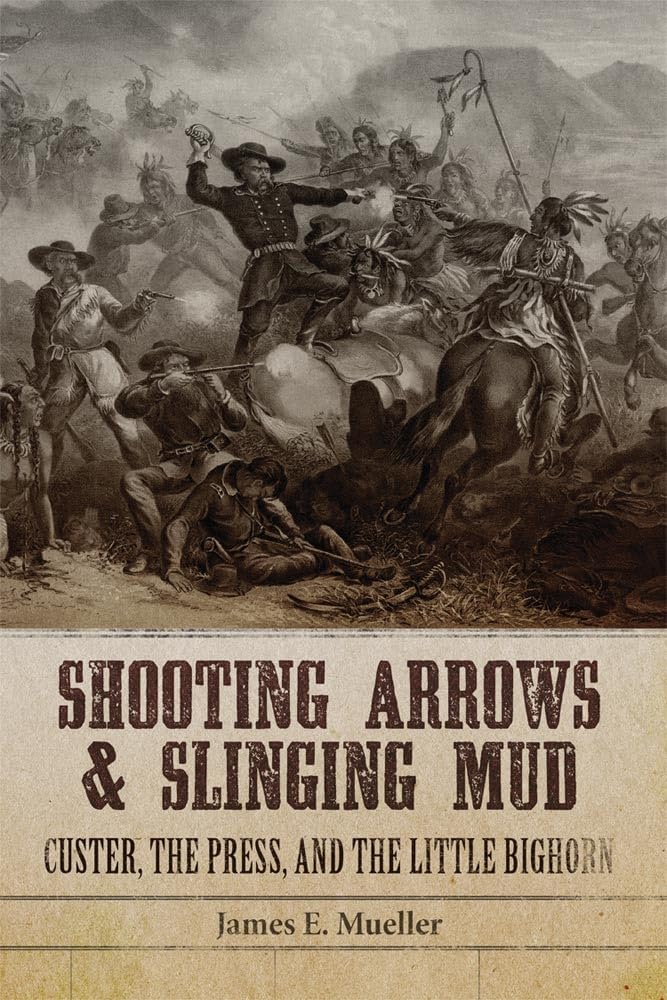
The defeat of George Armstrong Custer and the Seventh Cavalry at the Battle of the Little Bighorn was big news in 1876. Newspaper coverage of the battle initiated hot debates about whether the U.S. government should change its policy toward American Indians and who was to blame for the armys lossthe latter, an argument that ignites passion to this day. In Shooting Arrows and Slinging Mud, James E. Mueller draws on exhaustive research of period newspapers to explore press coverage of the famous battle. As he analyzes a wide range of accountssome grim, some circumspect, some even laced with humorMueller offers a unique take on the dramatic events that so shook the American public.Among the many myths surrounding the Little Bighorn is that journalists of that time were incompetent hacks who, in response to the stunning news of Custers defeat, called for bloodthirsty revenge against the Indians and portrayed the boy general as a glamorous hero who had suffered a martyrs death. Mueller argues otherwise, explaining that the journalists of 1876 were not uniformly biased against the Indians, and they did a credible job of describing the battle. They reported facts as they knew them, wrote thoughtful editorials, and asked important questions.Although not without their biases, journalists reporting on the Battle of the Little Bighorn cannot be creditedor faultedfor creating the legend of Custers Last Stand. Indeed, as Mueller reveals, after the initial burst of attention, these journalists quickly moved on to other stories of their day. It would be art and popular culturebiographies, paintings, Wild West shows, novels, and moviesthat would forever embed the Last Stand in the American psyche.
⚠️ WARNING (California Proposition 65):
This product may contain chemicals known to the State of California to cause cancer, birth defects, or other reproductive harm.
For more information, please visit www.P65Warnings.ca.gov.