
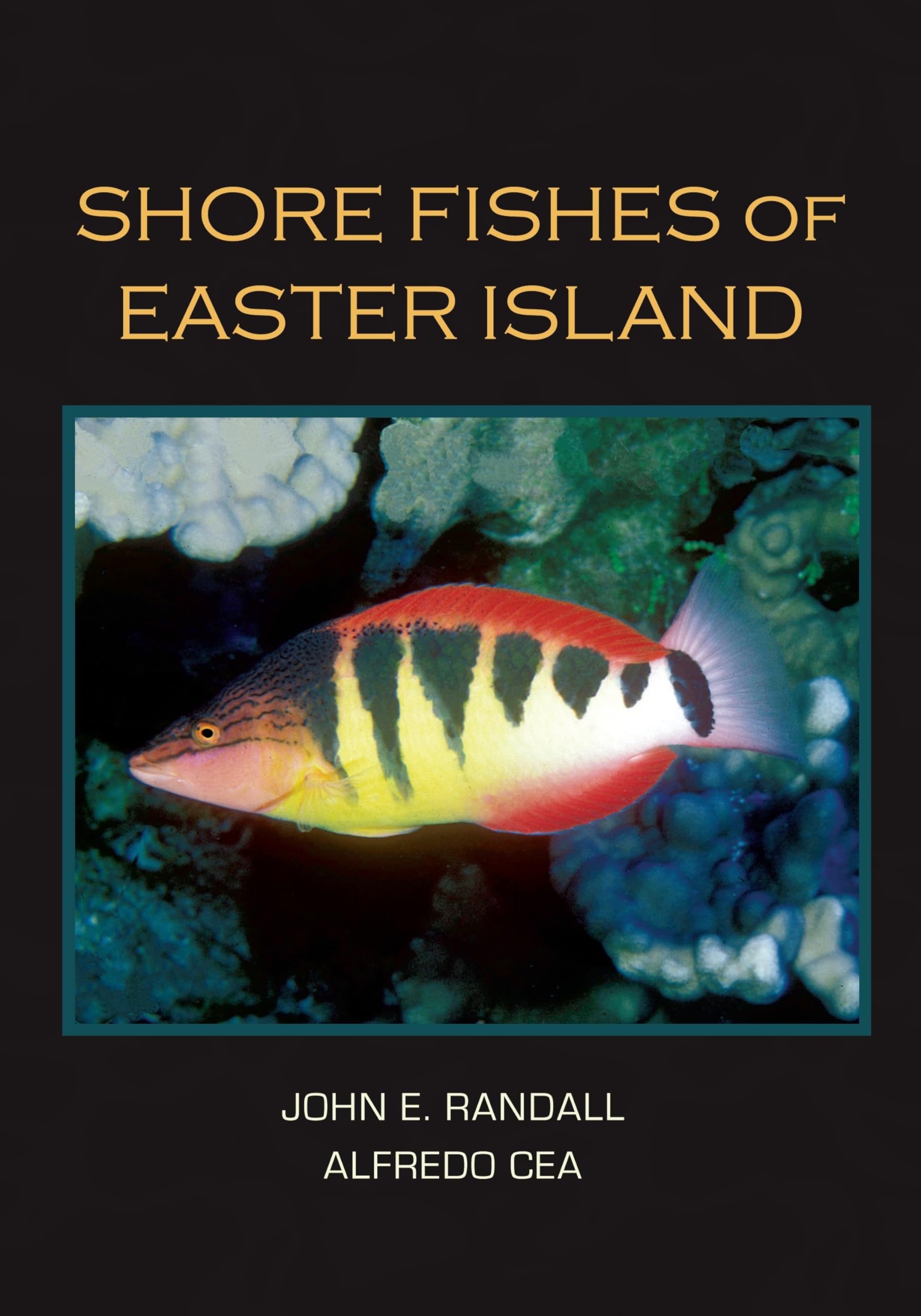
Title
Shore Fishes of Easter Island,Used
Sold by Ergodebooks, an authorized reseller.
Returns accepted within 30 days | support@ergodebooks.com
Shipping Information
- Free Standard Shipping — United States only
- Processing Time: 3–5 business days
- Estimated Delivery: 6–10 business days after dispatch
- Double-boxed, fully insured & discreetly packaged
- Tracking number sent via email once dispatched
Returns & Refund
Returns accepted within 30 days of delivery.
Damaged or Defective Item
Free return shipping + replacement or full refund
Wrong Item Received
Free return shipping + replacement or full refund
Change of Mind
Return shipping at customer's expense · 25% restocking fee applies
Payment Option

Easter Island (Rapanui) is the most remote inhabited island in the Pacific Ocean and the easternmost in Oceania. Much has been written on the origin of its first inhabitants and the enormous stone statues they carved and erected, but little exists on the islands biota. Knowing that very few species of fishes had been reported for Easter Island, John Randall went there in 1969, with the support of the National Geographic Society, to study the fish fauna. He was joined during revisits in 1988 and 1989 by the islands medical doctor, Alfredo Cea. They published the Rapanui names of fishes in 1984.The total number of Easter Island shore fishes to a depth of 200 meters is only 139 species. However, an astounding 21.7 percent are known only from the island, second only to the Hawaiian Islands in the percentage of endemic fishes. Fortyfour new species of fishes have been described, of which 25 are in scientific papers by Randall or by Randall and coauthors. Shore Fishes of Easter Island puts all of these fishes in one beautifully illustrated book with introductory chapters (Historical Review, Zoogeography, Marine Conservation, Materials and Methods).
⚠️ WARNING (California Proposition 65):
This product may contain chemicals known to the State of California to cause cancer, birth defects, or other reproductive harm.
For more information, please visit www.P65Warnings.ca.gov.