
Title
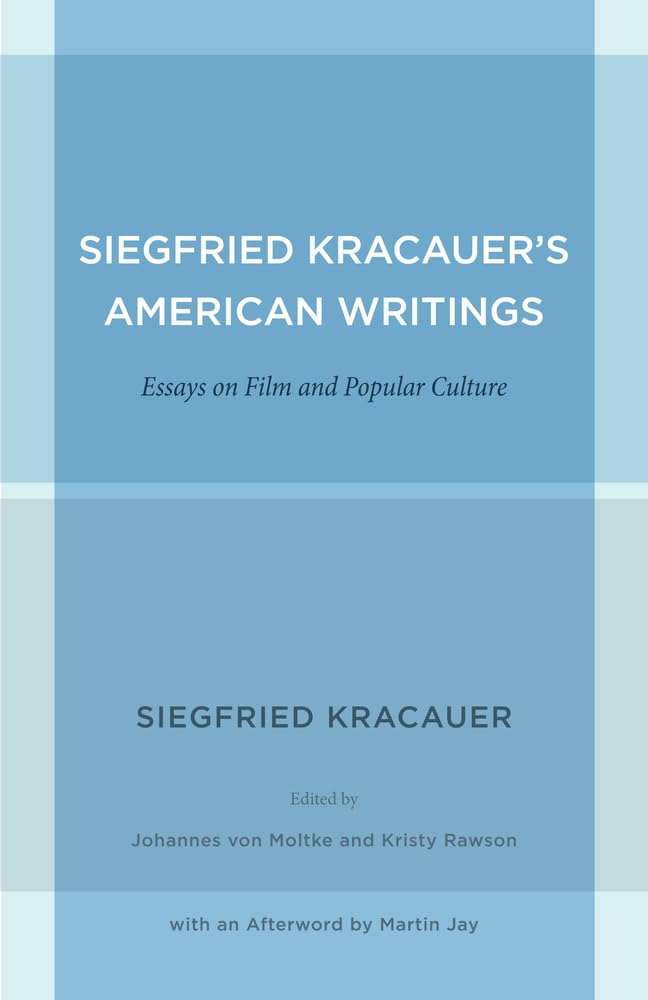
Siegfried Kracauer'S American Writings: Essays On Film And Popular Culture (Weimar And Now: German Cultural Criticism) (Volume 4,Used
Sold by Ergodebooks, an authorized reseller.
Returns accepted within 30 days | support@ergodebooks.com
Shipping Information
- Free Standard Shipping — United States only
- Processing Time: 3–5 business days
- Estimated Delivery: 6–10 business days after dispatch
- Double-boxed, fully insured & discreetly packaged
- Tracking number sent via email once dispatched
Returns & Refund
Returns accepted within 30 days of delivery.
Damaged or Defective Item
Free return shipping + replacement or full refund
Wrong Item Received
Free return shipping + replacement or full refund
Change of Mind
Return shipping at customer's expense · 25% restocking fee applies
Payment Option

Siegfried Kracauer (18891966), Friend And Colleague Of Walter Benjamin And Theodor Adorno, Was One Of The Most Influential Film Critics Of The Midtwentieth Century. In This Book, Johannes Von Moltke And Kristy Rawson Have, For The First Time Assembled Essays In Cultural Criticism, Film, Literature, And Media Theory That Kracauer Wrote During The Quarter Century He Spent In America After Fleeing Nazioccupied Europe. In The Decades Following His Arrival In The United States, Kracauer Commented On Developments In American And European Cinema, Wrote On Film Noir And Neorealism, Examined Unsettling Political Trends In Mainstream Cinema, And Reviewed The Contemporary Experiments Of Avantgarde Filmmakers. As A Cultural Critic, He Also Ranged Far Beyond Cinema, Intervening In Debates Regarding Jewish Culture, Unraveling National And Racial Stereotypes, And Reflecting On The State Of Arts And Humanities In The 1950S. These Essays, Together With The Editors' Introductions And An Afterward By Martin Jay Offer Illuminating Insights Into The Films And Culture Of The Postwar Years And Provide A Unique Perspective On This Eminent Migr Intellectual.
⚠️ WARNING (California Proposition 65):
This product may contain chemicals known to the State of California to cause cancer, birth defects, or other reproductive harm.
For more information, please visit www.P65Warnings.ca.gov.
- Q: What is the page count of this book? A: This book contains three hundred four pages. It provides a comprehensive collection of Siegfried Kracauer's essays on film and culture.
- Q: What are the dimensions of this book? A: The book measures six inches in length, zero point seven six inches in width, and nine point zero two inches in height. This size makes it easy to handle and store.
- Q: What type of binding does this book have? A: This book is published in paperback binding. Paperback editions are typically lightweight and flexible, suitable for casual reading.
- Q: Who is the author of this book? A: The author of this book is Siegfried Kracauer. He was a prominent film critic and cultural theorist known for his insights into cinema.
- Q: What is the main subject of this book? A: The main subject of this book is cultural criticism, particularly focusing on film and popular culture. It explores Kracauer's perspectives on cinema during his time in America.
- Q: How do I read this book? A: You can read this book by simply opening it and following the text from front to back. The essays vary in length and cover diverse topics.
- Q: Is this book suitable for academic study? A: Yes, this book is suitable for academic study. It presents critical essays that can enhance understanding of film theory and cultural criticism.
- Q: What audience is this book intended for? A: This book is intended for readers interested in film studies, cultural criticism, and media theory. It is particularly valuable for scholars and enthusiasts.
- Q: Can I use this book for a film studies course? A: Yes, you can use this book for a film studies course. It provides critical insights that align with many film theory curricula.
- Q: How should I care for this book? A: You should store this book in a cool, dry place to prevent damage. Avoid exposing it to direct sunlight to preserve its condition.
- Q: Is this book safe for young readers? A: This book is generally aimed at an adult audience. While it may be suitable for mature young adults, discretion is advised based on individual content.
- Q: How do I clean this book if it gets dirty? A: To clean this book, gently wipe the cover with a dry, soft cloth. Avoid using water or cleaning solutions to prevent damage.
- Q: What if the book arrives damaged? A: If the book arrives damaged, you should contact the seller for a return or exchange. Many retailers have policies in place for damaged goods.
- Q: Are there any notable themes in this book? A: Yes, notable themes include film noir, neorealism, and the examination of national and racial stereotypes. Kracauer's essays provide deep cultural insights.
- Q: Does this book have any visual content? A: No, this book does not contain visual content. It focuses solely on written essays and critical analysis.
- Q: Is there an introduction or afterword in this book? A: Yes, the book includes introductions by the editors and an afterword by Martin Jay. These sections provide context and enhance the reader's understanding.