If you have any questions, you are always welcome to contact us. We'll get back to you as soon as possible, withing 24 hours on weekdays.
Customer service
All questions about your order, return and delivery must be sent to our customer service team by e-mail at yourstore@yourdomain.com
Sale & Press
If you are interested in selling our products, need more information about our brand or wish to make a collaboration, please contact us at press@yourdomain.com
Help
If you have any questions, you are always welcome to contact us. We'll get back to you as soon as possible, withing 24 hours on weekdays.
Customer service
All questions about your order, return and delivery must be sent to our customer service team by e-mail at yourstore@yourdomain.com
Sale & Press
If you are interested in selling our products, need more information about our brand or wish to make a collaboration, please contact us at press@yourdomain.com
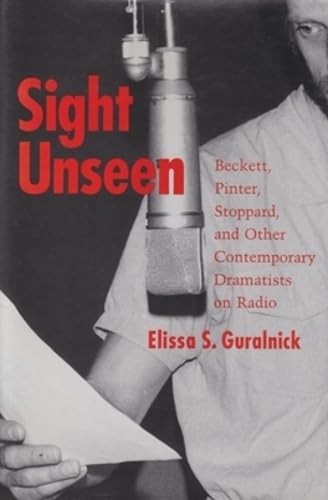
In Sight Unseen radio drama, a genre traditionally dismissed as popular culture, is celebrated as high art. The radio plays discussed here range from the conventional (John Ardens Pearl) to the docudramatic (David Rudkins Cries from Casement), from the curtly conversational (Harold Pinters A Slight Ache) to the virtually operatic (Robert Fergusons Transfigured Night), testifying to radio dramas variety and literary stature. Two of the plays included in this study pose aesthetic questionsthe role of art in politics (Howard Barkers Scenes from an Execution), and the nature of artistic excellence (Tom Stoppards Artist Descending a Staircase).Guralnick contends that wellcrafted radio plays tend to meld to their medium so naturally that they cannot be transferred to the theater or to film without being diminished. Each play is thus shown to exploit, to special effect, one of radios fundamental features: its invisible stage (Barker and Stoppard), its affinity to music (Ferguson and Beckett), its ability to imitate the minds subjectivity (Kopit and Pinter), its association with world events through features and the news (Rudkin). As for the question of radios relation to the theater, the issue is engaged in the work of John Arden, who dares to portray a theatrical stage on the airwaves, while intimating that the radio offers contemporary playwrights an incomparable boon: creative conditions roughly equivalent to those enjoyed by Shakespeare.
⚠️ WARNING (California Proposition 65):
This product may contain chemicals known to the State of California to cause cancer,
birth defects, or other reproductive harm.
For MAP (Minimum Advertised Price) violations and Intellectual Property (IP) or Trademark concerns, please contact:
support@ergodebooks.com
⚠️ California Proposition 65 Warning: Some products sold on this website may expose you to chemicals known to the State of California to cause cancer, birth defects, or other reproductive harm. For more information, visit www.P65Warnings.ca.gov.