
Title
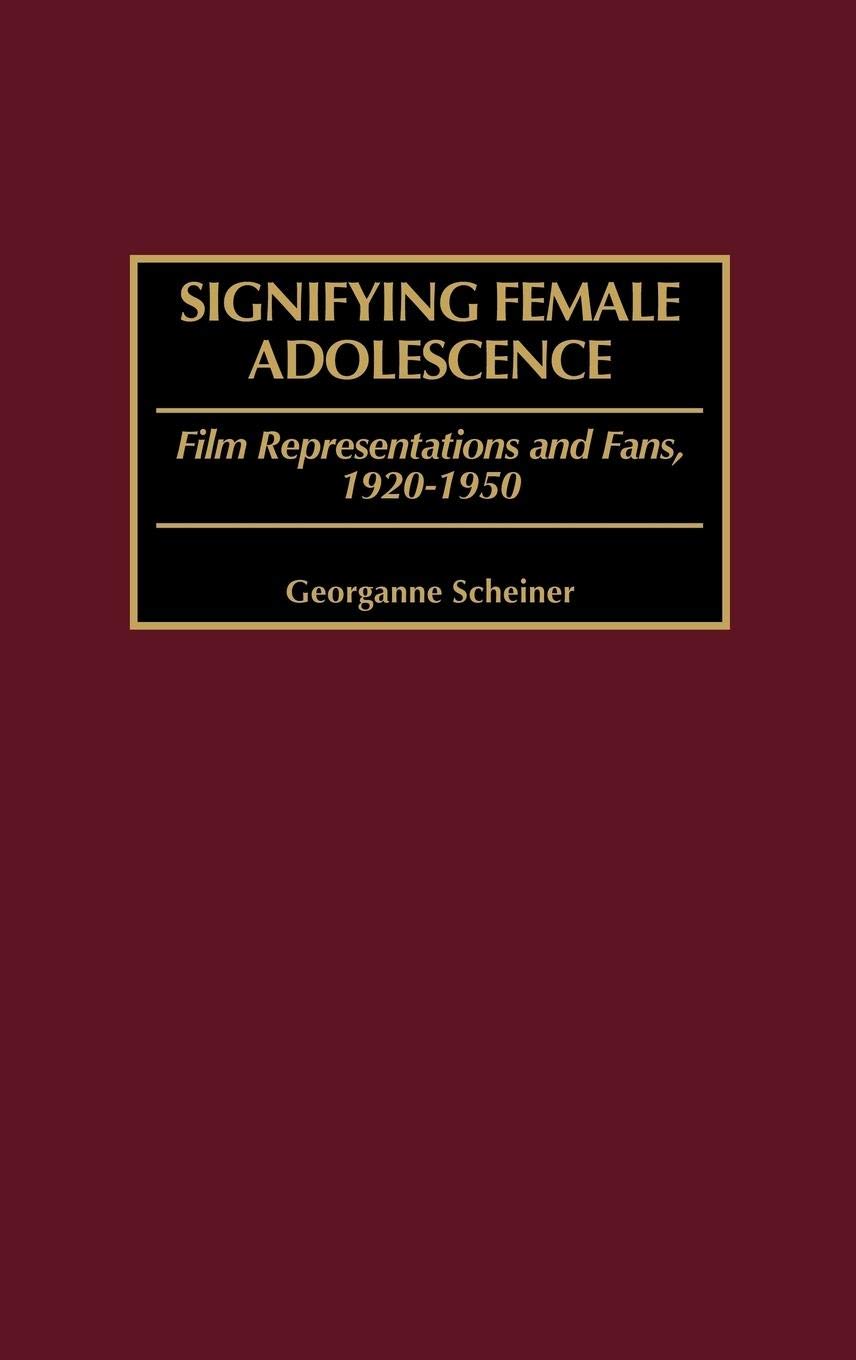
Signifying Female Adolescence: Film Representations and Fans, 19201950,Used
Sold by Ergodebooks, an authorized reseller.
Returns accepted within 30 days | support@ergodebooks.com
Shipping Information
- Free Standard Shipping — United States only
- Processing Time: 3–5 business days
- Estimated Delivery: 6–10 business days after dispatch
- Double-boxed, fully insured & discreetly packaged
- Tracking number sent via email once dispatched
Returns & Refund
Returns accepted within 30 days of delivery.
Damaged or Defective Item
Free return shipping + replacement or full refund
Wrong Item Received
Free return shipping + replacement or full refund
Change of Mind
Return shipping at customer's expense · 25% restocking fee applies
Payment Option

Motion pictures have been one of the forces that have both shaped and reproduced adolescent femininity. Films not only reflect culturethey help to create it. So it is worth looking at films to see what messages they gave girlsand adultsabout what girls were and should be like. Scheiner uses film as a window into the cultural meanings of female adolescence, and explores how those meanings changed over time. She looks at how female adolescence has been constructed in film, focusing on the period from 1920 to 1950. She contextualizes representations of female adolescence by looking at the actual experience of adolescence in each period and by examining the material conditions and film industry processes that contributed to these portrayals.As Scheiner makes clear, historical interpretations of film messages must be expanded to determine what conclusions girls themselves reached from film images. Girls are hardly passive consumers of film. Rather, they choose how to respond to the films they see. This is perhaps best illustrated by fan activities, where girls actively define what is important about films and film stars, and create their own understandings of female adolescence. Scheiner also looks specifically at adolescent girls as fans to decode their responses to filmic representations of adolescence. She uses some nontraditional sources such as fan columns in fan magazines, fan publications of various stars, reviews in young women's literature, fan mail, and letters to film companies to find evidence of audience reception. Scheiner opens up a world often at odds with the actual experience of female adolescents, and she makes clear that films about adolescent girls are not only a formative part of the nation's history in the early 20th century, but a formative part of becoming a girl. Scholars, students, and other researchers of American film and women's studies, popular culture, and 20thcentury history will find this study of particular interest.
⚠️ WARNING (California Proposition 65):
This product may contain chemicals known to the State of California to cause cancer, birth defects, or other reproductive harm.
For more information, please visit www.P65Warnings.ca.gov.