
Title
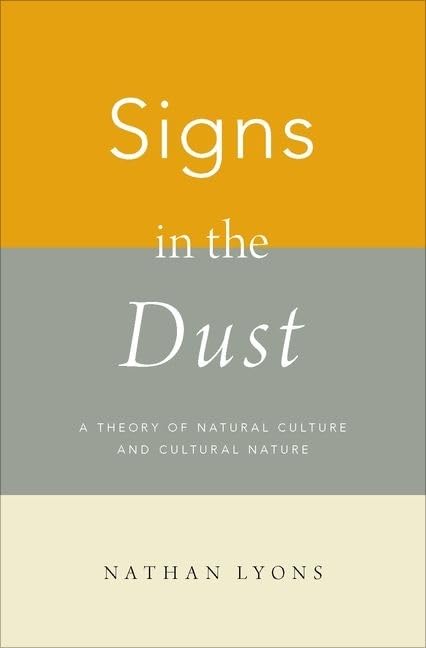
Signs in the Dust: A Theory of Natural Culture and Cultural Nature,Used
Sold by Ergodebooks, an authorized reseller.
Returns accepted within 30 days | support@ergodebooks.com
Shipping Information
- Free Standard Shipping — United States only
- Processing Time: 3–5 business days
- Estimated Delivery: 6–10 business days after dispatch
- Double-boxed, fully insured & discreetly packaged
- Tracking number sent via email once dispatched
Returns & Refund
Returns accepted within 30 days of delivery.
Damaged or Defective Item
Free return shipping + replacement or full refund
Wrong Item Received
Free return shipping + replacement or full refund
Change of Mind
Return shipping at customer's expense · 25% restocking fee applies
Payment Option

Modern thought is characterized by a dichotomy of meaningful culture and unmeaning nature. Signs in the Dust uses medieval semiotics to develop a new theory of nature and culture that resists this familiar picture of things. Through readings of Thomas Aquinas, Nicholas of Cusa, and John Poinsot (John of St. Thomas), it offers a semiotic analysis of human culture in both its anthropological breadth as an enterprise of creaturely signmaking, and its theological height as a finite participation in the Trinity, which can be understood as an absolute 'cultural nature'. Signs in the Dust then extends this account of human culture backwards into the natural depth of biological and physical nature. It puts the biosemiotics of its medieval sources, along with Flix Ravaisson's philosophy of habit, into dialogue with the Extended Evolutionary Synthesis that is emerging in contemporary biology, to show how all living things participate in semiosis, so that that a cultural dimension is present through the whole order of nature and the whole of natural history. It also retrieves Aquinas' doctrine of intentions in the medium to show how signification can be attributed in a diminished way to even inanimate nature, with the ontological implication that being as such should be reconceived in semiotic terms. The phenomena of human culture are therefore to be understood not as breaks with a meaningless nature, but instead as heightenings and deepenings of natural movements of meaning that long precede and far exceed us. Against the modern divorce of nature and culture, Signs in the Dust argues that culture is natural and nature is cultural, through and through.
⚠️ WARNING (California Proposition 65):
This product may contain chemicals known to the State of California to cause cancer, birth defects, or other reproductive harm.
For more information, please visit www.P65Warnings.ca.gov.