
Title
Signs of Cherokee Culture: Sequoyah's Syllabary in Eastern Cherokee Life,New
Processing time: 1-3 days
US Orders Ships in: 3-5 days
International Orders Ships in: 8-12 days
Return Policy: 15-days return on defective items
Payment Option

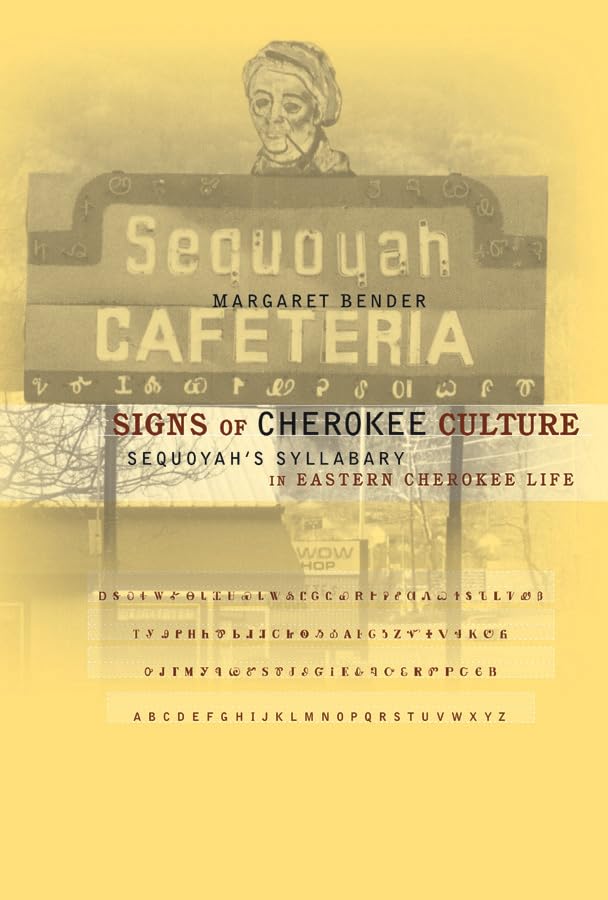
Based on extensive fieldwork in the community of the Eastern Band of Cherokee Indians in western North Carolina, this book uses a semiotic approach to investigate the historic and contemporary role of the Sequoyan syllabarythe written system for representing the sounds of the Cherokee languagein Eastern Cherokee life.The Cherokee syllabary was invented in the 1820s by the respected Cherokee Sequoyah. The syllabary quickly replaced alternative writing systems for Cherokee and was reportedly in widespread use by the midnineteenth century. After that, literacy in Cherokee declined, except in specialized religious contexts. But as Bender shows, recent interest in cultural revitalization among the Cherokees has increased the use of the syllabary in education, publications, and even signage.Bender also explores the role played by the syllabary within the ever more important context of tourism. (The Eastern Cherokee Band hosts millions of visitors each year in the Great Smoky Mountains.) English is the predominant language used in the Cherokee community, but Bender shows how the syllabary is used in special and subtle ways that help to shape a shared cultural and linguistic identity among the Cherokees. Signs of Cherokee Culture thus makes an important contribution to the ethnographic literature on culturally specific literacies.
⚠️ WARNING (California Proposition 65):
This product may contain chemicals known to the State of California to cause cancer, birth defects, or other reproductive harm.
For more information, please visit www.P65Warnings.ca.gov.
- Q: What is the page count of this book? A: The book has two hundred eight pages. It provides a comprehensive exploration of the Cherokee syllabary and its cultural significance.
- Q: What is the binding type of this book? A: The book is paperback bound. This makes it lightweight and easy to handle, perfect for reading or carrying.
- Q: What are the dimensions of this book? A: The dimensions are six point one inches by nine point two five inches. It has a thickness of zero point four seven inches.
- Q: How do I read this book? A: You can read this book at your own pace. It is suitable for anyone interested in Cherokee culture and linguistics.
- Q: Is this book suitable for children? A: Yes, this book is suitable for older children and adults. It covers themes related to culture and history that may interest young readers.
- Q: Can I use this book for educational purposes? A: Yes, this book is an excellent resource for educational settings. It provides valuable insights into the Cherokee syllabary and its role in culture.
- Q: How should I store this book? A: Store this book in a cool, dry place away from direct sunlight. This will help preserve the binding and pages.
- Q: What is the condition of this book? A: This is a used book in good condition. It may show slight signs of wear but is overall intact and readable.
- Q: Does this book contain any harmful materials? A: No, this book does not contain any hazardous materials. It is safe for general reading and handling.
- Q: What if my book arrives damaged? A: If your book arrives damaged, you can contact the seller for a return or exchange. Ensure you keep the original packaging for claims.
- Q: Is this book a good choice for academic research? A: Yes, this book is a significant contribution to ethnographic literature. It is valuable for researchers studying Cherokee culture.
- Q: What themes does this book explore? A: This book explores themes such as cultural revitalization, literacy, and the role of the Cherokee syllabary in identity.
- Q: Can I find more works by this author? A: Yes, the author Margaret Bender has other works related to Cherokee culture. You can look for her publications for further reading.
- Q: Is this book available in other formats? A: Currently, this book is only available in paperback format. There are no digital or hardcover versions listed.
- Q: What audience is this book intended for? A: This book is intended for scholars, students, and anyone interested in Indigenous cultures. It is accessible yet informative.