
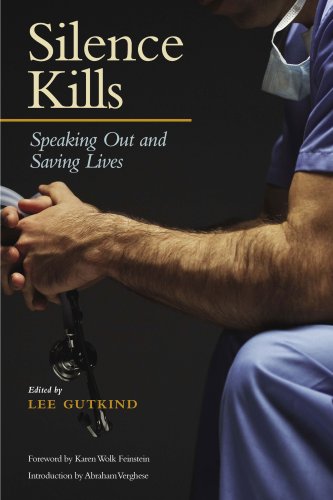
Title
Silence Kills: Speaking Out and Saving Lives,Used
Sold by Ergodebooks, an authorized reseller.
Returns accepted within 30 days | support@ergodebooks.com
Shipping Information
- Free Standard Shipping — United States only
- Processing Time: 3–5 business days
- Estimated Delivery: 6–10 business days after dispatch
- Double-boxed, fully insured & discreetly packaged
- Tracking number sent via email once dispatched
Returns & Refund
Returns accepted within 30 days of delivery.
Damaged or Defective Item
Free return shipping + replacement or full refund
Wrong Item Received
Free return shipping + replacement or full refund
Change of Mind
Return shipping at customer's expense · 25% restocking fee applies
Payment Option

The dozen personal essays in this collection, from patients and their caregivers, nurses, social workers, and physicians, address the devastating human results that can occur from a lack of communication and understanding among those in the health care profession. Medical errormuch of it traceable to simple lack of communicationcosts billions of dollars each year, in addition to the less quantifiable costs of the loss of trust in doctorpatient relationships and the decline in morale among health care professionals.These powerful stories illustrate the need to find ways to break these potentially lethal silences. In 'Mrs. Kelly,' a doctor obeying his superior's order sends a man home from the emergency room against his better judgment, agonizes over his decision, and later calls the man's widow to apologize. In 'In Praise of Osmosis,' a criticalcare nurse pressures a hospital's hierarchy to authorize the continuous renal replacement therapy her patient needs to prevent imminent and irreversible damage to his kidneys. In 'You Have the Right to Remain Silent,' an inmate's sister must fight her way through miles of red tape to get treatment for the HepatitisC her brother contracted in prison.Inspired by groundbreaking research by VitalSmarts, a global leader in organizational performance and leadership, and the American Association of CriticalCare Nurses (AACN), and supported by the Jewish Healthcare Foundation, Lee Gutkind, editor of the journal Creative Nonfiction, has collected the essays in this volumewith the hope that these voices, speaking out, taking action and risks, will inspire others to make changes that will improve communication within our troubled health care system.
⚠️ WARNING (California Proposition 65):
This product may contain chemicals known to the State of California to cause cancer, birth defects, or other reproductive harm.
For more information, please visit www.P65Warnings.ca.gov.
- Q: What is the main theme of 'Silence Kills: Speaking Out and Saving Lives'? A: The main theme of 'Silence Kills' is the critical importance of communication in the health care profession. It highlights how lack of communication can lead to medical errors and devastating consequences for patients.
- Q: Who is the author of this book? A: The author of 'Silence Kills' is Lee Gutkind, who is also the editor of the journal Creative Nonfiction.
- Q: What type of essays are included in this collection? A: This collection includes personal essays written by patients, caregivers, nurses, social workers, and physicians, focusing on their experiences with communication failures in healthcare.
- Q: How many pages does the book have? A: The book contains 176 pages.
- Q: What is the publication date of 'Silence Kills'? A: The book was published on January 1, 2007.
- Q: What is the condition of the book being sold? A: The book is listed as a 'Used Book in Good Condition'.
- Q: In which category is this book listed? A: This book is categorized under 'Medical Ethics'.
- Q: Is there any specific edition of the book? A: Yes, this is the first edition of 'Silence Kills'.
- Q: What format is the book available in? A: The book is available in hardcover format.
- Q: What key issues does the book address? A: The book addresses issues related to medical errors caused by communication breakdowns, the loss of trust in doctor-patient relationships, and the overall impact on healthcare professionals' morale.