
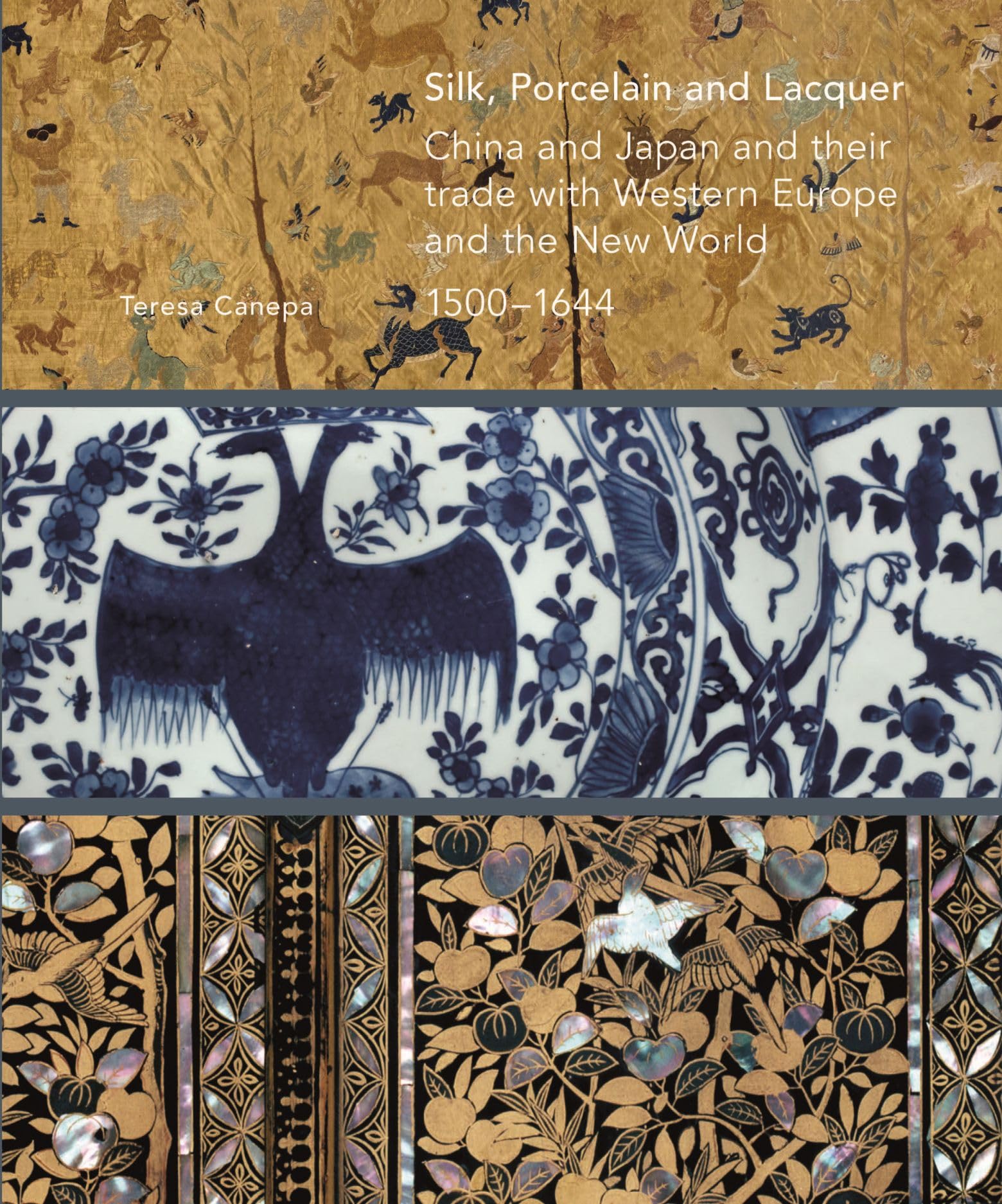
Title
Silk, Porcelain and Lacquer: China and Japan and their Trade with Western Europe and the New World, 15001644,Used
Sold by Ergodebooks, an authorized reseller.
Returns accepted within 30 days | support@ergodebooks.com
Shipping Information
- Free Standard Shipping — United States only
- Processing Time: 3–5 business days
- Estimated Delivery: 6–10 business days after dispatch
- Double-boxed, fully insured & discreetly packaged
- Tracking number sent via email once dispatched
Returns & Refund
Returns accepted within 30 days of delivery.
Damaged or Defective Item
Free return shipping + replacement or full refund
Wrong Item Received
Free return shipping + replacement or full refund
Change of Mind
Return shipping at customer's expense · 25% restocking fee applies
Payment Option

Focusing on the prolific trade, transport and consumption of Chinese silk and porcelain, and Japanese lacquer abroad between 1500 and 1644, this groundbreaking book will show how the material cultures of late Ming China and Momoyama/Early Edo Japan on one side of the globe, and Western Europe and the New World on the other, became linked for the first time, through an exchange of luxury Asian manufactured goods for currency. It offers new insight into these multilayered longdistance commercial networks, which resulted in an unprecedented creation of material culture that reflected influences of both East and West. New research reveals evidence of the trade of these three Asian manufactured goods, first by Portugal and Spain, and later by the trading companies formed by the Northern Netherlands/Dutch Republic and England. Important documentary information is brought to light concerning, for example, the use of Chinese porcelain in Western Europe, and the objects made to order in European shapes for the Dutch and English trading companies in Japan and China. The study also sheds light on both the transatlantic and transpacific commercial trading networks through which these Asian goods circulated, as well as the way in which these goods were acquired, used and appreciated by the Portuguese, Spanish, Dutch and English societies in Western Europe and the multiethnic societies of the European colonies in the New World and Asia. 400 illustrations of extant examples of Chinese silks and porcelains, along with Japanese lacquers of the period, complement the information gleaned from archival and textual material. In the case of Chinese porcelain, a large number of the examples illustrated are provided by archaeological finds from European shipwrecks, survival campsites, colonial settlements in Asia, the New World and the Caribbean, and their respective mother countries in Western Europe. Breaking new ground in its comparative study of the impact these European trading empires or companies had on the material cultures of China and Japan, this book shows the influence that the European merchants and missionaries exerted on the goods made specifically to order for them in both China and Japan. It also traces the worldwide circulation of these luxury objects, which were intended for secular and religious use in European settlements in Asia, and their respective mother countries in Western Europe and colonies in the New World. More importantly, this book shows that these specific orders led to the creation of a wide variety of hybrid manufactured goods in both China and Japan, which combined elements from very different and distant cultures, reflecting the fascinating and complex EastWest cultural exchanges that occurred in the early modern period.
⚠️ WARNING (California Proposition 65):
This product may contain chemicals known to the State of California to cause cancer, birth defects, or other reproductive harm.
For more information, please visit www.P65Warnings.ca.gov.