
Title
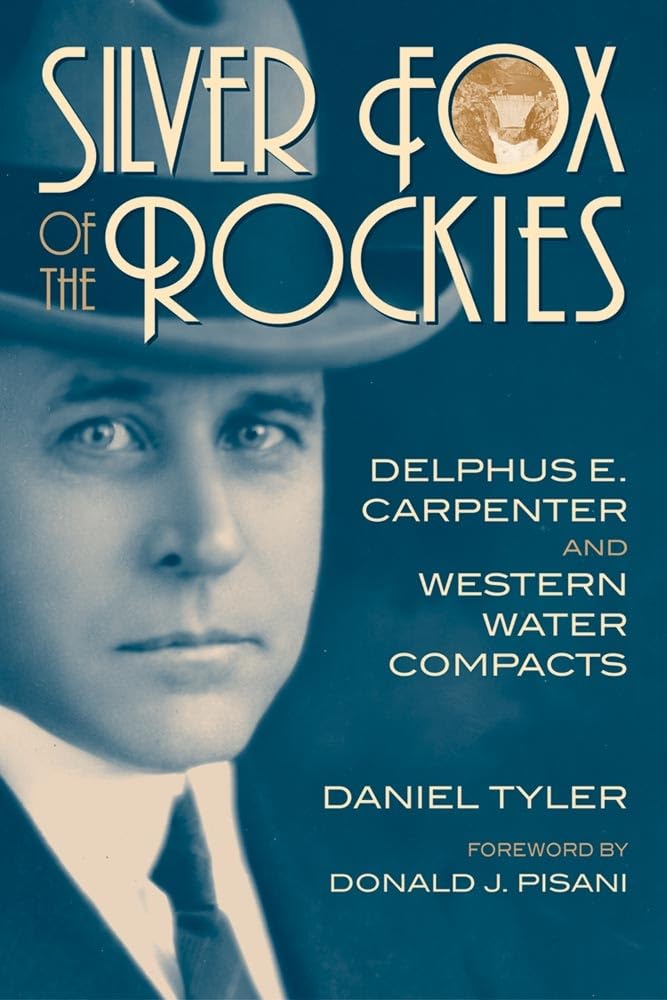
Silver Fox of the Rockies: Delphus E. Carpenter and Western Water Compacts,Used
Sold by Ergodebooks, an authorized reseller.
Returns accepted within 30 days | support@ergodebooks.com
Shipping Information
- Free Standard Shipping — United States only
- Processing Time: 3–5 business days
- Estimated Delivery: 6–10 business days after dispatch
- Double-boxed, fully insured & discreetly packaged
- Tracking number sent via email once dispatched
Returns & Refund
Returns accepted within 30 days of delivery.
Damaged or Defective Item
Free return shipping + replacement or full refund
Wrong Item Received
Free return shipping + replacement or full refund
Change of Mind
Return shipping at customer's expense · 25% restocking fee applies
Payment Option

Delphus E. Carpenter (18771951) was Colorados commissioner of interstate streams during a time when water rights were a legal battleground for western states. A complex, unassuming man as rare and cunning in politics and law as the elusive silver fox of the Rocky Mountain West, Carpenter boldly relied on negotiation instead of endless litigation to forge agreements among states first, before federal intervention. In Silver Fox of the Rockies, Daniel Tyler tells Carpenters story and that of the great interstate water compacts he helped create. Those compacts, produced in the early twentieth century, have guided not only agricultural use but urban growth and development throughout much of the American West to this day.In Carpenters time, most western states relied on the doctrine of prior appropriationfirst in time, first in rightwhich granted exclusive use of resources to those who claimed them first, regardless of common needs. Carpenter feared that population growth and rapid agricultural development in states sharing the same river basins would rob Colorado of its right to a fair share of water. To avoid that eventuality, Carpenter invoked the compact clause of the U.S. Constitution, a clause previously used to settle boundary disputes, and applied it to interstate water rights. The result was a mechanism by which complex issues involving interstate water rights could be settled through negotiation without litigating them before the U.S. Supreme Court. Carpenter believed in the preservation of states rights in order to preserve the constitutionally mandated balance between state and federal authority.Today, water remains critically important to the American West, and the great interstate water compacts Carpenter helped engineer constitute his most enduring legacy. Of particular significance is the Colorado River Compact of 1922, without which Hoover Dam could never have been built.
⚠️ WARNING (California Proposition 65):
This product may contain chemicals known to the State of California to cause cancer, birth defects, or other reproductive harm.
For more information, please visit www.P65Warnings.ca.gov.