
Title
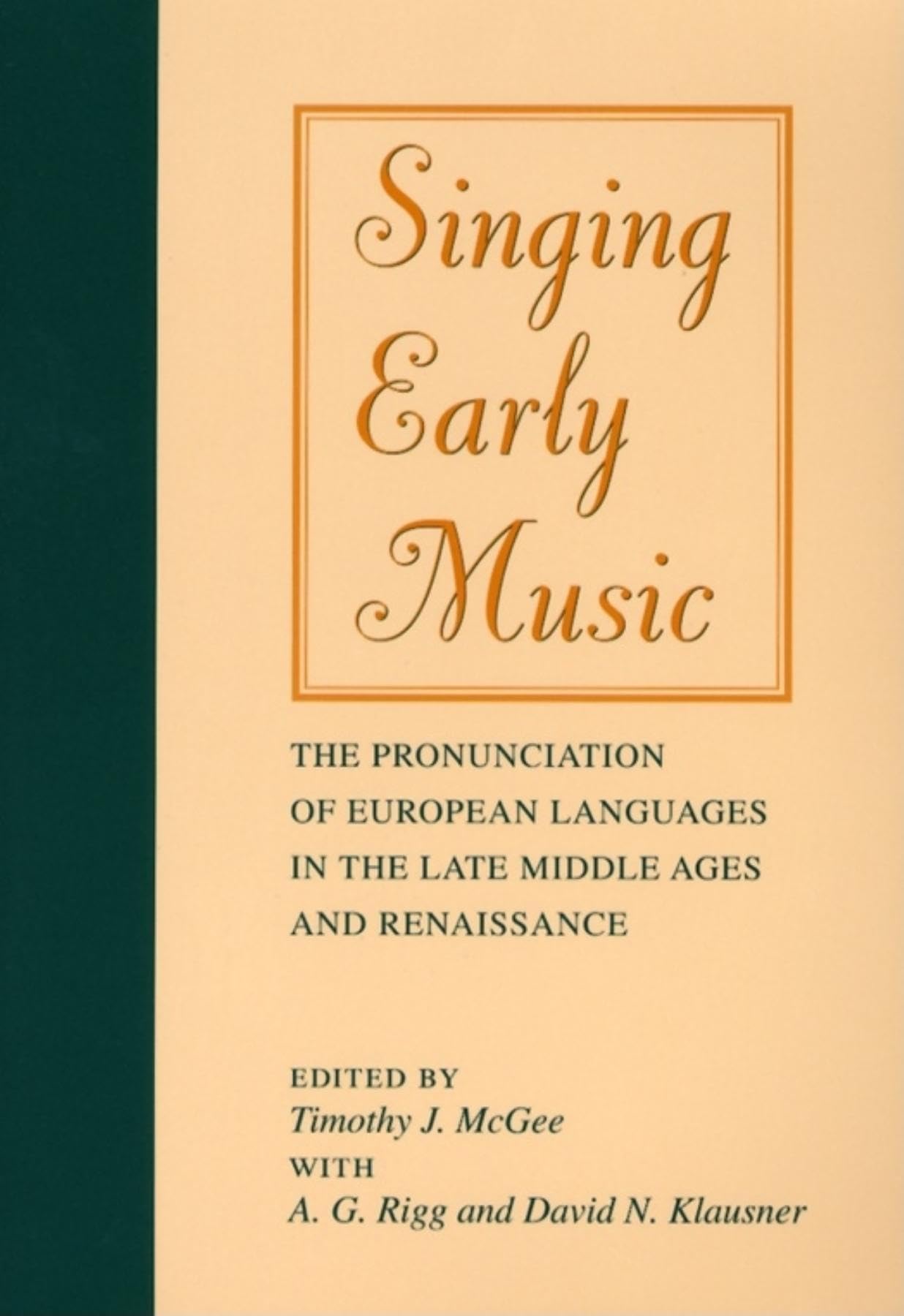
Singing Early Music: The Pronunciation of European Languages in the Late Middle Ages and Renaissance (Music Scholarship and Perf,New
Sold by Ergodebooks, an authorized reseller.
Returns accepted within 30 days | support@ergodebooks.com
Shipping Information
- Free Standard Shipping — United States only
- Processing Time: 3–5 business days
- Estimated Delivery: 6–10 business days after dispatch
- Double-boxed, fully insured & discreetly packaged
- Tracking number sent via email once dispatched
Returns & Refund
Returns accepted within 30 days of delivery.
Damaged or Defective Item
Free return shipping + replacement or full refund
Wrong Item Received
Free return shipping + replacement or full refund
Change of Mind
Return shipping at customer's expense · 25% restocking fee applies
Payment Option

Praise for the cloth edition:'Commendable in its scholarship . . . should prove of interest to linguists, medievalists, and Renaissance academicians, as well as to fastidious performers of early music.' Choice'Singing Early Music is a pioneering work of surpassing quality that cannot be too highly recommended.' Journal of Singing'Addresses the needs of the performer directly, giving historical pronunciations for a range of languages [and] sample texts. . . . The CD that comes with the book will prove invaluable. . . . David Klausner's recording is admirably consistent and convincing across the wide range of languages.' Early Music
⚠️ WARNING (California Proposition 65):
This product may contain chemicals known to the State of California to cause cancer, birth defects, or other reproductive harm.
For more information, please visit www.P65Warnings.ca.gov.
- Q: How many pages does this book have? A: This book has two hundred ninety-nine pages. It offers a comprehensive exploration of early music pronunciation.
- Q: What is the binding type of this book? A: The binding type is paperback. This makes it lightweight and portable for easy use.
- Q: What are the dimensions of the book? A: The book measures ten point zero eight inches in length, six point nine three inches in width, and one point zero four inches in height.
- Q: Who is the author of 'Singing Early Music'? A: The author is Timothy J. McGee. He is known for his expertise in early music and language pronunciation.
- Q: What is the main subject of the book? A: The main subject is the pronunciation of European languages during the Late Middle Ages and Renaissance. It targets performers and scholars of early music.
- Q: How can I use this book for my music practice? A: You can use this book as a guide for historical pronunciations in your music practice. It includes sample texts and a CD for reference.
- Q: Is this book suitable for beginners in early music? A: Yes, this book is suitable for beginners. It provides clear explanations and practical examples to help new learners.
- Q: Can I use the audio CD for learning? A: Yes, the audio CD included is invaluable for learning. It features consistent recordings across various languages.
- Q: What age group is this book appropriate for? A: This book is appropriate for adults and students interested in music scholarship. It is not specifically designed for children.
- Q: How should I care for this paperback book? A: To care for the paperback book, keep it in a dry place away from direct sunlight. Avoid bending or tearing the pages.
- Q: Is there a warranty or return policy for this book? A: Typically, there is a return policy for books, but warranties may not apply. Check with the retailer for specific details.
- Q: What if my book arrives damaged? A: If your book arrives damaged, contact the retailer immediately for return or replacement options. Most retailers have customer service support.
- Q: Can I find comparisons of this book with other early music resources? A: Yes, this book can be compared with other early music resources. It is particularly noted for its detailed linguistic focus.
- Q: Does this book address modern pronunciation methods? A: No, this book focuses on historical pronunciations. It does not cover modern pronunciation methods.
- Q: What makes this book a good resource for performers? A: This book is a good resource for performers because it provides historical context and practical pronunciation tips essential for authenticity.
- Q: Is this book recommended by experts? A: Yes, it has received high praise from experts in the field, including linguists and performers, for its scholarship and quality.