
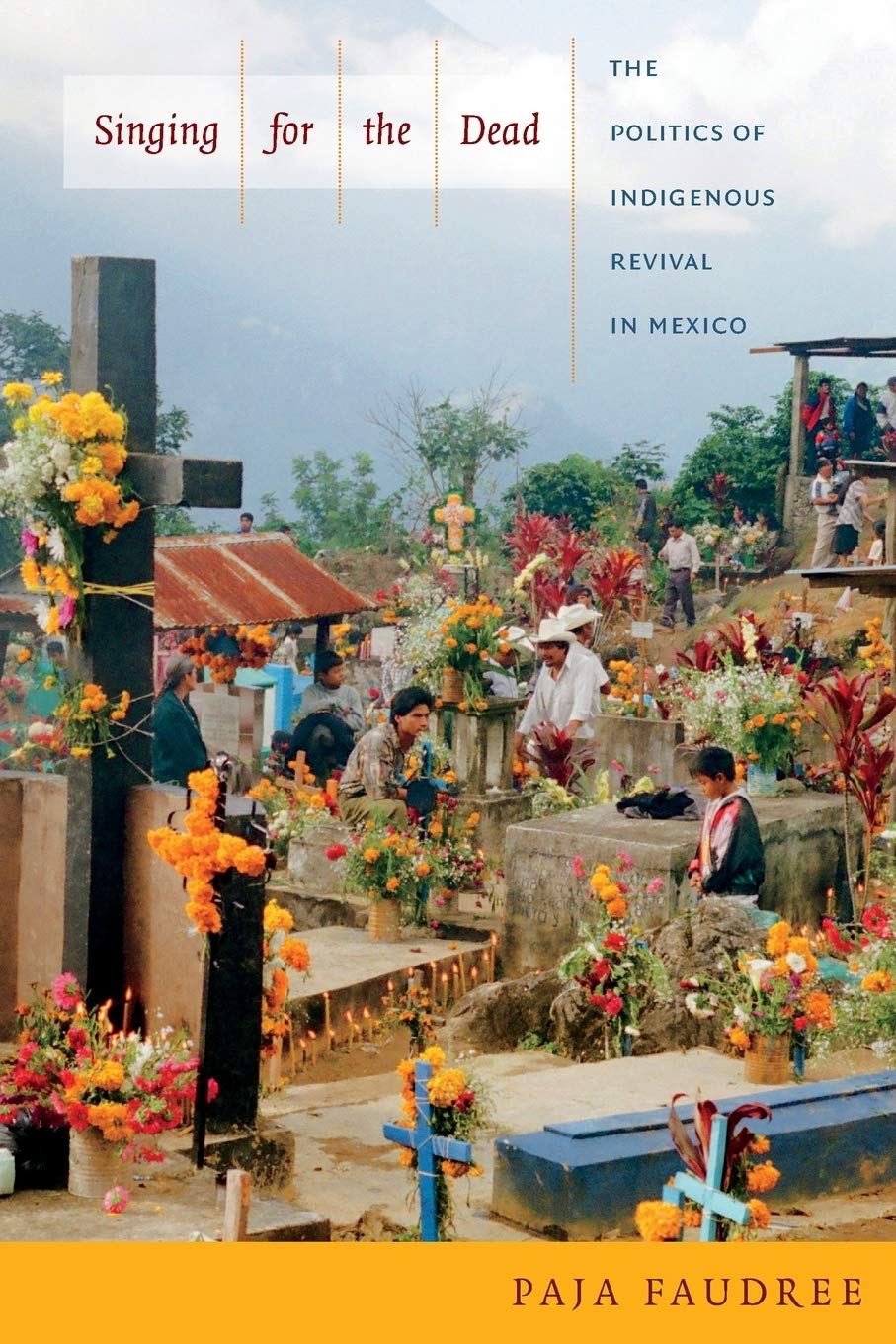
Title
Singing For The Dead: The Politics Of Indigenous Revival In Mexico
Sold by Ergodebooks, an authorized reseller.
Returns accepted within 30 days | support@ergodebooks.com
Shipping Information
- Free Standard Shipping — United States only
- Processing Time: 3–5 business days
- Estimated Delivery: 6–10 business days after dispatch
- Double-boxed, fully insured & discreetly packaged
- Tracking number sent via email once dispatched
Returns & Refund
Returns accepted within 30 days of delivery.
Damaged or Defective Item
Free return shipping + replacement or full refund
Wrong Item Received
Free return shipping + replacement or full refund
Change of Mind
Return shipping at customer's expense · 25% restocking fee applies
Payment Option

Singing For The Dead Chronicles Ethnic Revival In Oaxaca, Mexico, Where New Forms Of Singing And Writing In The Local Mazatec Indigenous Language Are Producing Powerful, Transformative Political Effects. Paja Faudree Argues For The Inclusion Of Singing As A Necessary Component In The Polarized Debates About Indigenous Orality And Literacy, And She Considers How The Coupling Of Literacy And Song Has Allowed People From The Region To Create Texts Of Enduring Social Resonance. She Examines How Local Young People Are Learning To Read And Write In Mazatec As A Result Of The Region'S New Day Of The Dead Song Contest. Faudree Also Studies How Tourist Interest In Local Psychedelic Mushrooms Has Led To Their Commodification, Producing Both Opportunities And Challenges For Songwriters And Others Who Represent Mazatec Culture. She Situates These Revival Movements Within The Contexts Of Mexico And Latin America, As Well As The Broad, Hemispherewide Movement To Create Indigenous Literatures. Singing For The Dead Provides A New Way To Think About The Politics Of Ethnicity, The Success Of Social Movements, And The Limits Of National Belonging.
⚠️ WARNING (California Proposition 65):
This product may contain chemicals known to the State of California to cause cancer, birth defects, or other reproductive harm.
For more information, please visit www.P65Warnings.ca.gov.
- Q: What is the page count of 'Singing for the Dead'? A: The book has three hundred twenty-eight pages. This extensive length provides a deep exploration of Indigenous revival in Oaxaca, Mexico.
- Q: What is the binding type of this book? A: The book is paperback. This binding style is lightweight and flexible, making it easy to carry and read.
- Q: What are the dimensions of 'Singing for the Dead'? A: The dimensions are six point fourteen inches by zero point eighty-three inches by nine point twenty-five inches. These dimensions make it a convenient size for reading.
- Q: Who is the author of 'Singing for the Dead'? A: The author is Paja Faudree. She provides a scholarly perspective on the intersection of music, politics, and indigenous culture.
- Q: What genre does 'Singing for the Dead' belong to? A: The book falls under the genre of ethnomusicology. It focuses on the cultural significance of music and its political implications.
- Q: How do you read 'Singing for the Dead'? A: You can read this book like any other, at your own pace. It may appeal to those interested in cultural studies or political history.
- Q: Is 'Singing for the Dead' suitable for academic purposes? A: Yes, it is suitable for academic purposes. The book offers insightful analysis and is relevant for studies in anthropology and ethnomusicology.
- Q: What themes are explored in 'Singing for the Dead'? A: The book explores themes of ethnic revival, indigenous literature, and the political effects of music. It highlights the transformative power of local culture.
- Q: Can 'Singing for the Dead' be used in a classroom setting? A: Yes, it can be used in a classroom setting. It provides valuable insights into the role of music in social movements and cultural identity.
- Q: How do you care for a paperback book like 'Singing for the Dead'? A: To care for it, keep it away from moisture and direct sunlight. Store it upright on a shelf to prevent bending and damage.
- Q: Is 'Singing for the Dead' a used book? A: Yes, it is a used book in good condition. This means it may show minor signs of wear but is still fully functional for reading.
- Q: What should I do if 'Singing for the Dead' arrives damaged? A: If it arrives damaged, you should contact customer service for a replacement or refund. Keep all packaging materials for the return process.
- Q: What if I have questions about the content of 'Singing for the Dead'? A: If you have questions about the content, consider reaching out to book clubs or forums focused on ethnomusicology. Engaging with others can enhance your understanding.
- Q: Are there any specific care instructions for this book? A: Yes, avoid exposing it to extreme temperatures and humidity. Handle it gently to maintain its condition over time.
- Q: How does 'Singing for the Dead' compare to other books in ethnomusicology? A: It offers a unique perspective on the politics of culture and identity in Mexico, distinguishing it from other ethnomusicological works that may focus on different regions.
- Q: Is 'Singing for the Dead' appropriate for casual readers? A: Yes, it is appropriate for casual readers interested in cultural topics. The engaging narrative may appeal to a wider audience beyond academia.