
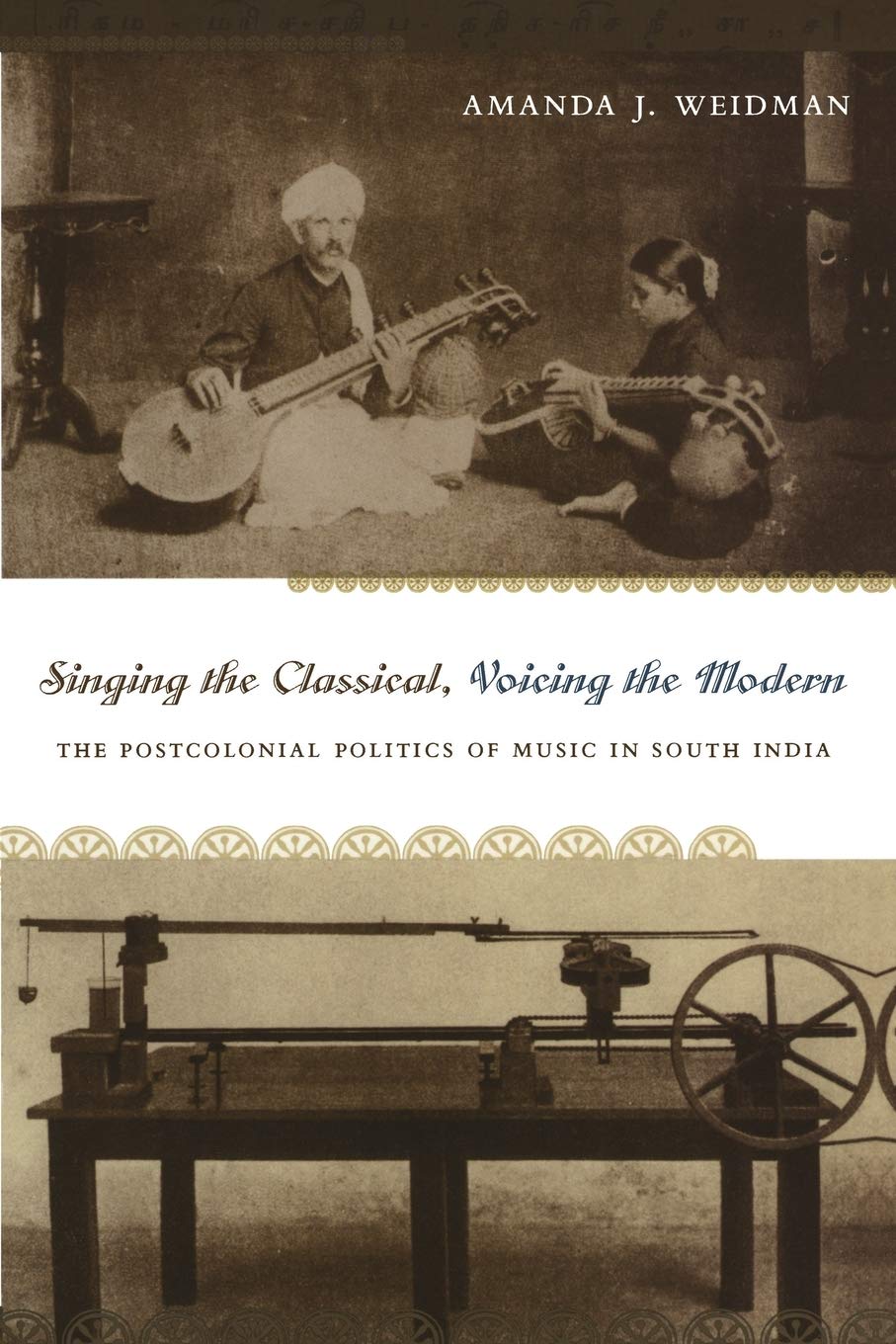
Singing The Classical, Voicing The Modern: The Postcolonial Politics Of Music In South India
$29.38
Title
Singing The Classical, Voicing The Modern: The Postcolonial Politics Of Music In South India
Free Standard Shipping Across USA
Quantity
Sold by Ergodebooks, an authorized reseller.
Returns accepted within 30 days | support@ergodebooks.com
Shipping Information
- Free Standard Shipping — United States only
- Processing Time: 3–5 business days
- Estimated Delivery: 6–10 business days after dispatch
- Double-boxed, fully insured & discreetly packaged
- Tracking number sent via email once dispatched
Returns & Refund
Returns accepted within 30 days of delivery.
Damaged or Defective Item
Free return shipping + replacement or full refund
Wrong Item Received
Free return shipping + replacement or full refund
Change of Mind
Return shipping at customer's expense · 25% restocking fee applies
All returns require a Return Authorization (RA) number before sending.
View Full Return & Refund Policy
Payment Option

⚠️ WARNING (California Proposition 65):
This product may contain chemicals known to the State of California to cause cancer, birth defects, or other reproductive harm.
For more information, please visit www.P65Warnings.ca.gov.
- Q: How many pages does the book have? A: The book has three hundred sixty-eight pages. This length allows for a thorough exploration of the themes presented by the author.
- Q: What is the binding type of this book? A: The binding type is paperback. This makes it lightweight and flexible, suitable for easy reading and portability.
- Q: What are the dimensions of the book? A: The book measures six inches in length, one inch in width, and eight point seventy-five inches in height. These dimensions make it a convenient size for handling.
- Q: Who is the author of the book? A: The author is Amanda J. Weidman. She is known for her contributions to the field of ethnomusicology, particularly regarding South Indian music.
- Q: What is the main genre of this book? A: The main genre is ethnomusicology. This field studies music's cultural and social aspects, particularly in the context of South India.
- Q: Is this book suitable for beginners in ethnomusicology? A: Yes, the book is suitable for beginners. It provides a comprehensive introduction to the political and cultural aspects of Karnatic music.
- Q: What themes does the book explore? A: The book explores themes of colonial modernity, nationalism, and cultural authenticity in relation to Karnatic music. It delves into how these themes shape musical identity.
- Q: How can I apply the ideas in this book to my research? A: You can apply the ideas by incorporating the analyses of vocal sound and performance conventions into your work. The book provides a framework for understanding music in cultural contexts.
- Q: Is this book appropriate for academic study? A: Yes, it is appropriate for academic study. It is well-researched and offers valuable insights into the politics of music and identity.
- Q: How should I store the book to keep it in good condition? A: Store the book in a cool, dry place away from direct sunlight. This helps preserve the quality of the paperback binding and the pages.
- Q: What should I do if the book arrives damaged? A: If the book arrives damaged, you should contact the seller for a return or exchange. Most sellers have a return policy for such instances.
- Q: Can I clean the book if it gets dirty? A: Yes, you can clean the book gently. Use a soft, dry cloth to wipe the covers and avoid using water or cleaning solutions that may damage the pages.
- Q: What if I want to gift this book? A: This book makes an excellent gift for anyone interested in music or cultural studies. Its insights into South Indian music are valuable for various audiences.
- Q: Is there any adult content in the book? A: No, there is no adult content in the book. It focuses on academic discussions related to music and culture.
- Q: What publishing company released this book? A: The book is published by Duke University Press. This publisher is known for its academic and scholarly works.