
Title
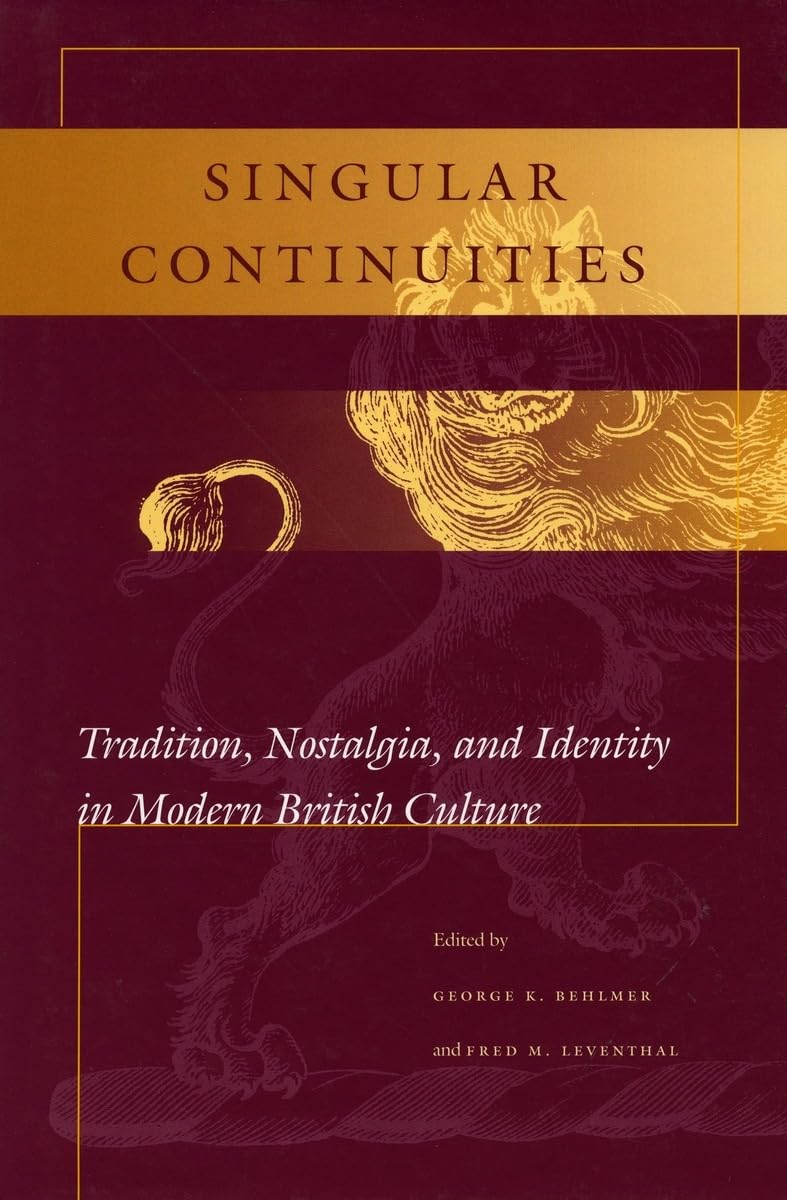
Singular Continuities: Tradition, Nostalgia, And Identity In Modern British Culture,Used
Sold by Ergodebooks, an authorized reseller.
Returns accepted within 30 days | support@ergodebooks.com
Shipping Information
- Free Standard Shipping — United States only
- Processing Time: 3–5 business days
- Estimated Delivery: 6–10 business days after dispatch
- Double-boxed, fully insured & discreetly packaged
- Tracking number sent via email once dispatched
Returns & Refund
Returns accepted within 30 days of delivery.
Damaged or Defective Item
Free return shipping + replacement or full refund
Wrong Item Received
Free return shipping + replacement or full refund
Change of Mind
Return shipping at customer's expense · 25% restocking fee applies
Payment Option

Product Description This volume explores the appropriation of the past in modern British culture. Today, at the beginning of a new millennium, the mass media would have us believe that Britain is suffering an identity crisis. If the pundits are correct, we are witnessing a manipulation of British history at the hands of those keen to project a new national imageor in the language of commodification, to 'rebrand' Britain. The twelve essays in Singular Continuities take a different tack. They argue that to distinguish between 'the new' and 'the traditional' in modern English culture often draws a false dichotomy, that Britishness, in fact, has been the product of continuous creation throughout the nineteenth and twentieth centuries. The contributors strongly suggest that 'tradition' derives from constant reimagining, if not from calculated invention. Such reimagining has often assumed surprising forms. Thus, for example, at the end of Victoria's reign, an 'enemy' culturethat of the Boer farmerwas recruited to the British ideal of pastoral selfsufficiency. Similarly, the iconoclastic surrealism of the interwar artist Humphrey Jennings was actually suffused with a celebratory sense of the British past. And during the 1970s and 1980s, workingclass autobiography eulogized not the triumph of character over circumstance but rather an industrial nostalgia that recalled a cityscape where slum neighbors once knew their turf and the people who occupied it. Related themes are pursued in essays that range from the demonizing of Irish immigrants in earlyVictorian London to the impact of reading on suffrage activism, from the professionalization of social work to the selling of the past in Thatcher's Britain. What has been termed 'heritagebashing' finds few echoes in this collection. 'Heritage' is a remarkably protean notion, as useful to the political left as to the right, to feminists as well as to wouldbe patriarchs. It is the malleable nature of British cultural continuity that makes its heritage 'singular.' Review 'While each of these essays can be read individually, and a review summary cannot even begin to do justice to the richness of the themes and arguments that they contain, their collective impact is to provide a new level of understanding about the varieties and persistence of tradition and nostalgia in modern British history.' Albion From the Inside Flap This volume explores the appropriation of the past in modern British culture. Today, at the beginning of a new millennium, the mass media would have us believe that Britain is suffering an identity crisis. If the pundits are correct, we are witnessing a manipulation of British history at the hands of those keen to project a new national imageor in the language of commodification, to rebrand Britain.The twelve essays in Singular Continuities take a different tack. They argue that to distinguish between the new and the traditional in modern English culture often draws a false dichotomy, that Britishness, in fact, has been the product of continuous creation throughout the nineteenth and twentieth centuries. The contributors strongly suggest that tradition derives from constant reimagining, if not from calculated invention.Such reimagining has often assumed surprising forms. Thus, for example, at the end of Victorias reign, an enemy culturethat of the Boer farmerwas recruited to the British ideal of pastoral selfsufficiency. Similarly, the iconoclastic surrealism of the interwar artist Humphrey Jennings was actually suffused with a celebratory sense of the British past. And during the 1970s and 1980s, workingclass autobiography eulogized not the triumph of character over circumstance but rather an industrial nostalgia that recalled a cityscape where slum neighbors once knew their turf and the people who occupied it. Related themes are pursued in essays that range from the demonizing of Irish immigrants in earlyVictorian London t
⚠️ WARNING (California Proposition 65):
This product may contain chemicals known to the State of California to cause cancer, birth defects, or other reproductive harm.
For more information, please visit www.P65Warnings.ca.gov.