
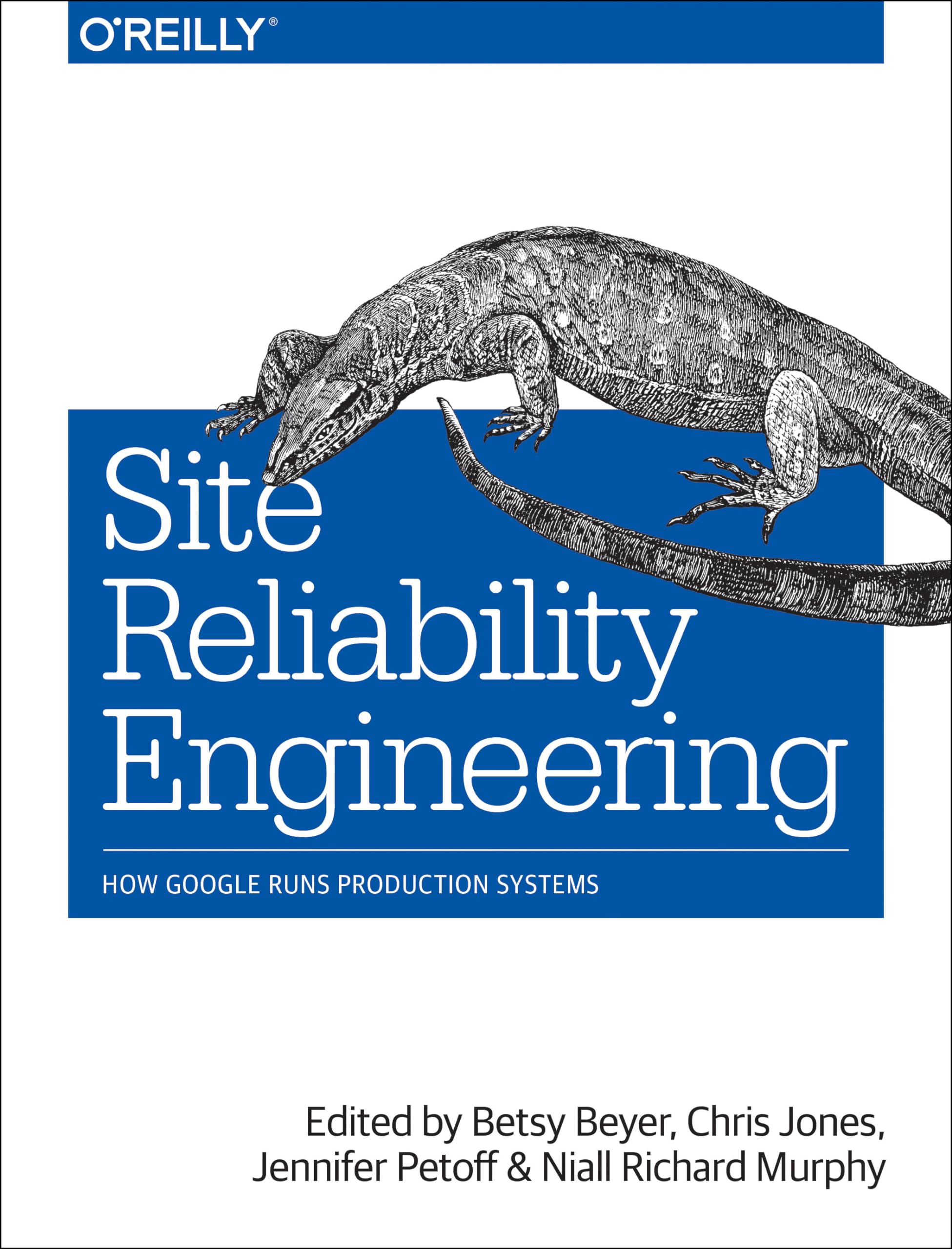
Title
Site Reliability Engineering: How Google Runs Production Systems,New
Sold by Ergodebooks, an authorized reseller.
Returns accepted within 30 days | support@ergodebooks.com
Shipping Information
- Free Standard Shipping — United States only
- Processing Time: 3–5 business days
- Estimated Delivery: 6–10 business days after dispatch
- Double-boxed, fully insured & discreetly packaged
- Tracking number sent via email once dispatched
Returns & Refund
Returns accepted within 30 days of delivery.
Damaged or Defective Item
Free return shipping + replacement or full refund
Wrong Item Received
Free return shipping + replacement or full refund
Change of Mind
Return shipping at customer's expense · 25% restocking fee applies
Payment Option

The overwhelming majority of a software system's lifespan is spent in use, not in design or implementation. So, why does conventional wisdom insist that software engineers focus primarily on the design and development of largescale computing systems?In this collection of essays and articles, key members of Google's Site Reliability Team explain how and why their commitment to the entire lifecycle has enabled the company to successfully build, deploy, monitor, and maintain some of the largest software systems in the world. You'll learn the principles and practices that enable Google engineers to make systems more scalable, reliable, and efficientlessons directly applicable to your organization.This book is divided into four sections: IntroductionLearn what site reliability engineering is and why it differs from conventional IT industry practices PrinciplesExamine the patterns, behaviors, and areas of concern that influence the work of a site reliability engineer (SRE) PracticesUnderstand the theory and practice of an SRE's daytoday work: building and operating large distributed computing systems ManagementExplore Google's best practices for training, communication, and meetings that your organization can use
⚠️ WARNING (California Proposition 65):
This product may contain chemicals known to the State of California to cause cancer, birth defects, or other reproductive harm.
For more information, please visit www.P65Warnings.ca.gov.
- Q: What is the main focus of 'Site Reliability Engineering: How Google Runs Production Systems'? A: The book focuses on the principles and practices of site reliability engineering (SRE) and how Google's Site Reliability Team manages the entire lifecycle of software systems, from design to deployment and maintenance.
- Q: Who is the author of the book? A: The book is authored by Jennifer Petoff, who is a key member of Google's Site Reliability Team.
- Q: How many pages does this book contain? A: The book contains 550 pages, providing comprehensive insights into site reliability engineering.
- Q: What are the key sections covered in the book? A: The book is divided into four sections: Introduction, Principles, Practices, and Management, each addressing different aspects of site reliability engineering.
- Q: In what format is the book available? A: The book is available in a paperback format, making it accessible for readers who prefer physical copies.
- Q: When was the book published? A: The book was published on May 10, 2016.
- Q: What can readers expect to learn from this book? A: Readers will learn about scalable, reliable, and efficient systems, as well as Google's best practices in training, communication, and SRE management.
- Q: Is this book suitable for beginners in site reliability engineering? A: Yes, the book provides foundational concepts of site reliability engineering, making it suitable for both beginners and experienced professionals.
- Q: Does the book provide practical examples or case studies? A: Yes, the book includes essays and articles from key members of Google's SRE team, offering real-world insights and practical examples.
- Q: What is the item condition of the book? A: The book is in new condition, ensuring that readers receive a quality product.