If you have any questions, you are always welcome to contact us. We'll get back to you as soon as possible, withing 24 hours on weekdays.
Customer service
All questions about your order, return and delivery must be sent to our customer service team by e-mail at yourstore@yourdomain.com
Sale & Press
If you are interested in selling our products, need more information about our brand or wish to make a collaboration, please contact us at press@yourdomain.com
Help
If you have any questions, you are always welcome to contact us. We'll get back to you as soon as possible, withing 24 hours on weekdays.
Customer service
All questions about your order, return and delivery must be sent to our customer service team by e-mail at yourstore@yourdomain.com
Sale & Press
If you are interested in selling our products, need more information about our brand or wish to make a collaboration, please contact us at press@yourdomain.com
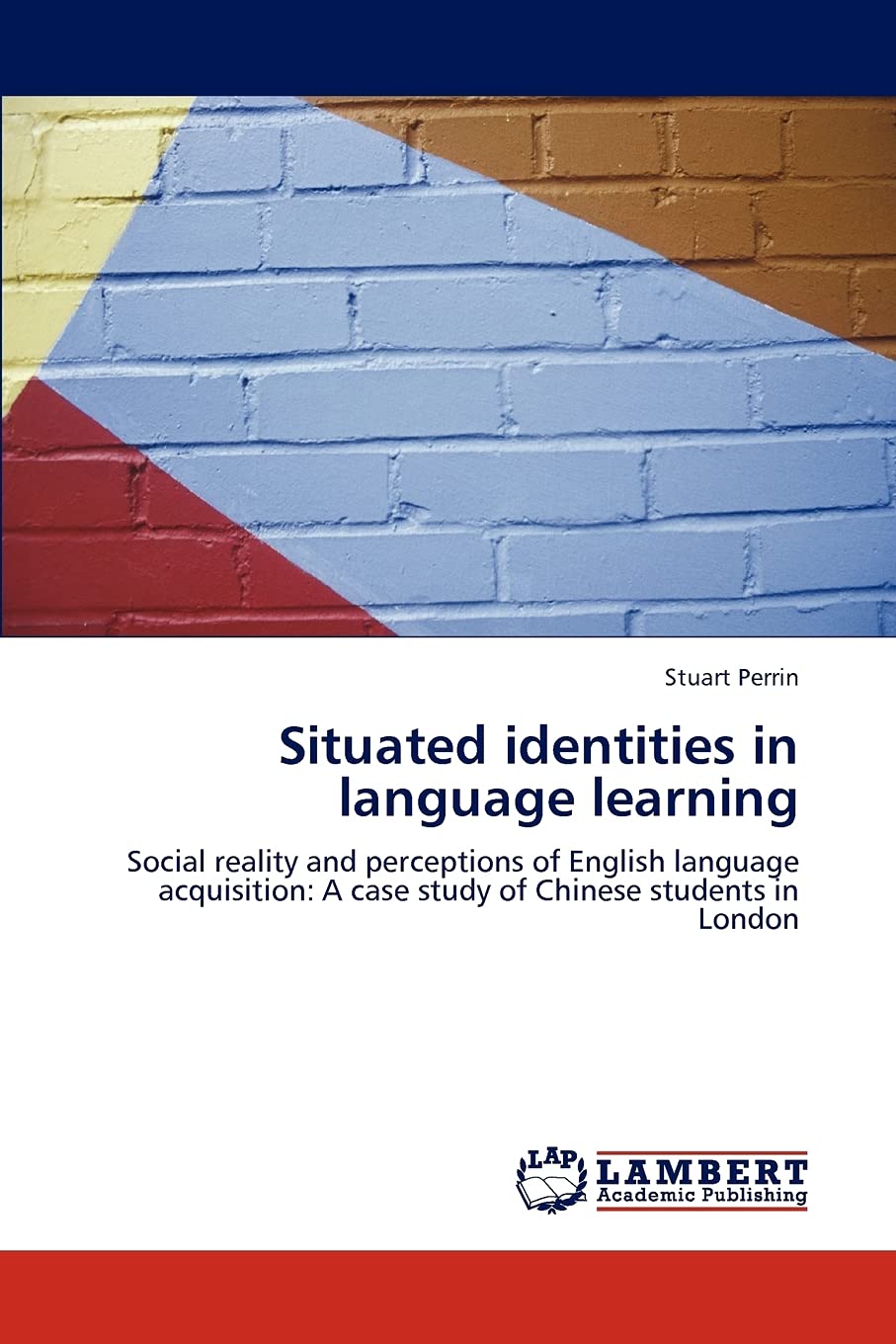
The work of identity researchers argue that current theories of second language acquisition are problematic in explaining the relationship between the language learner and the wider social world. This study examines the relationship between situated identities and constructed learning environments, and discusses the implications this relationship may have on language learners perceptions of acquisition of English through a longitudinal case study of a group of Chinese students studying English in London. It identifies a number of recurring themes; including personal investment in English, perceptions and experiences of English, imagined communities, stratification of English varieties, and learners literacy practices. The study argues that reasons for learning English and the educational values of being in a native speaker environment should be seen in terms of the learners identities and complex social realities that they construct, shaped by a mixture of language preferences, social values, personal goals and notions of home.
⚠️ WARNING (California Proposition 65):
This product may contain chemicals known to the State of California to cause cancer,
birth defects, or other reproductive harm.
For MAP (Minimum Advertised Price) violations and Intellectual Property (IP) or Trademark concerns, please contact:
support@ergodebooks.com
⚠️ California Proposition 65 Warning: Some products sold on this website may expose you to chemicals known to the State of California to cause cancer, birth defects, or other reproductive harm. For more information, visit www.P65Warnings.ca.gov.