
Title
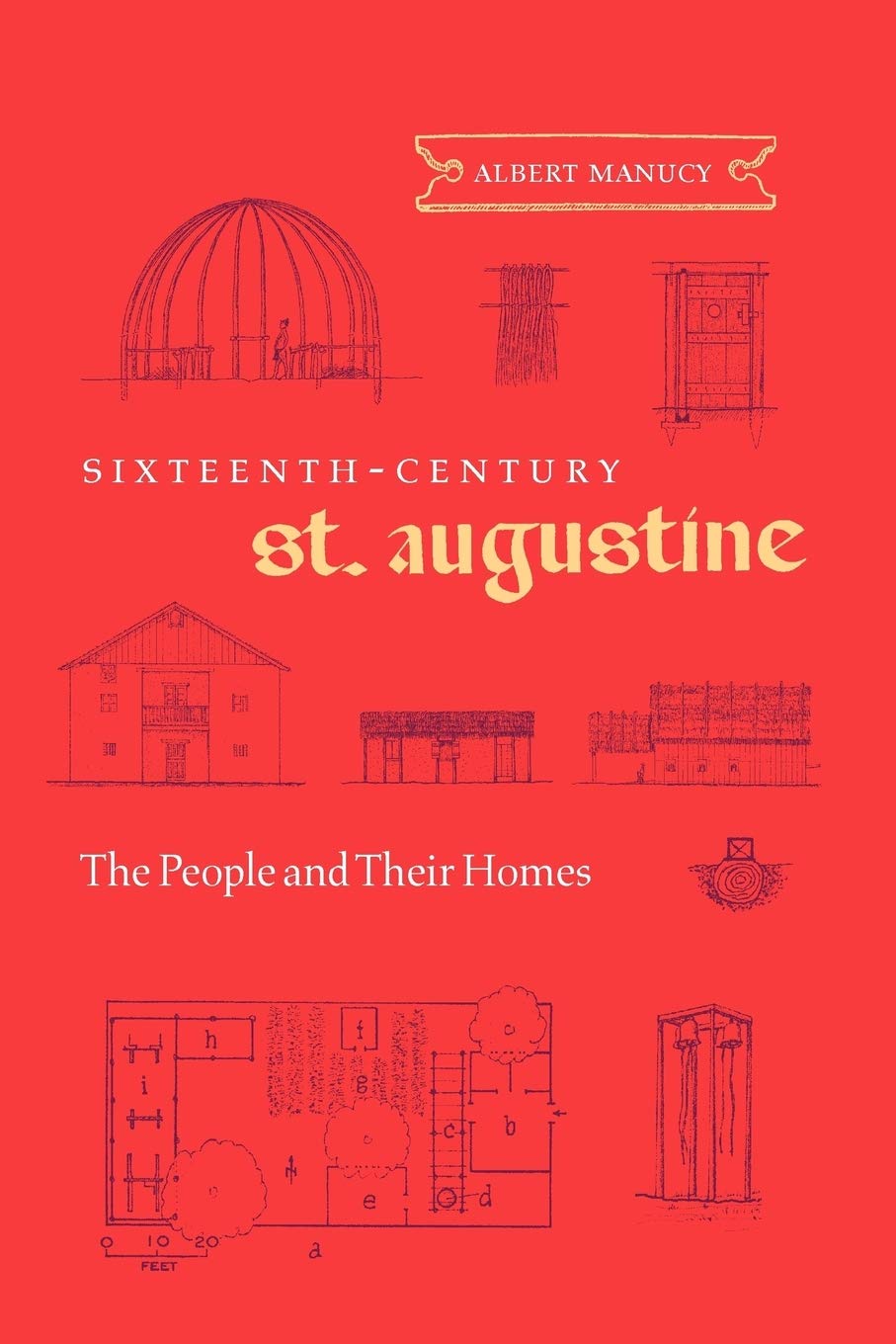
SixteenthCentury St. Augustine: The People and Their Homes,Used
Sold by Ergodebooks, an authorized reseller.
Returns accepted within 30 days | support@ergodebooks.com
Shipping Information
- Free Standard Shipping — United States only
- Processing Time: 3–5 business days
- Estimated Delivery: 6–10 business days after dispatch
- Double-boxed, fully insured & discreetly packaged
- Tracking number sent via email once dispatched
Returns & Refund
Returns accepted within 30 days of delivery.
Damaged or Defective Item
Free return shipping + replacement or full refund
Wrong Item Received
Free return shipping + replacement or full refund
Change of Mind
Return shipping at customer's expense · 25% restocking fee applies
Payment Option

"Greatly enriches our knowledge of Spanish Florida. . . . Describes the sixteenthcentury Native American and European occupants of St. Augustine, the circumstances which brought them together, and the city, fortifications, and houses in which they dwelt. Nothing else like this has been written. . . . Enlarges substantially upon the cultural meaning of people, place, and hearth."Eugene Lyon, director, Center for Historic Research, Flagler College, St. Augustine"[The] first and only comprehensive historical and anthropological synthesis of Americas first European colony . . . and a great story. There are very few scholars who can achieve this kind of precisely accurate, broadly synthetic, and wonderfully readable book."Kathleen Deagan, curator of anthropology, Florida Museum of Natural History, GainesvilleIn this companion volume to TheHouses of St. Augustine, 1565 to 1821, Albert Manucy goes back in time to detail the first years of St. Augustines settlement, from 1565 to 1700. Focusing on how the first Spanish colonists lived, Manucy describes the buildings and backyards of the early settlers and illustrates how the architecture of the Timucua Indians of Florida influenced Spanish colonial culture.Though the description of early St. Augustine is necessarily hypothetical, since all of the early structures were burned by Sir Thomas Moore in 1702, Manucy incorporates a broad range of scholarship in architecture, art, history, and ethnohistory to establish a provocative, convincing, and fascinating model of early colonial life. For years the leading architectural interpreter of St. Augustine and formerly a historian of the Castillo de San Marcos, a Fulbright scholar in Spain, and a member of the St. Augustine 1580 research team, Albert Manucy combines his expertise with a true gift for story telling.Richly illustrated and straightforwardly narrated, SixteenthCentury St. Augustine will appeal to anyone interested in Florida history, particularly in the early Spanish settlers of St. Augustine and the Timucuan Indians. It will also prove an invaluable resource for archaeologists, architects, enthnohistorians, museum curators, and scholars of Spanish colonial history.
⚠️ WARNING (California Proposition 65):
This product may contain chemicals known to the State of California to cause cancer, birth defects, or other reproductive harm.
For more information, please visit www.P65Warnings.ca.gov.